If you are an anxious over-thinker, lying in bed at night can be prime time for ruminating. From breathing patterns to backwards counting, many sleep hacks exist, but one technique called cognitive shuffling has gained popularity on social media and is claimed to help switch off a busy brain.
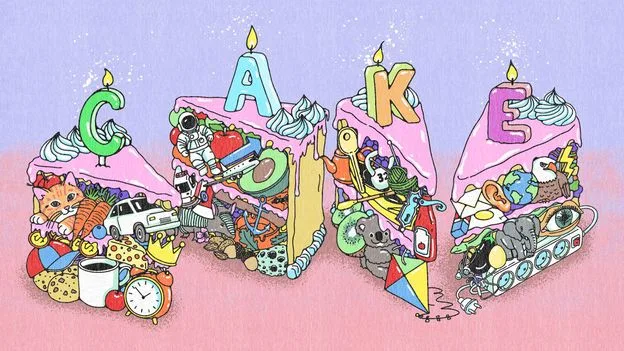
The technique involves thinking of a random, emotionally neutral word, such as 'cake'. You take the first letter, 'C', and think of as many items beginning with that letter, like 'car', 'carrot' and 'cottage', visualising each one. Once you cannot think of any more, you move to the second letter. Many users report rarely making it to the third letter before falling asleep.
According to Alanna Hare, a consultant in sleep medicine at Royal Brompton Hospital in London, cognitive shuffling is 'super somnolent'. It deploys a push-and-pull mechanism on the mind, both pulling you towards sleep while quietening intrusive worries that keep you awake.

Cognitive shuffling, or 'serial diverse imagining', was developed over 15 years ago by Luc P Beaudoin, an adjunct professor at Simon Fraser University in Canada. It is based on his theory of 'somnolent information-processing', which argues that people with insomnia dwell on perturbing thought patterns that keep the brain alert, and that these can be countered with neutral, random images that help the brain feel 'safe' enough to sleep.
In 2016, Beaudoin and colleagues tested the technique in a study of 154 university students struggling to sleep. One group used an app voicing random words, while another journalled about worries. The image shuffling approach was 'just as effective' at improving sleepiness and had the advantage of being done lying in bed.
Eleni Kavaliotis, a registered psychologist and sleep researcher at Monash University, Australia, says cognitive shuffling works by diverting attention away from interfering thoughts and mimicking the scattered, disconnected thought patterns the brain naturally generates as you fall asleep. It mirrors a natural process called hypnagogic mentation, which Beaudoin calls 'micro-dreams'.