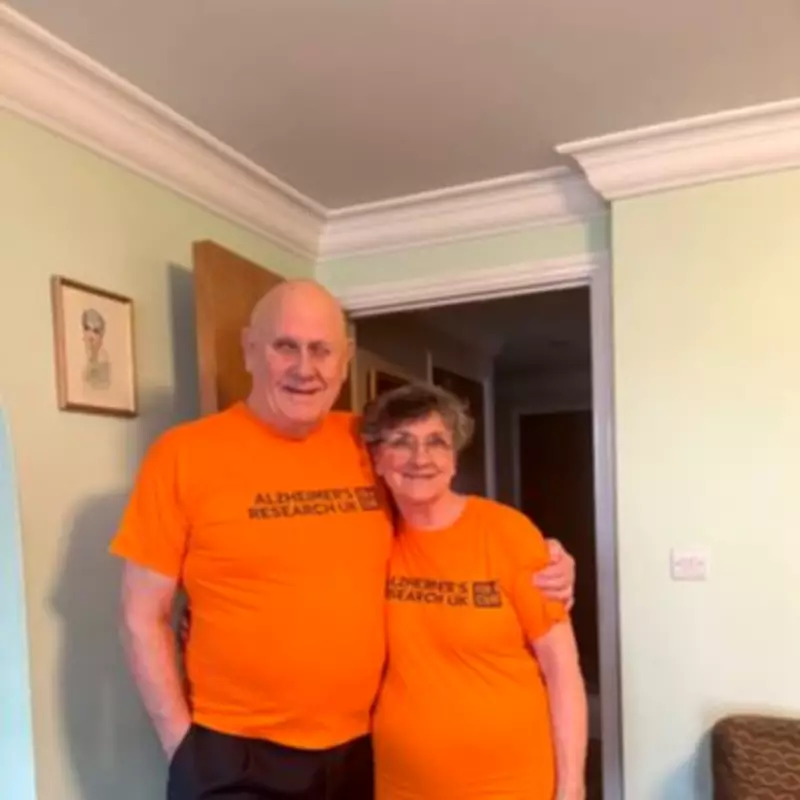
Three years after receiving a "shock" diagnosis, a man is urging other Alzheimer's patients to consider joining clinical trials after one managed to completely change his future. David Radford, 79, was first diagnosed with Alzheimer's after his family noticed symptoms at Christmas in 2022. David admits at the time: "I was in denial."
The Aldershot local said: "I had been forgetting things for a while and struggling with simple tasks like using the remote control. Over Christmas my family noticed how I kept repeating myself and knew something wasn't right. My wife, Christine, made the doctors appointment for me in January 2023. I was quickly referred to the memory clinic and then the consultant neurologist gave me the diagnosis of Alzheimer's disease just two months since my original doctor's appointment. I was lucky to get a swift and early diagnosis."
This early diagnosis is also what made David eligible for a nearby trial in Guildford, which a family friend had suggested to him. He was very keen to take part: "I had nothing to lose and if it didn't work for me it might help others in the future."

Clinical Trials: A Missed Opportunity?
Dr Sheona Scales, Director of Research at Alzheimer's Research UK, warned that people with Alzheimer's in the UK could be missing out on potential treatments. She said: "With a growing number of experimental medicines entering the pipeline, more people than ever will be needed to take part in clinical trials. And without a larger and more diverse range of trial participants, the UK will increasingly miss out on the opportunity to host new trials. This means people won't have access to the next generation of Alzheimer's treatments."
After passing the entry assessments and being accepted onto the donanemab clinical trial in spring 2023, David underwent fortnightly infusions for six months followed by monthly infusions for a year. Now on the other side of the trial, David has had a very fortunate outcome.
He said: "There were no side effects, I was monitored throughout and the whole experience was positive. By September 2024, the trial had finished and even though my existing symptoms remain, they haven't got any worse. Being a drug trial participant is something I would recommend to anyone who has just been diagnosed with Alzheimer's, if you get the chance. It could change the future for you and your loved ones as it has for me. I know I've been very fortunate. Everyone should have the same opportunity I had – to get an early and accurate diagnosis, join a trial, and benefit from the latest treatments."
Urging Others to Participate
Urging other patients to consider joining trials, David added: "A diagnosis is a shock and I think people aren't always in the right frame of mind to go on a trial. There's a lot to take in and understand at the beginning; it's a confusing time. At the drug trial site there were lots of forms to fill in initially which was a bit daunting. I couldn't have done it without Christine's help. Reading all the side effects can be off putting too. But I never had any doubts. I was assessed throughout the process and it went very smoothly. I'm very grateful to have been on the trial."
Alzheimer's research has been rapidly growing over the last decade, with 40% more new drugs being studied and 192 clinical trials taking place globally in the last year according to a new review. The UK hosts around 10% of these trials. Trials targeting the earliest stages of the disease, when treatments are most likely to work, are also among the hardest to find participants for as it relies on very early diagnosis. Alzheimer's Research UK also warned a lack of signposting could mean people that want to help, like David, are simply never given the chance.
NHS List of Alzheimer's Symptoms
The NHS website says that in the early stages, the main symptom of Alzheimer's disease is memory lapses. There are often signs of mood changes, the NHS says. These could include increasing anxiety or agitation, or periods of confusion. Someone with early Alzheimer's disease may:

- become less flexible and more hesitant to try new things
- forget the names of places and objects
- ask questions repetitively
- misplace items
- show poor judgement or find it harder to make decisions
- have trouble thinking of the right word
- forget about recent conversations or events