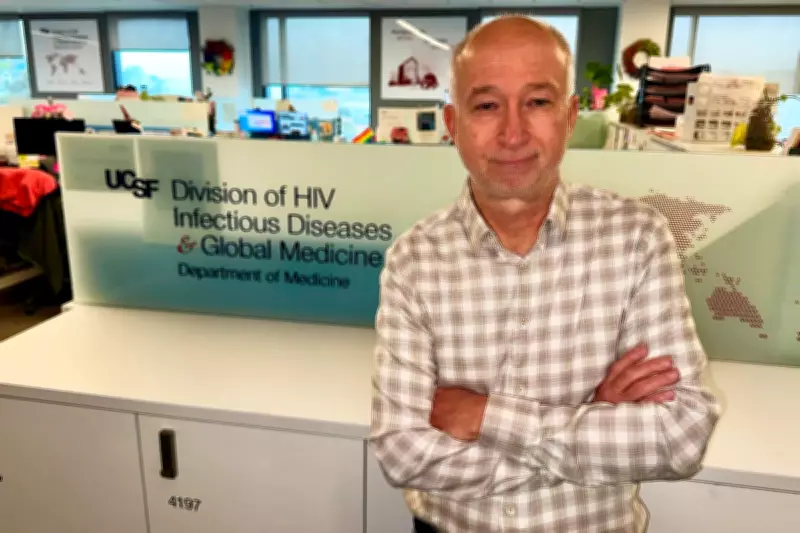
Scientists are exploring a novel approach to combat HIV by supercharging patients' own immune cells, borrowing techniques from cancer therapy. In a small study presented Tuesday, researchers reported that a single dose of genetically engineered T cells, known as CAR-T cells, strongly suppressed HIV in two participants—one for nearly a year and the other for nearly two years—without requiring their usual antiretroviral medications.
Promising but Preliminary Results
Dr. Steven Deeks of the University of California, San Francisco, who led the research, described the sustained response as provocative. "There is a real need for a one-and-done, safe and scalable cure," he said. The findings were presented at the American Society of Gene and Cell Therapy meeting in Boston.
Globally, nearly 40 million people live with HIV. While modern antiretroviral drugs can suppress the virus to undetectable levels, they require lifelong adherence and are not accessible to all. The virus hides in reservoirs in the body, rebounding quickly if treatment stops.

How CAR-T Therapy Works for HIV
CAR-T therapy involves extracting T cells from a patient's blood, genetically engineering them to recognize and attack HIV-infected cells, and infusing them back. The cells are also modified to resist infection by HIV itself, allowing them to multiply and keep the virus in check. Boro Dropulić, executive director of the nonprofit drug developer Caring Cross, explained that this dual modification provides the cells with added armor.
In the early-stage experiment, different dosing strategies were tested. Participants stopped their HIV medication on the day they received the CAR-T cells. No serious side effects occurred. The first three recipients showed no response and resumed their usual medicines. Six others received a small amount of chemotherapy to make space for the new T cells. Among them, two strong responders saw their HIV drop to undetectable levels, with occasional minor increases when the CAR-T cells presumably reactivated. A third patient had a temporary response and returned to regular HIV treatment.
Expert Perspectives
Dr. Hans-Peter Kiem, a gene therapy expert at Seattle's Fred Hutchinson Cancer Center not involved in the study, called the results fascinating but cautioned that more research is needed to confirm efficacy. Andrea Gramatica, vice president for research at amfAR, The Foundation for AIDS Research, noted that the strategy is exciting because it boosts what the immune system can already do. Her organization is funding work to create easier-to-use versions of the therapy.
The three patients who responded positively had all started antiretroviral treatment soon after infection, which likely resulted in smaller viral reservoirs and healthier immune systems. Larger and longer studies are necessary to determine if CAR-T therapy can provide a lasting solution for HIV.