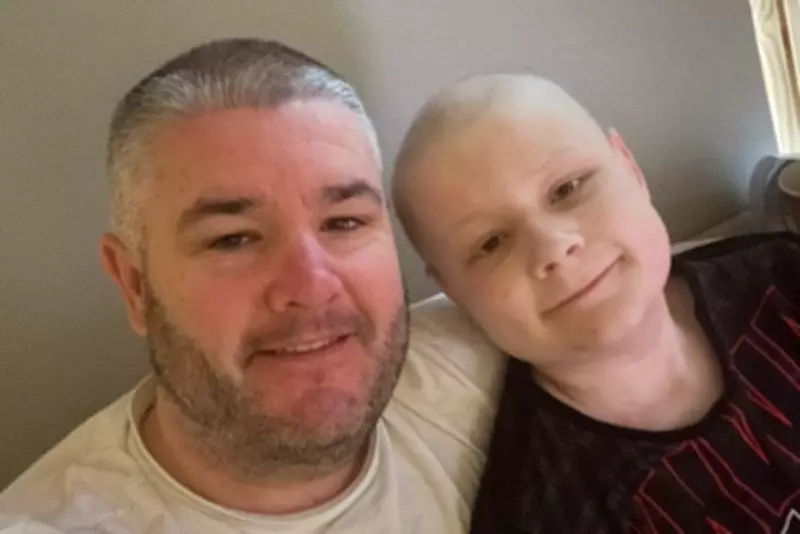
Father's Initial Dismissal of Symptoms Preceded Son's Devastating Leukaemia Diagnosis
Stephen McAlley, a 43-year-old operations manager for Network Rail living in Warrington, initially told his 12-year-old son Ollie to "stop moaning" when the boy complained of persistent back pain and extreme tiredness. The father-of-three dismissed the symptoms as a simple case of flu, adopting what he later called a "stupid dad mentality" of telling his son to "man up" and get on with it.
From Holiday Symptoms to Emergency Diagnosis
The family's ordeal began during their Christmas holiday in New York City in December 2024, where Stephen noticed Ollie appeared "fluey" and was "really struggling to get around." After paying hundreds of dollars for a New York GP visit that resulted only in a COVID test and paracetamol prescription, the family returned to the UK in January 2025 with Ollie's symptoms continuing unabated.
Stephen recalled several alarming incidents, including when Ollie screamed out in pain while watching a film at a cinema with reclining seats, holding his back in agony for about twenty seconds. A similar episode occurred at home days later, yet the family still didn't recognize the severity of the situation.

The Turning Point at Football Training
As coach of Ollie's football team, Stephen noticed his son was "struggling at training for a couple of weeks" leading up to a significant game in February 2025. During warm-ups for that match, Ollie told his father, "Dad, I can't, my back's hurting." Stephen responded by telling him to "stop moaning" and go sit with his mother.
At that same football game, another coach and parent commented on how unusually pale Ollie appeared, which finally triggered alarm bells for Kirsty McAlley, Ollie's mother and a trained nurse. Within days, Kirsty insisted on taking Ollie to their local GP, securing an appointment for 4pm that same day.
Rapid Progression from GP Visit to Hospitalisation
The junior doctor who examined Ollie demonstrated exceptional intuition, immediately consulting her supervisor who urged further testing. By that evening, Stephen received a call from his wife instructing him to meet them at Warrington Hospital, where Ollie was immediately admitted for blood tests.
"By midnight, four doctors took us into an empty side room away from our son," Stephen recounted. "They confirmed Ollie's blast blood cells were 'through the roof' and they were 'pretty sure it was some form of leukaemia.'"
The medical team advised immediate transfer to Alder Hey Children's Hospital, offering an ambulance and warning the family they would be "spending the next few months in hospital." Stephen described his initial reaction as "complete confusion, panic, and I was scared to death."
Family's Emotional Response and Treatment Journey
After receiving the devastating news, Stephen and Kirsty returned to Ollie's room, telling him only that his blood tests "weren't right" and they needed to go to another hospital. Stephen then faced the heartbreaking task of waking his two older children, Evie (20) and Caden (17), to deliver the news while sobbing uncontrollably.
At Alder Hey Children's Hospital, Ollie was immediately wheeled into theatre for his first round of chemotherapy and a Bone Marrow Aspirate procedure that confirmed the leukaemia diagnosis. Within days, doctors identified the specific condition as High-Risk Philadelphia Positive ALL, a rare and aggressive form of acute lymphoblastic leukaemia.
Ongoing Treatment and Future Uncertainties
Ollie has demonstrated remarkable resilience throughout what his father describes as a "brutal" 25-month treatment plan involving multiple rounds of chemotherapy and immunotherapy. Stephen noted the treatments "completely nuked everything in his whole body," frightening him with how ill they made his son.
Currently, Ollie's cancer is at an "undetectable" level, but he will continue regular testing until April 2027. There remains a significant possibility that he may require a stem cell transplant in the future, a prospect that holds particular significance for Stephen, who donated stem cells twice to another patient approximately fifteen years ago through the Anthony Nolan charity.

Advocacy and Awareness Campaign
Inspired by their son's experience, the McAlley family has become passionate advocates for leukaemia awareness and stem cell donation. Stephen has signed up for the London Marathon on April 26 to raise funds and awareness for Anthony Nolan, with Ollie "buzzing" about his father's participation despite logistical challenges due to infection risks preventing him from using public transport.
"Take your kids to the GP," Stephen urged other parents. "If you think that there's something going on, take them because I wouldn't have done, if it wasn't for my wife. It's just the whole stupid dad mentality of 'man up, you'll be fine, get on with it,' which is just complete rubbish in hindsight."
The family hopes their story will encourage more people to register as stem cell donors and recognize the importance of taking persistent symptoms seriously, regardless of initial assumptions about their severity.