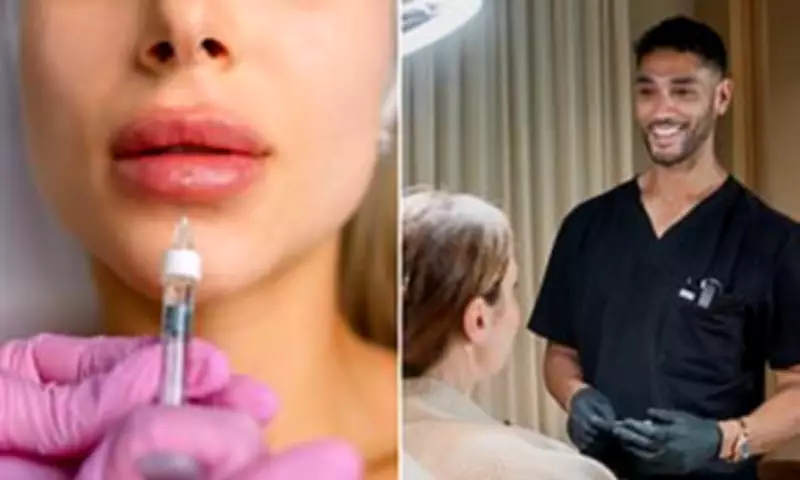
The Rise of Cosmetic Treatment Regret
From lip filler enhancements to non-surgical facial lifts, cosmetic tweakments have reached unprecedented levels of popularity in recent years. However, according to leading aesthetic doctors, despite constant media coverage and social media discussions about celebrity procedures, not all treatments are aging as gracefully as patients had initially hoped. In fact, many clinics are now experiencing a significant increase in clients seeking to completely reverse previous treatments, exchanging heavy, overfilled outcomes for softer, more natural, and ultimately more flattering appearances.
Thread Lifts: Temporary Results Lead to Disappointment
Dr Richard Devine, an aesthetic doctor and founder of Devine Clinic, identifies thread lifts as one of the most frequently regretted procedures, despite speculation that celebrities like Bella Hadid, Kendall Jenner, and Simon Cowell have embraced this treatment. "Many patients feel the results don't last as long as they expected," Dr Devine explains, "particularly when compared to the initial lifting effect visible immediately after the procedure."
Over time, some patients report asymmetry, visible puckering, or a subtle pulling sensation that can make outcomes appear less natural. Because the lift depends on temporary threads rather than structural facial changes, improvements can fade rapidly, leaving patients questioning whether the treatment justified the investment.

Overfilled Jawlines: Creating Bulk Instead of Definition
Another treatment Dr Devine observes many patients seeking to reverse is jaw filler. "We're seeing a growing number of patients wanting to reverse overfilled faces," he states, "particularly in the jawline area." Excessive volume in this region can create a bulky, heavy appearance rather than refined definition, and in some instances can alter facial proportions. Patients frequently request more sculpted, natural contours, preferring subtle shaping that enhances their features without adding width or weight to the lower face.
Dr Hassan Galadari, a dermatologist and aesthetics doctor, concurs, warning that what's intended to sculpt can often produce opposite effects. "One of the biggest regrets we're seeing now is overfilling," he says, "especially in the jawline and lower face. What was meant to create definition can actually make the face look heavier, bulkier, and less feminine." There has been a clear shift, with more patients choosing to dissolve filler and move away from volume-based treatments involving hyaluronic acid fillers.
Overfilled Cheeks and Tear Trough Filler Complications
Dr Nabil Jetha, aesthetic doctor and founder of Dr Nabil Jetha Clinic, notes that filler regret remains incredibly common, particularly regarding overdone procedures. "Overfilled cheeks remain among the most commonly regretted treatments," he reveals, "with many patients now seeking a softer, more natural appearance."
He also highlights under-eye filler as a key problem area. "Tear trough filler is another area we frequently dissolve," Dr Jetha explains, "particularly where migration or puffiness has occurred because the patient wasn't the right candidate." For women, jawline filler can present special challenges. "Jawline filler in women can also be regretted when it unintentionally masculinises the face by creating excessive width."
'Duck Lip' Filler and the Shift Toward Natural Lips
Dr Shagoon Modi, aesthetic doctor at Orskin Aesthetics, reports that lip filler ranks among the most frequently reversed treatments currently. This trend aligns with celebrities like Kylie Jenner and Molly-Mae Hague openly discussing dissolving their lip fillers and opting for more natural looks. "Lip filler is one of the most frequently reversed treatments," Dr Modi confirms, "especially when patients feel they've developed what's often described as a 'duck lip' appearance."
The current trend is moving firmly toward more refined, balanced results, prompting many patients to dissolve filler and restart with a softer, more natural approach that better suits their facial proportions.

Aggressive Skincare and Over-Exfoliation Damage
Problems aren't limited to injectable treatments. According to Dr Jetha, overusing medical-grade skincare can be equally damaging. "We are seeing increasing regret around aggressive skincare and in-clinic treatments," he elaborates. "Overuse of chemical peels, harsh exfoliants, and excessive cleansing can severely damage the skin barrier, sometimes triggering conditions like perioral dermatitis."
Ingredients such as retinoids, when overused, can lead to retinoid dermatitis, creating red-looking rashes that leave skin inflamed and sensitised. In more extreme cases, misuse of prescription-strength hydroquinone has resulted in complications like exogenous ochronosis, a rare, often permanent skin disorder causing blue-black or grey-brown hyperpigmentation.
The New Direction: Natural Enhancement Over Artificial Volume
Anastasia Koles, aesthetic nurse and co-founder of ALTA Clinic Beverly Hills, observes a clear shift in patient preferences. "The biggest shift we're seeing is that patients no longer want to appear as though they've had work done," she explains. "This aligns with the wider 'clean girl' aesthetic, where the focus is on fresh, natural, and understated results. Increasingly, patients are coming to us specifically to reverse heavier treatments and replace them with something more refined and anatomically respectful."
For lips, this means rethinking the entire approach. Rather than simply adding volume, practitioners now focus on shape, definition, and preserving natural lip anatomy, aiming for lips that look authentically personal.
Biostimulators and Collagen Stimulation
More broadly, doctors discuss moving away from "replacement" and toward "stimulation" of the body's own natural resources. As Dr Khaled Rabaya, co-founder of ALTA Clinic Beverly Hills, clarifies: "On the facial filler side, we're moving away from replacing volume with foreign material and toward treatments that stimulate the body's own collagen production. Calcium-based biostimulators encourage the skin to rebuild from within, delivering results that look and feel more natural."
"Our overall philosophy is simple: inject less, inject precisely, allow everything to integrate, then reassess. Patients heal better, results last longer and, most importantly, nothing looks overdone."