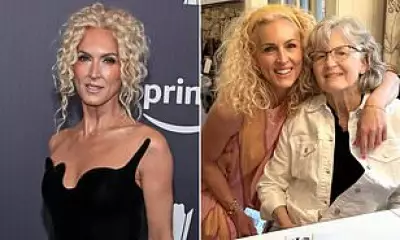
In a heart-wrenching appeal that has captured public attention, a beloved former television news anchor is fighting for her life while battling severe chronic liver conditions. Amy McGorry, aged 56, has issued an emotional and desperate plea to the public in hopes of securing a life-saving liver transplant. The former anchor, once a familiar face to viewers across Long Island, New York, on News 12 and TV55, has been quietly enduring a long and grueling struggle with autoimmune hepatitis and primary biliary cholangitis (PBC), two debilitating chronic diseases.
A Tearful Video Appeal for Survival
McGorry recently took to Instagram to share a tearful video, her voice breaking as she made a direct appeal to fans and strangers alike. "Help me find a living liver donor that would be a match for me. You can help save my life," she implored, adding with palpable disbelief, "I can't even believe I have to say those words but I need a liver transplant. You can't wait." This public cry for help marks a stark shift for the journalist, who has transitioned from reporting the news to becoming the story herself.
Rapid Health Deterioration and Life-Threatening Symptoms
In recent months, McGorry's condition has deteriorated alarmingly, leaving her grappling with severe and potentially deadly symptoms. She has experienced fainting episodes, internal bleeding, and dangerously low hemoglobin levels, all indicators of her failing liver. Without a timely transplant, her liver could begin to shut down other vital organs, escalating the urgency of her situation. McGorry, who previously worked as a health reporter, now finds herself on the other side of medical crises, relying on the very public she once informed.

The Transplant List Challenge and Living Donor Solution
The traditional organ transplant system offers little hope for McGorry due to the nature of her condition. Patients with primary biliary cholangitis are often ranked lower on transplant lists, making it difficult to secure a liver through conventional means. "The problem with PBC, you're the low man on the list when it comes to getting a transplant," she explained in an interview with the New York Post. Consequently, her only viable option is to find a living donor—someone willing to undergo major surgery to donate a portion of their liver.
"You have to find a living donor willing to do it - and that's a big ask - to go 'can I have a piece of their liver?'" McGorry acknowledged. In her emotional appeal, she detailed the medical process, noting that the liver is one of the few organs capable of regeneration. "The doctors explained that they'll take a portion of the liver from this person and it would grow back in two to three months which is pretty cool," she said in her Instagram video, emphasizing the need for a donor with O-positive blood type.
Narrow Criteria and Urgent Timeline
The search for a donor is constrained by strict criteria, adding to the desperation of McGorry's plea. She is seeking someone between the ages of 20 and 60, in good health, and with O-positive blood—a narrow window that underscores the urgency of her condition. The process requires a healthy donor to undergo rigorous evaluation and accept significant risks, making the quest all the more challenging. McGorry has urged the public to share her message widely, stating, "If you're not a donor, if you can please share the link get the message out there. I really need your help, I appreciate it, thank you."
A Life of Service and Continued Advocacy
Even as her health worsens, McGorry has refused to retreat from her commitment to helping others. Loved ones have described her on a GoFundMe page as a journalist, sister, aunt, teacher, athlete, and performer who has always been a source of strength and joy. "Amy has always been a source of strength and joy for our family and everyone who knows her," they wrote. "Now, her liver has given all it can, and she is in urgent need of a transplant. Every day matters."

In a testament to her resilience, McGorry is planning to travel to Washington, D.C., next month to advocate for the Living Donor Protection Act. This legislation aims to expand protections for organ donors, including job security during recovery periods. "Some people may want to donate, and their jobs won't let them," she noted, highlighting systemic barriers. McGorry sees her advocacy as a way to find meaning in her struggle, explaining, "For me, it's not just about me, I have been trying to find a reason through all of this, the 'why is this happening to me?' and maybe this is my way of helping everyone. This is bigger than me. It's about hope, and maybe, just maybe, someone out there can be my miracle."
As McGorry continues her fight, her story serves as a poignant reminder of the critical need for organ donors and the human faces behind medical emergencies. Her journey from TV anchor to patient advocate underscores a relentless spirit in the face of adversity, with her life hanging in the balance as she awaits a potential lifesaver.