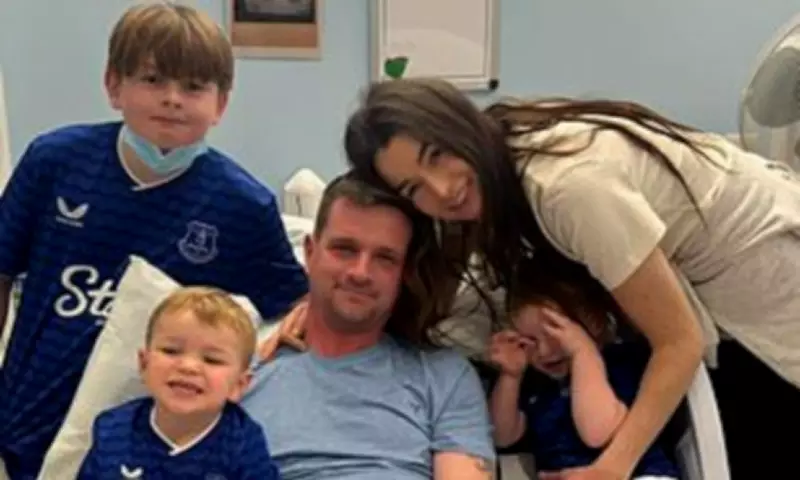
A 35-year-old father-of-three has been told he may have just one to three years to live after being diagnosed with a rare and highly aggressive form of kidney cancer. Leon Skapars, a self-employed plasterer from Southport, has also been denied a place on a promising drug trial after the disease spread further, in what his family describe as a 'devastating double blow'.
The Initial Symptoms
Mr Skapars first noticed a dull ache in his back and left side in March last year - but at the time, it didn't seem serious. When he later saw blood in his urine, he went to A&E. Doctors found no sign of infection and reassured him it was likely something minor, such as kidney stones, which often pass on their own. He was discharged with advice and a leaflet on kidney stones. One doctor briefly raised the possibility of cancer but Leon was reassured that this was unlikely because of his age.
His brother-in-law, Anthony Duffey, said: 'Leon's the kind of person who just gets on with things. He works hard and doesn't make a fuss. At first it just felt like a bit of back pain - nothing out of the ordinary. Even when he went to hospital, he was told it was probably nothing to worry about.'

Diagnosis and Treatment
While on a family holiday in August 2025, his condition worsened and he began passing large blood clots. 'That's when we realised something wasn't right,' Anthony said. Following the family's return home, Mr Skapars underwent urgent further investigations. A scan revealed an 8cm tumour on his right kidney and just days after his 35th birthday, he was diagnosed with stage three kidney cancer. He underwent surgery the following month to remove his right kidney and tumour, before facing an agonising wait for results.
In November, doctors confirmed he had a rare and fast-spreading form of the disease known as sarcomatoid renal cell carcinoma. Mr Skapars began immunotherapy in December in the hope of stopping the cancer - but just four months later, the family were dealt devastating news. The cancer had spread to his lungs, lymph nodes and back to the area where the kidney had been removed. His family say he could have as little as 12 months to live if treatment fails, or up to three years if it works. It has since spread to major arteries near his heart, causing breathing difficulties and putting his life in immediate danger.
Family's Heartbreak
His partner, Crystal, 30, said: 'Our world has been completely turned upside down. Leon was so fit and active - always in the gym and playing with the kids. Now he's facing this cruel disease. When he was first diagnosed, I barely left his side. I slept next to him in a chair in hospital. We were all in shock - we still are. We've gone from planning our future to fighting for every extra moment together.'
In a cruel new twist, the family were dealt another devastating blow just days ago. Anthony said: 'He hasn't been on any treatment for about seven weeks. He'd been waiting to start a drug trial that was looking really promising and could have helped extend his life. He was going back and forth to The Christie in Manchester for all the pre-trial tests, and a lot of hope had been put into it. But after new scans, doctors found the cancer had spread further into major arteries near his heart, causing blood clots and putting him in immediate danger - so he's no longer eligible. To have that taken away just as he was due to start has been devastating.'
Warning Signs of Kidney Cancer
Key warning signs include blood in urine, persistent pain in side, back or under ribs, fatigue, unexplained weight loss, lump or swelling in abdomen, loss of appetite, and fever or excessive sweating.
Current Situation and Fundraising
Mr Skapars has not received further cancer treatment since immunotherapy was halted in early April. He is due to see doctors next week to discuss what options, if any, remain. The family say the NHS can now only offer a daily tablet to try to slow the disease but fear it may not be enough given how aggressively the cancer is progressing. They are now urgently raising funds via GoFundMe for private treatment, specialist trials and care not available on the NHS, in the hope of buying Mr Skapars more time with his young sons.

Kidney Cancer Statistics
Kidney cancer now ranks as the UK's sixth most common cancer, with almost 14,000 Britons diagnosed every year, with 4,700 deaths, amounting to about 13 deaths per day. Cases are also climbing sharply in younger adults. People born in 1990 are up to three times more likely to develop the disease than those born in the 1950s - a trend doctors say is partly driven by rising obesity and high blood pressure. One of the biggest challenges with kidney cancer is that early-stage disease (stages one and two) is almost entirely symptom-free. As a result, there are often no warning signs to indicate cancer is present unless investigations are carried out for an unrelated reason.
For Mr Skapars, his focus is on maximising the amount of time he has with his partner and three young children, Warren, aged two, Leuin, four, and Tony, 10. 'He's built his life around being a good father to his three boys. His children mean the world to him,' Anthony said. 'Every decision he's made, every long day worked, every sacrifice has been for them and their future. He cares deeply about the small everyday moments with his kids that most people take for granted.'