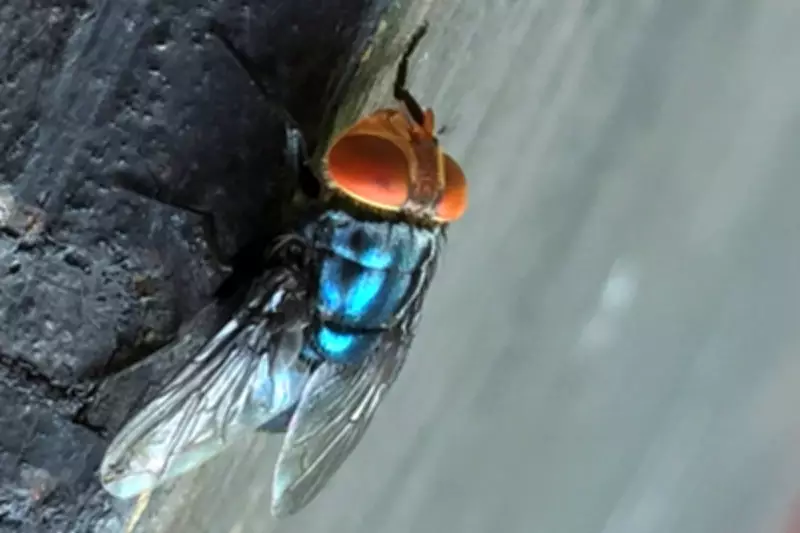
The Flesh-Eating Screwworm Fly's Alarming Return to North America
A devastating parasitic fly, known for its flesh-eating larvae, is threatening to reinvade the United States after being eradicated from North and Central America decades ago. The New World screwworm (Cochliomyia hominivorax) has been detected in Mexican states bordering Texas, sparking significant concern among agricultural authorities and health officials.
Understanding the Screwworm's Destructive Nature
This parasitic insect lays its eggs in open wounds and bodily orifices of warm-blooded animals, including livestock and occasionally humans. Upon hatching, the maggots consume the host's living tissue, creating severe lesions known as myiasis that can rapidly prove fatal if left untreated.
Historically, the screwworm caused substantial economic damage across southern U.S. states before successful eradication efforts in the mid-20th century. The 1935 Texas epidemic alone recorded approximately 230,000 livestock cases and 55 human infections, demonstrating the parasite's devastating potential.

The Sterile Insect Technique: A Past Success Now Unraveling
The method responsible for eliminating screwworms from North America involved the sterile insect technique (SIT). This approach breeds massive numbers of target insects, sterilizes them through radiation, and releases sterile males to mate with wild females, ultimately causing population collapse.
"The eradication of screwworm from the U.S., Mexico and Central America represented SIT's greatest success story," notes Richard Wall, Emeritus Professor at the University of Bristol's School of Biological Sciences. "However, maintaining this control requires continuous surveillance and prevention of fertile female immigration."
Recent years have seen this control system deteriorate dramatically. Thousands of screwworm cases have been confirmed across Panama, Costa Rica, Nicaragua, Honduras, and Mexico, with the parasite now reaching Tamaulipas and Nuevo Leon—Mexican states that share borders with Texas.
Multiple Factors Behind the Control Breakdown
Several interconnected issues have contributed to the screwworm's resurgence:
- Reduced U.S. federal funding and foreign aid weakened surveillance programs in Central America
- The U.N. Food and Agriculture Organization scaled back its global health security program after U.S. funding withdrawal in March 2025
- Insufficient veterinary inspections for illegally moved cattle
- A generational loss of expertise as experienced veterinary entomologists retired without replacement
- Traditional applied entomology being deprioritized in favor of modern molecular approaches
Economic Implications and Response Efforts
The U.S. Department of Agriculture estimates that a Texas outbreak could cost livestock producers over $700 million annually. In response, significant new federal funding for screwworm control has been announced, though some experts question whether it arrives too late for effective regional management using SIT alone.
Current efforts include refurbishing Mexico's sterile insect rearing facilities—shuttered after the initial eradication—to resume production by summer 2026. Additionally, a new facility is under construction at Moore Airbase in Edinburg, Texas, near the southern border.
Broader Lessons and Future Threats
This situation highlights several critical lessons for pest management:
- Insects disregard political borders, necessitating international cooperation at geographically relevant scales
- Maintaining prevention barriers proves far more cost-effective than responding to full-blown outbreaks
- New and resurgent parasites represent persistent threats exacerbated by global travel and climate change
- Deprioritizing research, control programs, and specialist training creates vulnerabilities
The screwworm's northward advance serves as a stark reminder that past eradication successes require ongoing vigilance. Without sustained international cooperation and adequate funding, previously controlled pests can reemerge with significant economic and public health consequences.