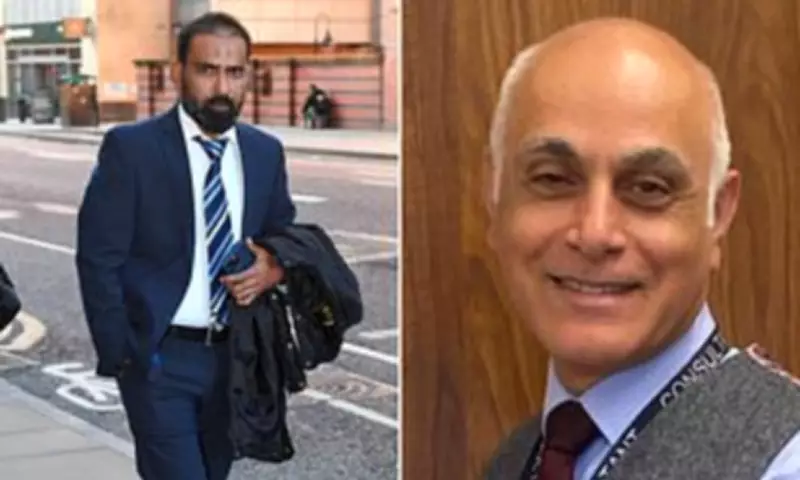
A General Practitioner based in Luton who allowed his driver to perform a breast examination on a young mother was permitted to continue practising after receiving only a formal warning from medical regulators. Dr Godfrey Nkanu Emiku, who worked for Hertfordshire Urgent Care, faced disciplinary action following the incident in February 2024, which was deemed 'unacceptable and inappropriate' and risked 'bringing the profession into disrepute'.
Incident Details and Regulatory Response
During a home visit, Dr Emiku observed the driver, who serves as a chaperone when needed but lacks clinical training, examining the woman who had recently given birth. The GP neither intervened to stop the examination nor conducted a proper assessment himself. The matter only emerged when the driver later informed a receptionist, who subsequently reported it.
Despite these clear failings, General Medical Council examiners concluded that Dr Emiku demonstrated 'insight' and did not present a future risk to patients, allowing him to retain his medical license. Hertfordshire Urgent Care confirmed it had investigated the event and stated that neither individual remains employed by the organisation.

Broader Pattern of Lenient Sanctions
This extraordinary case is one of 109 disciplinary actions over the past year involving doctors who were disciplined by either the GMC or the Medical Practitioners Tribunal Service. These tribunals handle allegations serious enough to potentially affect a doctor's fitness to practise. In many instances, practitioners received only warnings, enabling them to continue working within the NHS and private sectors despite breaching professional standards.
The cases span a wide range of misconduct, from errors in clinical judgment and patient safety risks to inappropriate behaviour and ethical violations. Some involve sexual harassment, criminal activities unrelated to medical practice, and significant clinical failures where patients were misdiagnosed or not referred for urgent treatment.
Notable Examples of Misconduct
In a separate incident, consultant anaesthetist Dr Suhail Anjum left a patient on the operating table to engage in sexual activity with a nurse in another room at Tameside Hospital in Greater Manchester. A colleague discovered them in a 'compromising position' and reported it. Dr Anjum returned to complete the surgery eight minutes later, and his fitness to practise was deemed unimpaired, resulting in only a warning.
Another case involved Dr Ali Shokouh-Amiri, who faced over 100 claims of inappropriate conduct while leading gynaecological oncology at Guernsey's Princess Elizabeth Hospital. Allegations included performing intimate examinations without a chaperone and hugging patients. He too received a warning and continues to practise as a consultant gynaecologist.
Cardiologist Dr Amer Ali Bilal Hamed was reprimanded for miming pulling a gun from his pocket and 'shooting' patients with his fingers. He also shouted at a patient and made comments about religion and gender stereotypes to junior staff at Torbay and South Devon NHS Foundation Trust.
Clinical Failures and Regulatory Appeals
Even in cases of serious clinical errors, doctors have escaped with minimal sanctions. Dr Susan Walker failed to correctly interpret an abnormal electrocardiogram result and did not urgently refer the patient to cardiology. Dr Rohini Priyanka Samaratunga misdiagnosed a patient during a telephone consultation and neglected to refer them to Accident and Emergency despite signs of significant dehydration.
The GMC has initiated High Court appeals against the MPTS decisions to issue only warnings in the cases of Dr Shokouh-Amiri and Dr Anjum. A spokesman emphasised that a warning is a serious formal finding that remains on a doctor's record for two years. The regulator stated it will appeal tribunal decisions that it believes do not sufficiently protect public safety.