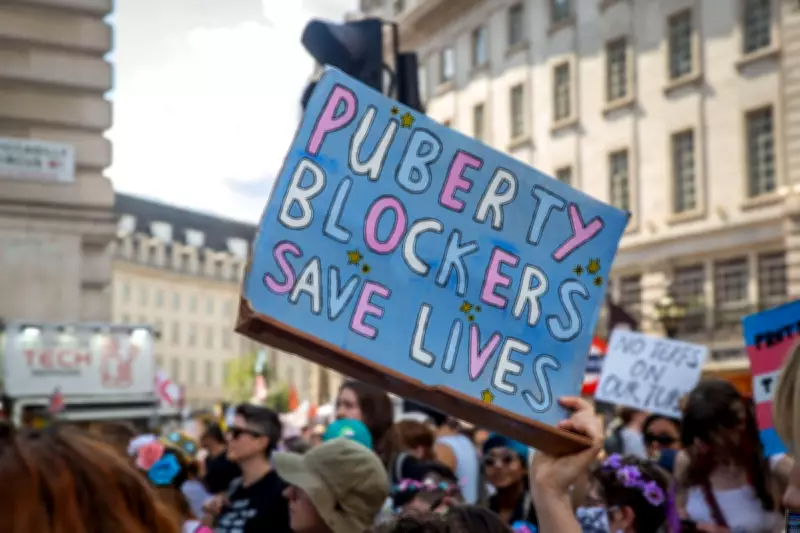
GP Warns: Puberty Blockers Trial Pause Risks Vital Evidence for Trans Youth
A landmark drugs trial involving 200 children was designed to address critical questions about administering puberty blockers to adolescents with gender dysphoria. However, rather than resolving the controversy, the study has become a flashpoint after being paused by the medical regulator due to safety concerns, according to Dr Joseph Freer, a GP and child health researcher.
NHS Policy Shifts and Evidence Gaps
Recently, NHS England announced an immediate halt to new prescriptions of cross-sex hormones for 16- and 17-year-olds questioning their gender, allowing only those already on medications to continue after a clinical review. This policy change follows a review that identified "very limited and weak" evidence regarding the benefits or harms of these hormones in this age group.
Dr Freer notes that the issue is not merely the weakness of existing evidence but the repeated obstruction of efforts to generate better data. This echoes the 2024 Cass review, which found the evidence for puberty blockers in young people with gender dysphoria to be "remarkably weak." While the Cass review advocated for a trial to strengthen evidence, NHS England's restrictions have effectively limited access to these medications for young people.

The Pathways Trial Controversy
The Pathways trial, conducted by King's College London, aimed to enrol 200 children aged 10 to 16 with gender dysphoria in a randomised study. Participants would either receive puberty blockers immediately or wait a year while continuing usual care, allowing researchers to isolate the medication's effects from broader clinical support.
However, the trial was paused amid concerns from the MHRA about "unquantified risks." This decision has sparked political debate, with figures like Wes Streeting expressing discomfort and Kemi Badenoch arguing it amounts to experimentation on children. The trial will not proceed until regulatory issues are resolved and is set for parliamentary debate later this month.
Historical Context and Institutional Patterns
Transgender healthcare has faced scepticism historically. In 1966, the Johns Hopkins Gender Identity Clinic pioneered gender-affirming care for adults, but a flawed 1979 study led to its closure, influencing similar shutdowns across the US. Dr Freer sees a parallel pattern emerging in the UK, where criticism of the Pathways trial often misunderstands clinical trial methodologies, such as control groups and informed consent, risking public misinformation.
He highlights that the regulator's insistence on raising the trial's minimum age to 14 limits the study's conclusions, noting that uncertainty in medicine is not tolerated uniformly and often depends on whose suffering is prioritised.
Alternative Data and Future Implications
Attention has shifted to analysing patient data from clinics like the Tavistock, which closed in 2024, involving 9,000 young people who received NHS care for gender dysphoria. However, Dr Freer argues that such observational data would not provide the high-quality evidence needed, as called for by Dr Cass.
Ultimately, the pause in the puberty blockers trial underscores broader challenges in balancing safety concerns with the urgent need for robust evidence to guide transgender healthcare for adolescents, potentially impacting long-term outcomes and policy decisions.