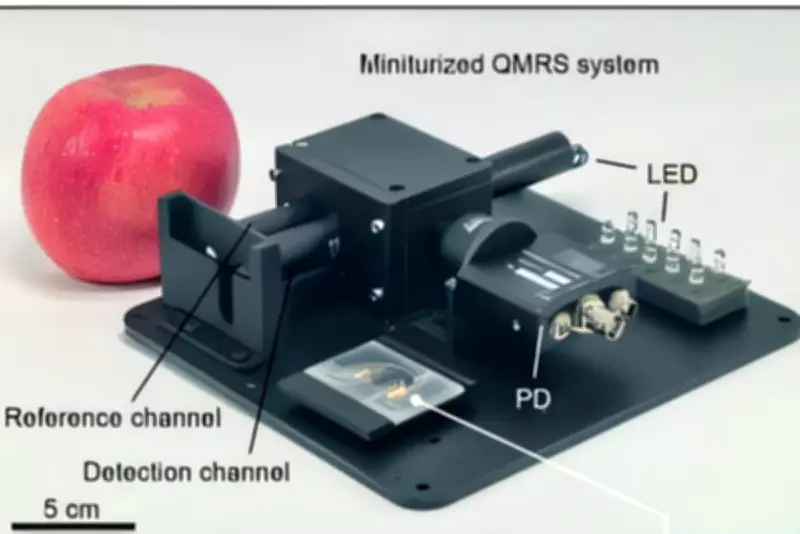
Chinese scientists have developed a groundbreaking handheld device capable of detecting early signs of lung cancer from just a single drop of blood. This innovation could revolutionize cancer diagnosis by making it more accessible and timely.
How the Device Works
Traditional cancer detection methods rely on bulky instruments that measure changes in light properties caused by sample molecules. These devices are typically confined to laboratories or hospitals due to their size and complexity. The new device, however, uses a different approach. It features a sensor that detects how molecules bend light rather than how they alter its properties. This is achieved through a 3D chip made from a specially engineered material that manipulates light in ways not found in nature.
Key Components and Manufacturing
The device comprises a light emitter, a light detector, and the specialized material, which is fabricated on 8-inch semiconductor wafers for mass production. This manufacturing process allows for low-cost, at-home detection systems, moving away from single laboratory devices. According to the researchers, writing in Science X Dialog, "This greatly simplifies the instrument design and makes the sensing process more compatible with portable diagnostic systems."

Testing and Accuracy
In tests, the device measured levels of vesicles—ultrasmall bubble-like components found in very low concentrations in blood and other body fluids. Analyzing vesicle concentration can aid in early disease diagnosis. The sensor detected these vesicles at extremely low concentrations within just 15 minutes, demonstrating a nearly 10,000-fold improvement in sensitivity compared to standard lab assays.
Further testing involved analyzing 170 human serum samples, where the device successfully distinguished early-stage lung cancer from healthy tissue. It achieved an accuracy of up to 95%, significantly higher than the approximately 75% accuracy of traditional ELISA lab methods.
Future Prospects
Despite these promising results, the researchers caution that there is "still a long path" before the prototype becomes a widely used medical device. They call for larger studies to validate the technology across more patient groups and note that further engineering is needed for routine clinical or home use. The study was published in the journal Nature Photonics.