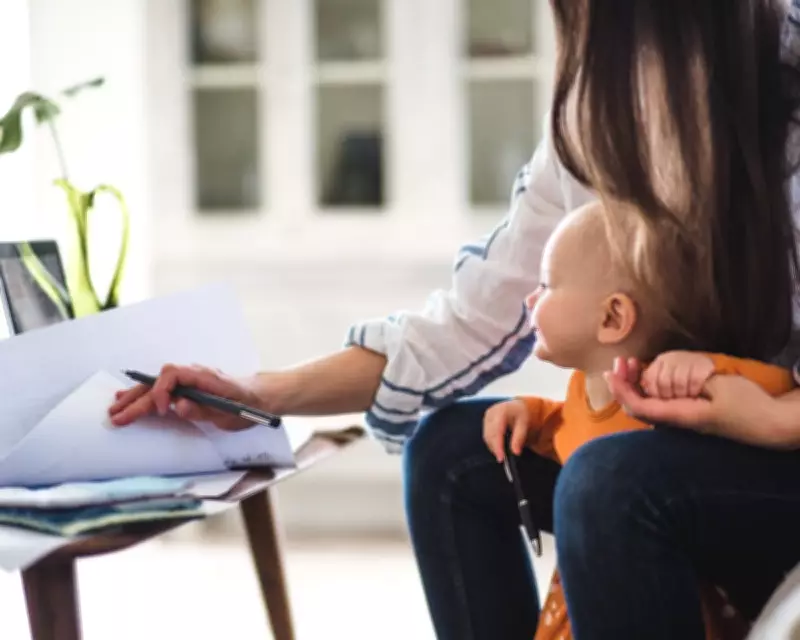
Becoming a parent is undoubtedly challenging. New parents often spend eight to twelve hours daily breastfeeding, preparing formula, and washing bottles, alongside carrying, singing, soothing, and managing sleep deprivation. These activities consume time that was once entirely at one's discretion, and the sudden constriction can be a shock.
However, after the necessary physical and mental healing, this new reality can foster creativity in using time. Parenthood can actually enhance productivity by leveraging gaps in the daily routine. This is not about capitalistic self-optimisation but rather a means to reclaim a sense of self. Caring for a baby can feel like a removal from one's previous identity, and writing can serve as an alleviation of this loss. Drafting a paragraph or a few sentences stimulates the mind and provides a creative outlet.
Swedish writer Johanne Lykke Naderehvandi, mother of four and author of three novels since 2020, says, “I write in the small pockets of time that exist in between everything else.” She finds that surrounding sounds, like a child playing or a baby breathing, remind her that work time is fleeting. Colombian writer Pilar Quintana wrote much of her novel The Bitch on her phone's notes app while breastfeeding or holding her baby. When she transferred the text to a document, she was surprised by the high word count achieved in those fragmented moments.

Holding a sleeping baby can feel like captivity—any movement risks waking the child. Yet this forced stillness can focus thoughts on creating fiction, an alternative reality under one's control. This method is the opposite of a serious routine or a room of one's own, but it carries a lightness. A full empty day for work can be daunting, but with a child, even thirty minutes of calm becomes a valuable window of usable time, provided one can ignore other tasks like cleaning or sleeping.
US writer Kate Zambreno, in her memoir The Light Room, describes writing during the pandemic with two small children: “As I’m writing the above passage, the baby wakes up on my lap.” She adds, “I put my nipple in her mouth so I can continue thinking.” Danish writer Olga Ravn's My Work explores the messiness of a new mother's thinking and the necessity of scribbling illegible notes. The fragmentary access to time affects the form of work emerging from parenthood—often composed of paragraphs, blocks of thoughts, and notes that reflect the experience itself.
However, early on, working can be impossible. A friend edited her book in the first three months of her second child's life by taking the sleeping baby to a café for two hours. Another parent expected similar productivity with a second child but found the birth too hard, the baby's sleep too irregular, and exhaustion too great. Parental productivity often comes at the expense of relaxation, alone time, or idle moments. As Zambreno notes, “There is nothing more foreclosed to her than such free time – with children, with students, with deadlines – and yet nothing more desired.” For parents with young children, time will never be an unused resource.