Scottish Hospitals Inquiry Delivers Damning Verdict on Government Oversight
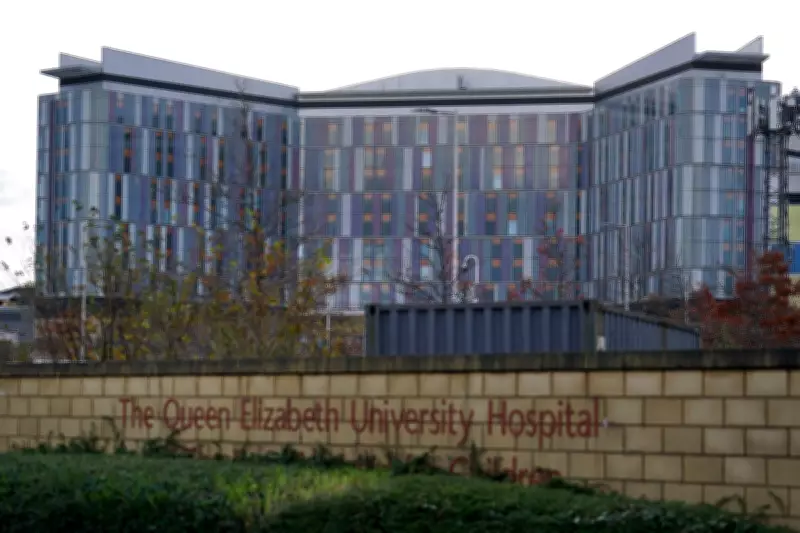
A supplementary note published by the Scottish Hospitals Inquiry has delivered a stark assessment of the measures taken by the Scottish Government to ensure the Queen Elizabeth University Hospital (QEUH) in Glasgow was constructed in line with expected technical standards. The document, issued by inquiry lawyers on Monday, concludes that these measures were "inadequate" for the task.
Ministers Unaware of Critical Issues Until Years After Opening
The note clarifies a critical timeline, stating that Scottish Government ministers did not become aware of significant problems with the hospital's water and ventilation systems until 2018 or 2019. The flagship facility had opened its doors in 2015. Consequently, the inquiry found that any governmental pressure exerted on NHS Greater Glasgow and Clyde (GGC) to complete the project on time and within budget was applied "in ignorance of these issues".
However, the inquiry was highly critical of the oversight framework itself. It stated that the Government had been "reliant" on the health board to self-report compliance issues and had incorrectly assumed NHS GGC possessed its own robust "mechanisms of approval" to guarantee all standards were met.

Systems Failed to Ensure Compliance with Best Practice
The inquiry scrutinised the Government's role in ensuring the hospital was built according to Scottish Health Technical Memoranda (SHTM), which outline best practice for healthcare facility design. The note's conclusion is unequivocal: "The Scottish Government systems to manage the procurement of this hospital it paid for were inadequate for the task of ensuring that it was built to technical standards the public and Scottish Government as funder should have expected."
It further revealed that the Government only understood in 2018-2019 that NHS GGC had decided, via an agreed ventilation derogation, to construct the hospital not in compliance with official guidance. The note also points out that senior management at NHS GGC were similarly unaware of the water system problems until 2018, due to resource and oversight failures.
Political Calls for Ministerial Scrutiny and Inquiry's Response
The publication of this note follows "developments" since the inquiry's last oral hearings in January 2026, including a letter from Scottish Labour leader Anas Sarwar. He urged the inquiry chair, Lord Brodie, to take evidence from key political figures from the period, such as Nicola Sturgeon, Shona Robison, and John Swinney, arguing their roles had not been sufficiently scrutinised.
Sarwar warned of a risk that ministers might use the final report to suggest problems were "contained entirely within the health board and could not have been prevented by Government intervention." The inquiry lawyers addressed this directly, stating it is not correct to claim the problems were solely within NHS GGC and beyond governmental prevention. However, they also noted that because ministers were unaware of the issues pre-opening, there was no "evidential basis" to hold further oral hearings on this specific point.
Labour Condemns 'Damning Indictment' of SNP Ministers
Scottish Labour's health spokesperson, Dame Jackie Baillie, described the note as a "damning indictment of SNP ministers' failure to protect patients and safeguard public money." She highlighted that the note found governmental oversight was "not adequate", there was a lack of ministerial scrutiny over the construction contract, and the relevant guidance was "too obscure and entirely ineffective".
"While this note is welcome, it is no substitute for the examination under oath that should have been carried out," Baillie stated. "After all the spin, this makes clear there was a serious failure of government oversight at the heart of this scandal."
The Scottish Hospitals Inquiry was established following infections linked to the design and construction of QEUH and the adjoining Royal Hospital for Children, including the tragic death of 10-year-old Milly Main in 2017. The Scottish Government has been approached for comment on the inquiry's latest findings.