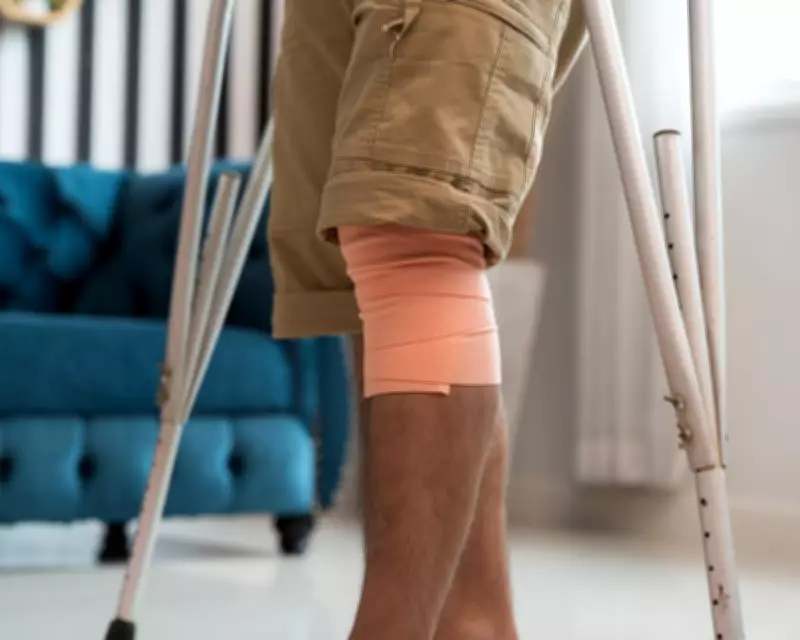
A common knee surgery for cartilage damage does not benefit patients and may lead to worse outcomes, according to a 10-year trial. The study tracked patients treated for a meniscus tear who underwent a partial meniscectomy, one of the most common orthopaedic surgeries. Their outcomes were compared with those who received sham surgery, where no procedure was performed.
Study Findings
Patients who had the surgery, which involves trimming frayed meniscus tissue, did not benefit and scored worse on measures of knee function, pain, and symptom progression. Lead researcher Prof Teppo Järvinen, an orthopaedic surgeon at the University of Helsinki, said: "Our findings suggest that this may be an example of a medical reversal, where a broadly used therapy proves ineffective or even harmful."
Understanding Meniscus Tears
The meniscus is a C-shaped rubbery cartilage pad in the knee joint that acts as a shock absorber. Tears can occur from sudden twisting during sports or gradually over time. MRI scans often reveal meniscal tears in healthy people without symptoms. "We now know that these meniscal tears are very frequently found in patients with no symptoms," said Järvinen. "Over the past 20 years, evidence suggests most MRI findings are purely incidental."

Trial Details
The study enrolled 146 patients aged 35 to 65 from five Finnish hospitals. About one-third had acute sports-related injuries, while two-thirds had gradual symptom onset. Patients were randomly assigned to meniscus surgery or sham surgery. After 10 years, the surgery group had poorer knee function, greater osteoarthritis progression, and higher likelihood of subsequent knee surgery.
Expert Commentary
Mark Bowditch, consultant knee surgeon and former president of the British Orthopaedic Association, said best practice guidelines now recommend waiting longer before surgery. "In the past, three-quarters of patients might have had surgery, but now it's closer to a quarter," he said. "We have an approach of 'think before you strike'. Surgery should not be the first step." However, he noted that some patients with mechanical catching sensations may still benefit.
Järvinen added that many independent non-orthopaedic organisations recommend discontinuing the procedure. "Still, the American Academy of Orthopaedic Surgeons and the British Association for Surgery of the Knee continue to endorse it," he said. "This illustrates how difficult it is to give up inefficient therapies." The findings are published in the New England Journal of Medicine.