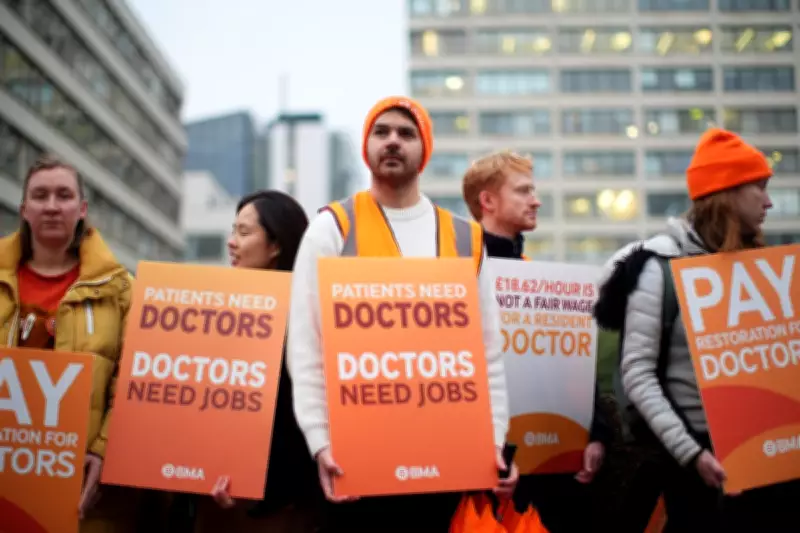
Health Minister Refuses to Rule Out Banning Doctors from Striking Amid Pay Dispute
A government minister has declined to rule out the possibility of banning doctors from taking industrial action, as a bitter pay dispute with the British Medical Association continues to escalate. Health minister Karin Smyth insisted that prohibiting doctors from striking is "not what we want to do" but acknowledged it remains "always a possibility" during a tense interview on Sky News.
Strike Action and Government Response
Doctors in England returned to work on Monday following a six-day walkout, marking the fifth round of industrial action by resident doctors since 2023. When questioned whether the government could ban resident doctors from striking in a manner similar to police officers, who are legally barred from industrial action under any circumstances, Ms Smyth responded cautiously.
"That is not what we want to do. We want to work with them," she stated. Pressed further on whether she could definitively rule out such a ban, the health minister added: "We don't want that to happen." However, when pushed repeatedly on the issue, Ms Smyth conceded: "Well, in a world that is always a possibility. That is not what we want to do, very firmly. So I'm very firm that we don't want to do that. We want to work with them."

Financial and Operational Impact
The minister also criticised striking doctors for "damaging improvement" to the National Health Service. "Doctors strikes are really regrettable and they do cost the service money," she emphasised. This comes as Health Secretary Wes Streeting argued that meeting the demands of resident doctors and the BMA would cost approximately £3 billion annually, a figure that could potentially rise to £30 billion per year if other healthcare staff received comparable pay increases.
Speaking at an Institute for Public Policy Research event on Monday, Mr Streeting warned that if "everyone was demanding the same" then "we would be breaking this country." He highlighted that the £300 million lost during six days of strike action could have been allocated elsewhere within the NHS budget.
BMA's Position and Counterarguments
The British Medical Association has accused the government of reneging on an offer made last month to resolve the protracted dispute. The union is demanding that pay be restored to 2008 levels, measured against retail price index inflation metrics. Dr Jack Fletcher, chairman of the BMA resident doctors committee, criticised the health secretary for "once again choosing hostile rhetoric in the media and outside of the negotiating room over and above getting round the table and speaking to us directly."
Dr Fletcher clarified: "We don't recognise the sums that he is using to cost pay restoration. Nor have we at any point said it would be done all in one go. We're keen to do a deal, and look forward to discussing this with the government as soon as possible."
Broader Context and Future Implications
The ongoing confrontation highlights deeper tensions within the NHS regarding workforce management and compensation structures. Mr Streeting used a maritime analogy to describe the situation: "I feel like we've turned the ship, the boat's going in the right direction, except some of the crew are trying to row in one direction while the rest of us are going in the other. You can't make progress that way."
He acknowledged that the NHS has shown improvement despite the resident doctors' strikes but argued that performance would have been significantly better with additional financial resources available for staff and services had the industrial action not occurred. The health secretary called for compromise and mutual understanding, stating: "So there needs to be a bit of compromise and bit of give and take here."
As negotiations remain stalled, the possibility of further industrial action looms, raising questions about patient care continuity and long-term workforce morale within the healthcare system.