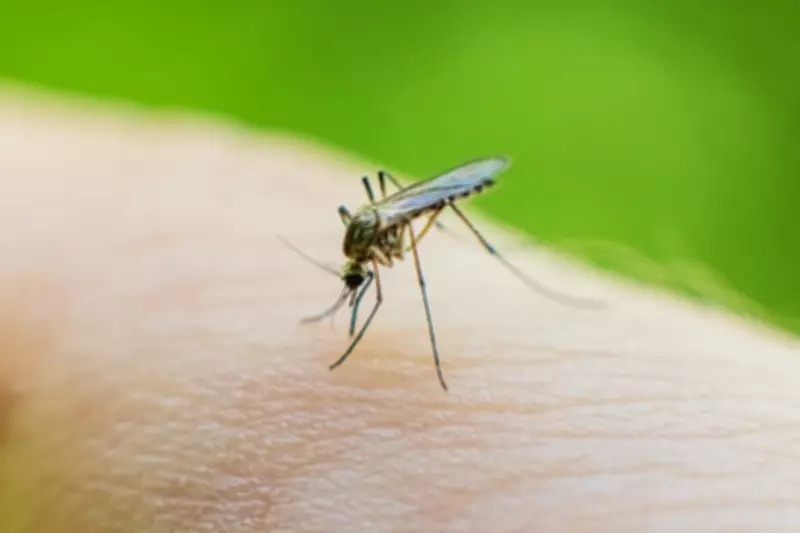
Mosquitoes Evolve Faster Than Insecticides, Raising Global Malaria Risk
The battle against infectious diseases is a relentless evolutionary arms race. As bacteria develop antibiotic resistance and viruses mutate to spread more efficiently, insects are also evolving formidable defences against the poisons designed to eliminate them. This rapid adaptation poses a significant threat to public health, particularly in the fight against malaria, which claims over 600,000 lives annually.
Since World War II, insecticides have been a cornerstone of malaria control, targeting Anopheles mosquitoes that carry the Plasmodium parasites responsible for the disease. However, new research indicates that mosquitoes are evolving counterstrategies at a pace that outstrips the effectiveness of these chemical weapons, endangering millions of people worldwide.
Insecticide Resistance Escalates Public Health Crisis
As an evolutionary geneticist, I study natural selection and adaptive evolution, where genetic variants that enhance survival replace less advantageous ones, driving species change. Anopheles mosquitoes are proving exceptionally adept at this process. In the mid-1990s, most African Anopheles were susceptible to pyrethroids, a class of insecticides derived from chrysanthemums. Control methods like insecticide-treated bed nets and indoor residual spraying have been instrumental, preventing over half a billion malaria cases between 2000 and 2015.

Today, however, mosquitoes from Ghana to Malawi can often survive insecticide concentrations ten times higher than previously lethal doses. This resistance is exacerbated by agricultural use of pyrethroids, which inadvertently exposes mosquitoes to these chemicals. In some African regions, Anopheles mosquitoes now show resistance to all four main insecticide classes used for malaria control, signalling a dire public health emergency.
Adaptation Spreads to Latin American Mosquitoes
While insecticide resistance in African mosquitoes is well-documented, less is known about its prevalence in other regions. In South America, the primary malaria vector is Anopheles darlingi, a species so distinct it might be classified as a different genus, Nyssorhynchus. Collaborating with researchers from eight countries, we analysed over 1,000 Anopheles darlingi genomes collected from 16 locations across Brazil and Colombia.
Our findings revealed extremely high genetic diversity in these mosquitoes—more than 20 times that of humans—indicating vast population sizes. Such a large gene pool enhances their ability to adapt to new challenges, as beneficial mutations are more likely to arise and spread without being eliminated by chance events. This contrasts sharply with species like bald eagles in the U.S., which could not evolve resistance to DDT and faced near-extinction due to smaller populations.
We detected signals of adaptive evolution in resistance-related genes of Anopheles darlingi over recent decades, highlighting their rapid response to environmental pressures.
Mosquitoes Develop Detoxification Mechanisms
Insecticides like pyrethroids and DDT target nerve cell channels, forcing them to remain open and causing paralysis and death. Insects can evolve resistance by altering these channels, but our research did not find this mechanism in Anopheles darlingi. Instead, resistance is emerging through a different pathway: a group of genes encoding enzymes known as P450, which break down toxic compounds.
High activity of P450 enzymes is a common resistance mechanism in other mosquitoes, and we observed that the same cluster of P450 genes has independently changed at least seven times across South America since insecticide use began in the mid-20th century. In French Guiana, a different set of P450 genes shows a similar evolutionary pattern, reinforcing the link between these enzymes and adaptation.
Experiments exposing mosquitoes to pyrethroids in sealed bottles confirmed that variations in P450 genes correlate with survival times. Interestingly, insecticide-heavy malaria campaigns in South America have been sporadic, suggesting that agricultural insecticides may be the primary driver of this evolution. The strongest evolutionary signals were detected in farming-intensive areas, pointing to indirect exposure as a key factor.

Advancing Vector Control Strategies
Despite advancements like new vaccines, mosquito control remains critical in reducing malaria incidence. Some countries are exploring gene drives—genetic modifications to reduce mosquito populations or their ability to carry Plasmodium. While promising, the relentless adaptability of mosquitoes could hinder these efforts.
To combat evolving resistance, researchers are refining methods to detect emerging insecticide resistance early. Genome-scale sequencing is essential for identifying new evolutionary responses. Minimising, rotating, and staggering pesticide use can help reduce selection pressure and thwart resistance development.
Success in this fight requires coordinated monitoring and proactive responses. Unlike evolution, humans possess the foresight to anticipate and adapt, offering hope in the ongoing struggle against mosquito-borne diseases.
About the author: Jacob A Tennessen is a Research Scientist in Immunology and Infectious Diseases at Harvard University. This article is republished from The Conversation under a Creative Commons license.