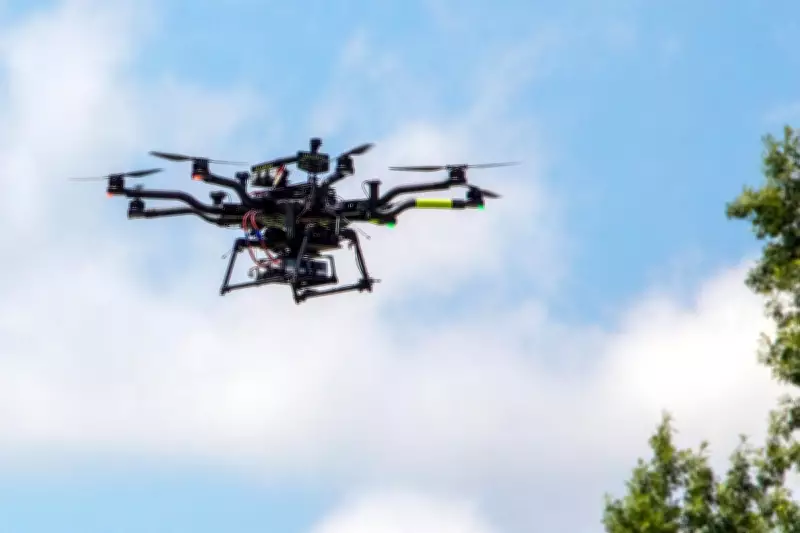
In a groundbreaking initiative that could transform emergency medical logistics, NASA is exploring the use of unmanned drones to deliver life-saving organs for transplants across the United States. The space agency, in partnership with the non-profit United Network for Organ Sharing (UNOS), has commenced early-phase testing to assess whether this technology can provide a faster and more reliable transportation method for donor organs.
The Urgent Need for Faster Organ Transport
Currently, more than 48,000 transplants are performed annually in the U.S., but federal data reveals a stark reality: thirteen people die each day while awaiting a transplant, and another individual is added to the national waiting list every eight minutes. Organs are often transported between cities via aircraft, yet ground logistics present significant challenges, leading to delays that can be fatal.
NASA's Testing Phases at Langley Research Center
NASA announced on Tuesday that it is evaluating the flight capabilities of its unmanned drones at the Langley Research Center in Virginia. Following this, researchers will transport an animal's organ to determine if it remains viable for donation after a flight. The focus is on ensuring tissue damage from blood flow issues is avoided and that temperature stability is maintained during transit.

Organs must be kept at a chilly temperature just above freezing, typically between 39 and 46 degrees Fahrenheit, using advanced cooling technology. John Koelling, director of the Aeronautics Research Directorate at Langley, expressed excitement about the project, stating, "The idea that something of worldwide benefit could be created in our own backyard is pretty exciting."
Challenges and Scrutiny in the Transplant System
While the potential benefits are immense, the tests raise questions about drone performance in inclement weather, patient acceptance of this delivery method, and other logistical hurdles. The U.S. transplant system has faced increased scrutiny in recent years, with the Trump administration implementing reforms after patient safety failures and reports of unethical practices.
A 2024 report even led to a spike in people revoking their organ donor registrations, highlighting public concerns. Despite this, NASA is proceeding cautiously, noting that it will be a long time before such a program could be piloted on a larger scale.
Building on Past Successes
In 2023, researchers at Langley conducted similar tests with self-piloting air taxis, which flew successfully. If early drone testing proves effective, NASA and UNOS may expand their partnership to evaluate operational feasibility and scalability. "If early drone testing proves successful, the partnership may expand to further evaluate operational feasibility and scalability, helping determine whether drones could become a viable option for time-critical medical deliveries," NASA stated.
This innovative approach could one day see NASA drones delivering organs to hospitals, potentially saving countless lives by reducing wait times and improving the efficiency of the transplant process.