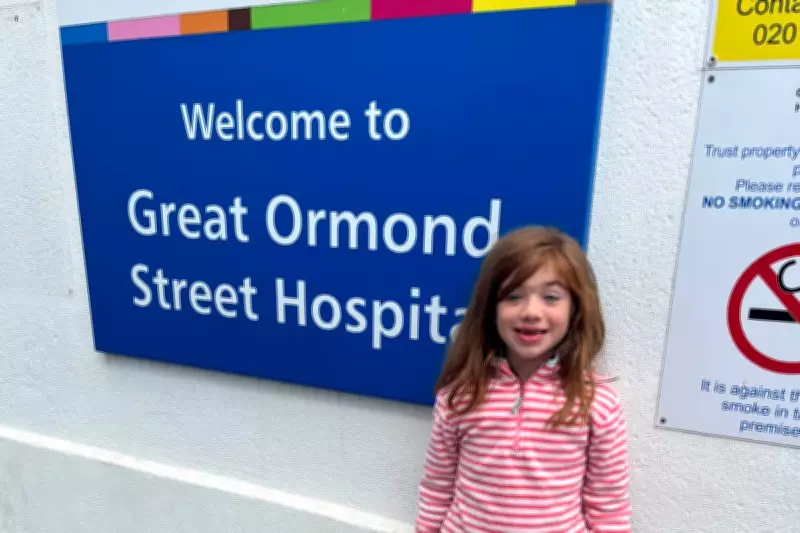
NHS Could Save Tens of Thousands Per Patient by Prescribing Tablets to Children
Children as young as four could soon be offered tablets instead of liquid medicine as part of a major NHS cost-cutting initiative that also promises significant quality-of-life improvements. Experts at Great Ormond Street Hospital have revealed that switching from liquid formulations to tablet alternatives for children with congenital hyperinsulinism could save the health service approximately £40,000 per patient each year.
Substantial Financial Savings Identified
The research focused specifically on diazoxide, a medication essential for managing congenital hyperinsulinism (CHI), a rare condition affecting approximately one in every 30,000 to 40,000 children. This disorder is characterised by elevated insulin levels that require regular, often multiple daily doses of medication to maintain stable blood sugar levels.
The cost difference between formulations is staggering: liquid diazoxide currently costs the NHS £15.50 per 50mg dose, while the tablet version costs just £1.15 for the same amount. This represents a cost reduction of over 90% for the medication alone, without considering additional savings from reduced administration time and resources.

Successful Transition for Young Patients
Researchers conducted a pilot project involving 19 patients aged seven to thirteen to determine whether children could successfully transition from liquid to tablet medication. The results were overwhelmingly positive, with patients not only managing the switch effectively but often expressing a clear preference for tablets over their previous liquid medicine.
"We monitored patients closely to ensure their blood glucose levels remained stable throughout the transition," explained researchers. "What surprised us was how many children actually preferred taking tablets once they had made the switch."
Real-Life Impact on Patients and Families
Eleven-year-old Jess Manktelow from Kent, who has been a Great Ormond Street patient since she was fifteen months old, participated in the project. Her experience highlights the practical benefits beyond mere cost savings.
"It has made a big difference taking medicine that doesn't taste horrible," Jess explained. "There were times where I didn't want to take it because of the taste. It makes things very easy for me now - I'm able to do it myself and it doesn't take up as much time at school or when I'm doing things I like."
Her mother, Steph Manktelow, added: "We were so excited when the team told us we could switch to the diazoxide tablets. We'd been hoping for some time - we knew it was a better solution and would allow Jess to have control over her condition, and that is very important."
Quality of Life Improvements Beyond Expectations
Kate Morgan, the clinical nurse specialist at Great Ormond Street who co-led the project, expressed surprise at the scale of quality-of-life improvements observed.
"We knew the potential this trial had for savings, but the scale of the quality-of-life improvements for children and their families we are seeing is something we didn't anticipate," Morgan stated. "Children are so much more than their diagnoses - they have full lives and families, and their illnesses affect everyone, so it is very important we do all we can to make simple, positive changes."
Expanding Research to Younger Children
Following the success of the initial study with children aged seven and above, hospital academics are now planning further assessments to determine if even younger patients - specifically those as young as four years old - can successfully make the switch to the more cost-effective tablet alternative.
Dr. Antonia Dastamani, consultant of paediatric endocrinology and diabetes at Great Ormond Street and co-lead of the project, highlighted an important insight gained from the research.
"It is common practice to ask patients how they're finding treatment, or how they feel when they have injections, but we never thought to ask patients about the taste of medicines and whether they like them," Dr. Dastamani explained. "This has shed a light on key questions we now want to ask children and young people about their care and treatment so they can be more involved and have more independence in their lives."

Broader Implications for NHS Prescribing
The findings suggest potential for similar cost-saving and quality-of-life improvements across other areas of paediatric medicine where liquid formulations are currently standard. The research demonstrates that children's preferences and capabilities regarding medication administration have been historically underestimated, with significant consequences for both NHS finances and patient experience.
As the NHS continues to face financial pressures, this research provides a compelling case for re-evaluating standard prescribing practices for paediatric patients, particularly for chronic conditions requiring long-term medication management.