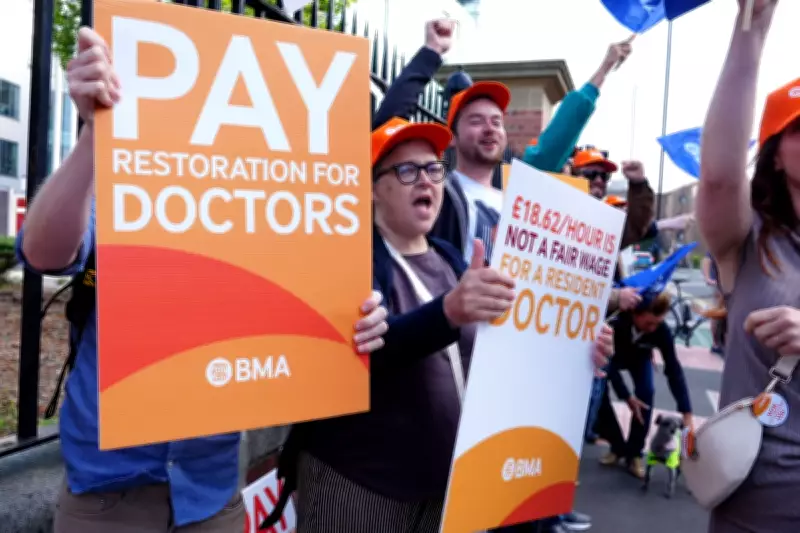
NHS Calls for Normal Patient Attendance Amid Challenging Six-Day Doctor Strike
The NHS is strongly urging patients not to delay seeking necessary medical care as tens of thousands of resident doctors in England prepare to embark on a "difficult" six-day walkout beginning Tuesday. This industrial action follows immediately after the Easter weekend, with health officials warning of particular challenges due to the shorter notice period.
Health Service Prepares for Disruption
NHS England has confirmed that hospital teams across the country will be working diligently to minimise disruption for patients during what is expected to be a particularly challenging period. The strikes proceed after the Government withdrew a key component of its offer to doctors, specifically the promise of 1,000 additional training places, which the Department of Health and Social Care declared was no longer financially or operationally feasible.
Professor Ramani Moonesinghe, national clinical director for critical and perioperative care at NHS England, emphasised: "Staff across the NHS will be doing everything they can this week to keep patients safe and ensure people can continue to get the care they need. We know this round of industrial action will be difficult, coming straight after the Easter weekend, but patients should come forward as normal and attend any appointments unless they are contacted otherwise."

Official Guidance for Patients
During the six-day industrial action, patients are advised to:
- Attend all planned appointments unless specifically contacted to reschedule
- Call 999 or attend Accident and Emergency departments for life-threatening emergencies
- Use the NHS 111 online service first for urgent but non-life-threatening medical needs
Professor Moonesinghe reinforced: "The NHS remains open for you this week – as ever, please call 999 or come to A&E in an emergency, and use 111 online first if you need urgent but not life-threatening help."
Political Tensions and Doctor Frustrations
Health Secretary Wes Streeting expressed disappointment at the British Medical Association's decision to proceed with strikes, stating: "It is disappointing for patients and staff alike that the BMA has decided to press ahead with strikes this week, despite the deal we put to them which would have seen resident doctors 35.2% better off, on average, than they were four years ago."
Mr Streeting added that his focus and that of NHS leaders was now on protecting patients and staff by minimising disruption to health services. He noted that during December strikes, the NHS delivered almost 95% of planned activity and reassured patients that services would be available when needed.
However, Dr Jack Fletcher, chairman of the British Medical Association's resident doctors committee, countered that resident doctors "are as keen as (Wes Streeting) is to bring an end to the strikes." He criticised the Government for watering down a potential deal and removing funding for training posts.
"The Health Secretary may well be 'disappointed' but he is failing to acknowledge a deal was taking shape until his Government quietly watered it down, reducing the money on the table, then stretching what was left over too many years to make it worthwhile," Dr Fletcher stated.
Broader Implications for Healthcare
The dispute highlights ongoing tensions between medical professionals and the Government over pay, working conditions, and long-term workforce planning. Dr Fletcher emphasised that while senior doctors would be covering for striking colleagues, many were already exhausted and demoralised.
"We know that strikes bring disruption – despite NHS England's assurances that it can maintain the vast majority of services running for patients during times of industrial action," he said. "We are willing to bring an end to industrial action, but we are not seeing that willingness from Government so far."
The NHS continues to stress that emergency services will remain operational throughout the industrial action, with contingency plans in place to manage the expected increase in pressure on healthcare services during this challenging period.