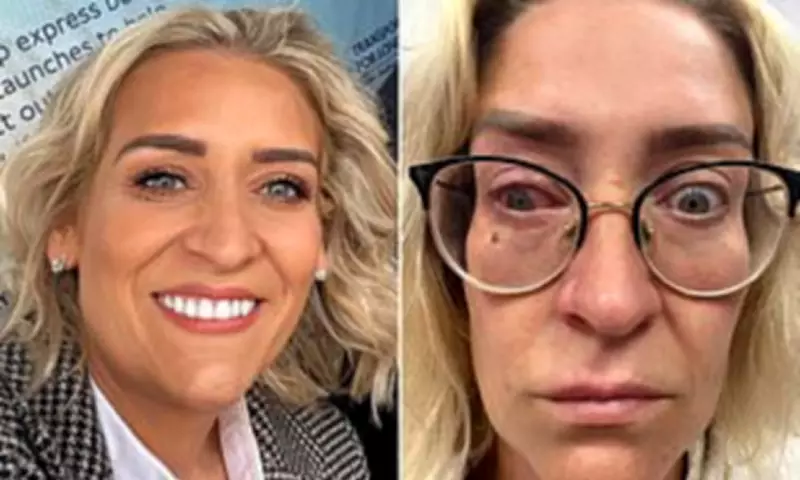
As a dedicated nurse, Katie Carrington was accustomed to caring for patients who had jeopardised their health through avoidable errors. Yet, this professional experience did not shield the 36-year-old mother-of-four from making a perilous personal mistake with devastating consequences.
A Dangerous Habit With Daily Lenses
Ms Carrington, who resides in Romford, Essex, was first prescribed glasses at age sixteen and began using daily disposable contact lenses a year later. Over time, she developed a hazardous routine of not removing her lenses after social evenings, which gradually escalated into wearing the same pair for stretches of up to two weeks.
"I was really foolish—I completely misused my contact lenses," she admitted reflectively. "Initially, I'd forget to take them out after parties, but it soon became normal to wear them for excessive periods. Sometimes, I'd be terrible and keep them in for a week or two, only changing them when my eyes felt extremely dry. It was purely for convenience; my eyesight is quite poor, and I hated waking up unable to see. Looking back, I genuinely don't understand why I persisted with such risky behaviour."

The Night Everything Changed
In August 2025, the repercussions of her long-term negligence abruptly manifested. While lying in bed, Ms Carrington experienced intense pounding in her eyes accompanied by profuse watering. She removed her lenses but dismissed the severity, attempting to sleep through the discomfort.
The situation deteriorated overnight, and by morning, she awoke to "unbearable" pain that she described as surpassing the agony of childbirth. Her right eye was completely sightless, with a sensation akin to being "stabbed in the eye." After hastily wrapping a scarf around her head, her husband drove her to Moorfields Eye Hospital in London for emergency treatment.
Medical Crisis and Uncertainty
At the hospital, doctors conducted traumatic procedures, scraping her eyeballs to test for microorganisms that might have caused the sudden blindness. They diagnosed a severe infection, likely triggered by bacteria trapped behind the contact lenses, which had led to the acute vision loss.
Medical staff were uncertain if her sight would ever return. Ms Carrington was fitted with an eyepatch and prescribed a rigorous regimen of hourly eye drops, even throughout the night, for forty-eight hours. She required weekly check-ups at Moorfields to monitor any potential improvement in her condition.
"I was utterly depressed, thinking I might never see my children grow up," she recalled of the harrowing period. "Doctors couldn't guarantee my vision would recover. The uncertainty was devastating."
Struggling With Lost Independence
The stressed mother took a full month off work to recuperate, during which she grappled with profound depression and a loss of independence. Simple daily tasks became monumental challenges; preparing a bottle for her baby often resulted in spills, and kitchen activities required intense concentration to avoid accidents.
"Even though it was only one eye, I felt all my autonomy had been stripped away," she explained. "I considered leaving my job because I couldn't drive, and I panicked about adapting to a partially sighted life. Spilling things made me feel it was my fault, as I simply couldn't see what I was doing."
Gradual Recovery and a Lifelong Vow
Fortunately, after five anxious weeks, Ms Carrington's sight gradually returned to normal. Doctors confirmed the blindness was directly caused by bacterial infection due to prolonged lens wear. Although medical professionals have advised she could safely wear contact lenses again, she has made a firm resolution never to do so.
"It's absolutely not worth the risk," she stated emphatically. "If just one person learns from my story and avoids leaving lenses in too long, then I feel I've made a difference. Thank the Lord I can see again, but I will never wear contacts again. It was my fault, and I take full accountability, but I was unaware of the severe risks. I urge all contact lens wearers to educate themselves properly. I thought it would never happen to me because I got away with it for years, but now my focus is entirely on looking after myself."

Her powerful testimony serves as a stark warning about the critical importance of adhering to recommended contact lens hygiene and usage guidelines to prevent potentially life-altering eye injuries.