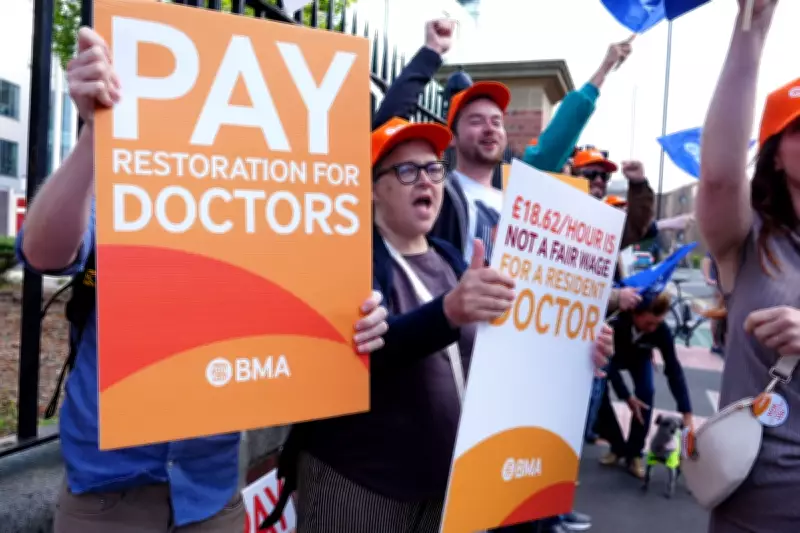
The British Medical Association (BMA) has announced that resident doctors in England will embark on a six-day strike, commencing just after the Easter holiday period. This latest round of industrial action is scheduled to begin at 7am on April 7 and continue until 6.59am on April 13, intensifying the long-standing conflict over pay and employment conditions within the National Health Service.
Government Urged to Act Swiftly to Avert Strikes
The doctors' union has issued a stark warning to the Government, urging immediate intervention to prevent the strikes from proceeding. This call to action follows the recent recommendation by the Doctors' and Dentists' Review Body (DDRB), which proposed a 3.5% pay uplift for doctors. However, the BMA has expressed significant dissatisfaction with this proposal, arguing that it fails to address the core issues at hand.
Negotiations Stalled Over Pay Restoration Concerns
Jack Fletcher, chairman of the BMA Resident Doctors Committee, detailed the breakdown in negotiations, stating that progress had been made until the Government altered the terms in recent weeks. He explained that the proposed funding for pay increases was unexpectedly spread over three years, a move that the union views as inadequate.

"We have been negotiating in good faith for weeks to try and end the simultaneous pay and jobs crises for resident doctors," Fletcher said. "Frustratingly we had been making good progress right up until the point, in the last two weeks, when the Government began to shift the goalposts."
Fletcher emphasized that the union's primary objective is pay restoration, and any deal that does not substantially advance this goal is unacceptable. He highlighted the broader economic context, noting that global events have led to projections of sustained high inflation, which further erodes doctors' real-term earnings.
Impact on NHS Workforce and Patient Care
The BMA leader also pointed to the ongoing exodus of doctors leaving the UK for better opportunities abroad, underscoring the urgency of resolving the pay dispute. "We are simply not going to put an offer to doctors that risks locking in further erosion of pay at a time when doctors continue to leave the UK for other countries," he asserted.
Despite the strike announcement, Fletcher reiterated the union's willingness to continue negotiations, provided the Government returns to the constructive spirit of earlier talks. "No strikes need to happen, but Government will need to act fast to prevent them," he concluded.
Government Response and Patient Safety Measures
In response to the impending industrial action, Health Secretary Wes Streeting addressed the issue during a speech in east London earlier on Wednesday. He outlined the Government's approach to managing strikes, contrasting it with previous administrations.
"Under our predecessors, there was an acceptance that when doctors go on strike, planned operations just get cancelled, as if these were pain-free, consequence-free cancellations for patients," Streeting said. "We didn't accept that and we made the safety case for maintaining planned care, keeping 95% of activity going, even during strikes."
This statement highlights the Government's commitment to minimizing disruption to patient services during periods of industrial action, though the effectiveness of such measures during a six-day strike remains to be seen.
Ongoing Dialogue and Future Implications
The Department of Health and Social Care has been approached for further comment on the situation. The strike announcement comes at a critical juncture for the NHS, with resident doctors playing a vital role in frontline healthcare delivery. The extended duration of this industrial action could have significant repercussions for hospital operations and patient waiting lists across England.
As the April 7 start date approaches, all eyes will be on whether last-minute negotiations can avert the strike or if the healthcare system must brace for another period of disruption. The outcome of this dispute may set a precedent for future pay negotiations within the NHS and influence broader public sector wage discussions.