The Growing Burden of America's Sandwich Generation
Across the United States, a silent crisis is unfolding as millions of mid-life individuals find themselves squeezed between the demands of caring for aging parents and raising their own children. Known as the "sandwich generation," these caregivers now number approximately 16 million Americans, with projections indicating significant growth in the coming decades.
Personal Stories of Sacrifice and Struggle
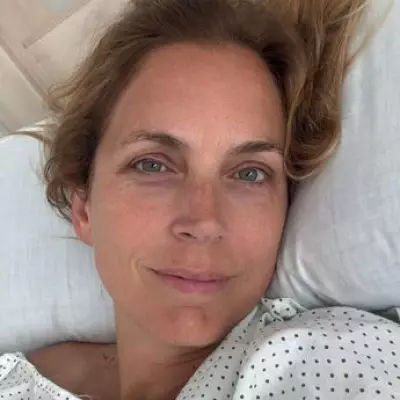
Tara Hastings, a 46-year-old meteorologist from Indianapolis, embodies this challenging reality. Every week, she brings lunch to her 70-year-old father Steve, who resides in an assisted living facility and suffers from Alzheimer's disease. "He can no longer feed himself, so I feed him lunch," Hastings revealed. "I don't remember the last time he said my name."
Despite working full-time while caring for her teenage stepdaughter and two young children, Hastings moved from Ohio in 2019 to be closer to her declining father. "Is it hard? Absolutely. Are there tears? Absolutely," she confessed. "But you just do it."

Vanessa Louise Carter, 47, experienced similar pressures while caring for both parents diagnosed with Alzheimer's while raising her seven-year-old son in California. "There was sort of a painful repetition of history," Carter recalled, noting how she had watched her mother care for her grandmother with the same condition decades earlier.
A National Crisis in the Making
Women shoulder the majority of America's caregiving burden, comprising nearly two-thirds of the nation's 63 million caregivers according to AARP research. The demographic profile is shifting dramatically, with Millennials and Generation Z already accounting for 29 percent of caregivers.
The Urban Institute projects a 20 percent increase in Americans over 65 within the next two decades, reaching 80 million people. Meanwhile, Alzheimer's cases are expected to nearly double to 13 million by 2060 according to the Alzheimer's Association.
"By 2030, when all Baby Boomers will be 65 or older, a perfect storm is brewing," warns the San Diego Senior Community Foundation. "A severe lack of paid caregivers colliding with millions of employees being forced to quit their careers to become unpaid family caregivers themselves."
The Financial Crunch of Caregiving
The economic realities are staggering. Memory care facilities can cost up to $200,000 annually - equivalent to "buying a new Porsche every year" according to Neal Shah, CEO of senior care platform CareYaya. Yet most Americans have less than $1,000 saved for retirement, as revealed by the National Institute on Retirement Security.
Only 7.5 million Americans possess long-term care insurance, leaving families to shoulder enormous costs. Nearly 40 percent of family caregivers working more than 20 hours weekly report that inflation makes expenses increasingly unaffordable according to AARP data.
Debt has become a common consequence, with 24 percent of family caregivers exhausting personal savings and 23 percent accumulating debt from caregiving expenses. Younger caregivers from Generation Z face particular challenges, dealing with both caregiving costs and substantial student debt.
Political and Celebrity Attention
The issue has gained attention from Washington to Hollywood. New Jersey Senator Andy Kim, 43, shared his experience caring for his father with Alzheimer's while raising two young sons. "We are the richest, most powerful country in the world. It shouldn't have to be this hard for people to get care when their family needs it," he stated.
Celebrities like Emma Heming Willis, caring for husband Bruce Willis with frontotemporal dementia while raising two daughters, and actress Laura Dern, who cared for her mother with pulmonary fibrosis, have brought visibility to caregiving challenges.
Inadequate Support Systems
America's family caregivers provide an estimated $600 billion in unpaid labor according to the National Alliance for Caregiving, performing everything from housework to medical coordination. Yet support systems remain fragmented and insufficient.

While Medicaid programs in some states offer limited compensation for caregivers at $10-$35 hourly with strict hour limits, only 13 states and Washington D.C. provide paid family leave programs for caregivers. Efforts to expand such programs in Pennsylvania and Minnesota highlight growing recognition of the crisis.
Vanessa Carter, reflecting on her experience, issued a stark warning: "We're really setting ourselves up for quite a disaster in the coming decades. This country will have to change the way that we live and who we live with and how we care for each other."
With caregiver burnout affecting over 60 percent of those providing care according to Cleveland Clinic research, and costs continuing to outpace inflation, America faces fundamental questions about how to support the millions caught in the caregiving squeeze.