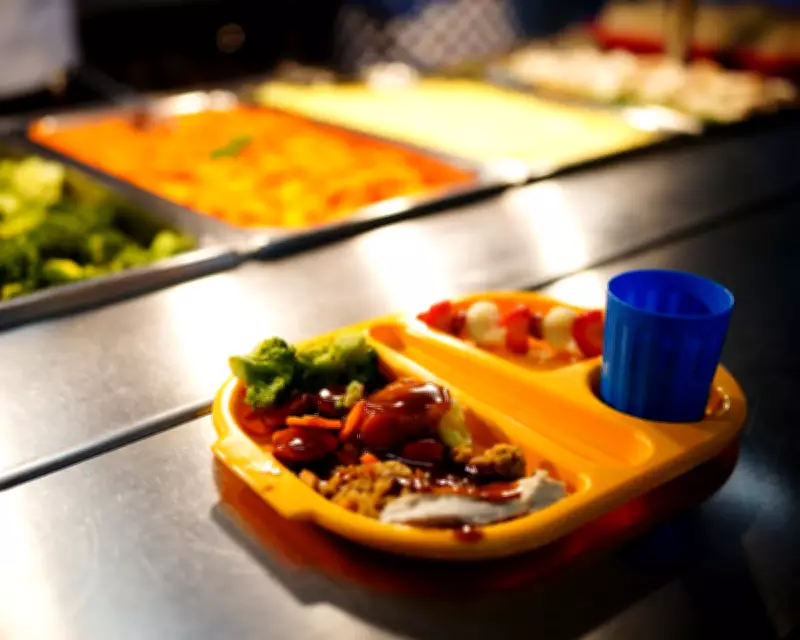
The UK government's push for healthier school meals in England, which includes more lentils and pulses and fewer chicken nuggets, could have a "devastating effect" on catering services, according to school meal providers. The proposals, the first major update to school food standards in 13 years, aim to increase pupils' fibre intake by limiting desserts and reducing "grab-and-go" items like pizzas and sausage rolls.
Caterers Warn of Unintended Consequences
Brad Pearce, chair of The School Food People, a trade body representing school meal providers, warned that the changes could drive up costs and push students to seek junk food elsewhere. "We think there will be unintended consequences of secondary school students who buy food and drink on the way to school, or leave schools at lunchtime and buy it on the high street," he said. "That has a devastating effect on the viability of our services in terms of revenue, and payment for staff and food and ingredients."
Tracey Smith, chief executive of Sodexo's school and university business, noted that caterers already struggle to balance nutrition with what children find appealing. "What we don't want is children to start bringing in packed lunches that aren't balanced because they think they do not like the school food or that they cannot afford it," she said.

Proposed Changes and Timeline
Announced earlier this month, the proposals include making it mandatory for all school puddings to contain at least 50% fruit by September 2027. Deep-fried items such as battered fish and chicken nuggets will be banned. Lentils are expected to replace meat in some meals as a healthier, nutritious alternative, but suppliers warn that since most lentils are imported, costs could rise further.
Gavin Squires, a business development controller at Bidfood, which supplies school caterers, said stricter demands would add strain on an already stretched supply chain. "Changes to menus and product specifications, alongside reduced menu flexibility in certain areas, could have implications for sourcing, availability and stock management," he said.
Financial Pressures on Caterers
The average cost of a school lunch in England was £3.16 last year, but caterers say prices are primarily influenced by government funding. The government spends £1.5bn annually to provide free school meals for about 3.4 million children, a figure expected to rise from September when all households on universal credit become eligible, extending access to over 500,000 children.
Elevated inflation and the war in the Middle East have increased pressure on caterers, who operate on low profit margins. Compass Group has a net profit margin of only 4%, Sodexo 2.8%, and Bidfood about 3%. Members of The School Food People have reported 50-70% inflation in food prices over the past three years, according to Pearce.
"The pressures from the increase in the UK living wage and the London living wage are huge," he said. "Plus you have the war in the Middle East and increases in fuel costs; it is adding pressure on what is already a very difficult situation."
Charity Calls for More Funding
Stephanie Slater, chief executive of the charity School Food Matters, argued that healthier food standards do not necessarily mean higher costs. "There is a real squeeze at the moment with food inflation and labour costs," she said. "But it is a broader issue that it is less about food standards and more about the fact that the system needs more funding."
The Department for Education is consulting on its proposals until 12 June, with plans for the new rules to come into force next year. The changes come amid rising concerns about children's health; NHS data from January 2024 showed that 24% of nursery and primary schoolchildren were overweight or living with obesity.
This is the first overhaul of school meals since 2012, when the government-commissioned School Food Plan was written by Henry Dimbleby and John Vincent. A Department for Education spokesperson said the new standards were "thoroughly tested with caterers, schools and nutritional experts to make sure they are deliverable, realistic and don't have detrimental knock-on effects." They added that a phased approach would give caterers time to adapt.