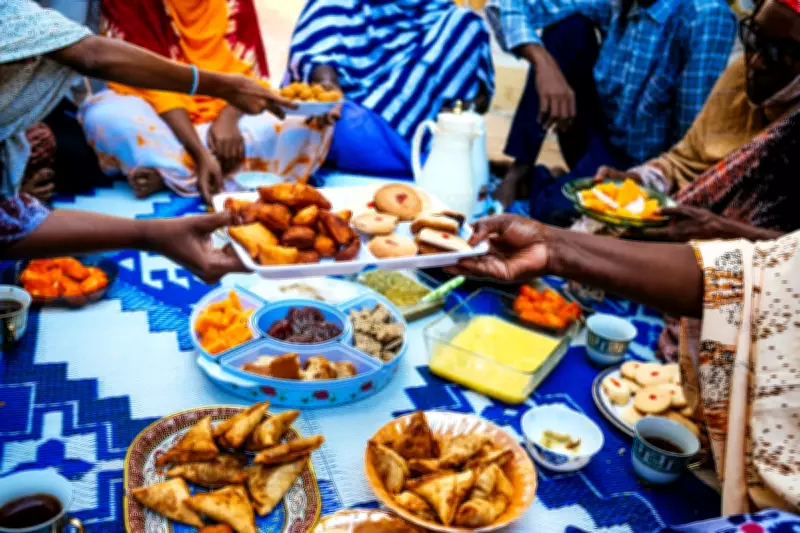
Ifrah F Ahmed's debut cookbook, Soomaaliya: Food, Memory and Migration, serves as a love letter to Somali cuisine, history, and its people. Released in March, it is one of the few cookbooks to explore Somali food and how conflict has reshaped it across the diaspora.
A Culinary Journey Through History
On a video call from Brooklyn, between stops on her book tour, Ahmed drinks ginger-root tea, a scent that transports her to her childhood kitchen where her mother often baked aromatic cardamom cake. 'That's a core childhood memory for me,' she says. For Ahmed, food is not just sustenance; it is memory, inheritance, and a record—'Somali history on a plate,' as she puts it.
The book features 75 recipes tracing Somali cuisine through trade, colonialism, war, and migration. Ancient Somalia was a key stop on the Silk Road, earning the nickname 'the land of cinnamon' for its spice production. Pastoral traditions placed importance on camel milk, often called 'white gold,' and meat. Italian colonization introduced pasta, while European rule saw banana farming profits funneled into colonial networks. Despite global influences, Somali cuisine remains less known than that of neighboring Ethiopia, though they share some dishes.

Diaspora and Adaptation
Ahmed, born in Mogadishu and relocated to Seattle in 1996 after civil war, conceived the book a decade ago while studying law in New York. Noticing the scarcity of written resources on Somali cuisine, she embarked on research that included interviewing elders, family cooks, digital archives, YouTube videos, and audio recordings of Somali women discussing recipes. 'If I didn't know how to make a recipe, I'd have my mum call someone over,' she recalls.
The book highlights figures like Barlin Ali, author of Somali Cuisine (2007), and contemporary chefs such as Jamal Hashi, Hamda Issa-Salwe, and Liban Ibrahim. Ahmed emphasizes that while her name is on the cover, it was a communal effort to tell other people's stories through food.
Challenging Simplifications
Ahmed aims to disrupt the idea of a singular Somali cuisine, especially in the diaspora where dishes like bariis iskukaris often stand in for an entire food culture. She includes recipes representative of all regions where Somali people live. Migration influences foodways structurally—camel meat and milk are hard to source in Europe and North America, leading to adaptations like Juba Farms in Kansas City, which raises camels and bottles their milk.
Somali people reinvent dishes without abandoning their essence. The sambusa, for instance, varies regionally: in the Pacific north-west, salmon sambusas have emerged, while tortillas sometimes replace traditional wrappers. 'That's another example of the way migration impacts food traditions,' Ahmed notes.
Resistance and Resilience
The book arrives amid heavy politicization of immigration in the US. Donald Trump has targeted Somali Americans, and protesters in Minneapolis have handed out sambusas alongside rights pamphlets. Ahmed acknowledges the timeliness but insists the book is for Somali people first. 'I don't really feel the pressure of needing to prove anything to anyone,' she says.
Ultimately, Soomaaliya is a book about pleasure—fragrant rice, fried fish, spiced tea, and cardamom cake. Its mission is to preserve Somali culinary heritage for those to whom it belongs, offering younger Somalis a stronger sense of cultural grounding.