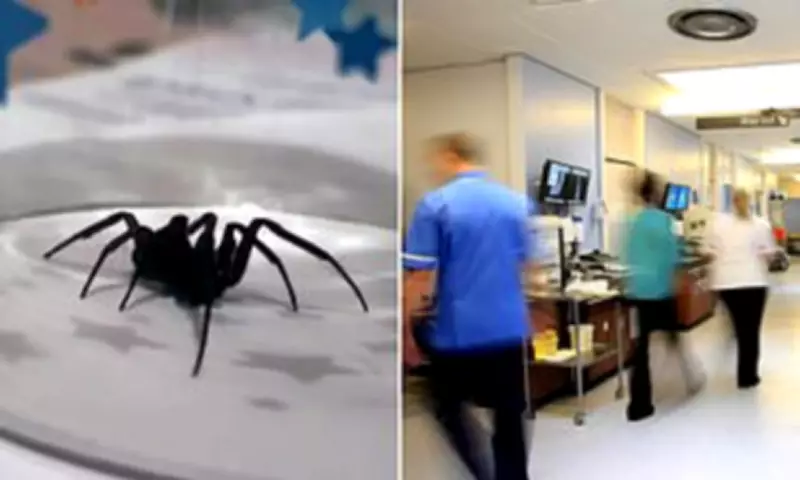
Spider Bite Hospital Admissions in England More Than Double Over Decade
Hospital admissions for spider bites in England have surged, more than doubling across the last ten years, amid what experts describe as an 'explosion' in the population of noble false widow spiders. Provisional NHS data reveals a stark increase, with 100 hospital admissions recorded in 2025 due to 'contact with or toxic effect of spiders', up from just 47 admissions in 2015.
Rise Linked to Noble False Widow Spider
This dramatic rise is closely associated with the expanding presence of the noble false widow spider, a species originating from Madeira and the Canary Islands, first reported in southern England as far back as 1879. Oxford University ecologist Clive Hambler has labelled this spider 'the most dangerous spider in Britain', noting that its increasing prevalence signals the end of treating spiders as 'benign in Britain'.
'I think if you were going back 50 years, then there would have been hardly any consequences from spider bites in Britain,' Mr Hambler stated. 'The incidents of severe bites from spiders in Britain will have increased, as this species became hugely more abundant, particularly in the south.'

Hospital Admission Trends and Data
The escalation in admissions has been rapid. In 2021, 43 people were hospitalised due to spider bites, a figure that jumped to 95 by 2022. Admissions remained high in subsequent years, with 91 cases reported in both 2023 and 2024, before reaching 100 in 2025. Of these 2025 admissions, 73 entered through A&E departments, nearly double the 38 A&E admissions recorded in 2015.
Mr Hambler highlighted that encounters with noble false widows are becoming commonplace, even noting sightings in the gardens of Buckingham Palace. While bites typically cause pain and itching, he warned of more severe risks due to bacteria carried by the spiders, which can potentially lead to amputation, sepsis, and death.
Expert Perspectives on the Surge
Dr Michael Dougan, a zoologist at the University of Galway, described the figures as 'interesting' but 'not surprising', attributing the trend primarily to the 'explosion in the population of noble false widow'. He explained that these spiders prefer living in and around houses in the UK and Ireland, increasing human contact.
However, Dr Dougan cautioned that media coverage might lead to misidentification of bites, noting that a noble false widow bite is intensely painful, comparable to a wasp sting. 'Essentially, when you do not see the spider really bite or capture the spider and you say that you haven't felt any pain - then it's most likely not a spider,' he said. Despite the rise, he emphasised that 100 cases in England remains a relatively minor amount, as spiders are 'not aggressive animals' and do not 'particularly try to bite'.
Public Advice and Balanced Approach
Experts urge a measured response. Mr Hambler advised a 'balanced' approach, raising awareness without causing alarm. 'I think spiders are wonderful things and they're very important in ecosystems, but you now need to treat spiders in Britain as you might in many other parts of the world - as something to be very respectful of,' he said. He added that while arachnophobia is a concern, the real danger lies in the toxic effects of bites.
Echoing this, Professor Adam Hart from the University of Gloucestershire reassured the public that severe reactions are rare. 'While they can bite if handled or trapped against the skin, most bites are mild,' he said. 'Basic precautions, such as not handling spiders directly, should ensure the chances of being bitten are minuscule.'
The data underscores a shifting landscape in public health regarding arachnids in England, driven by ecological changes and increased spider populations.