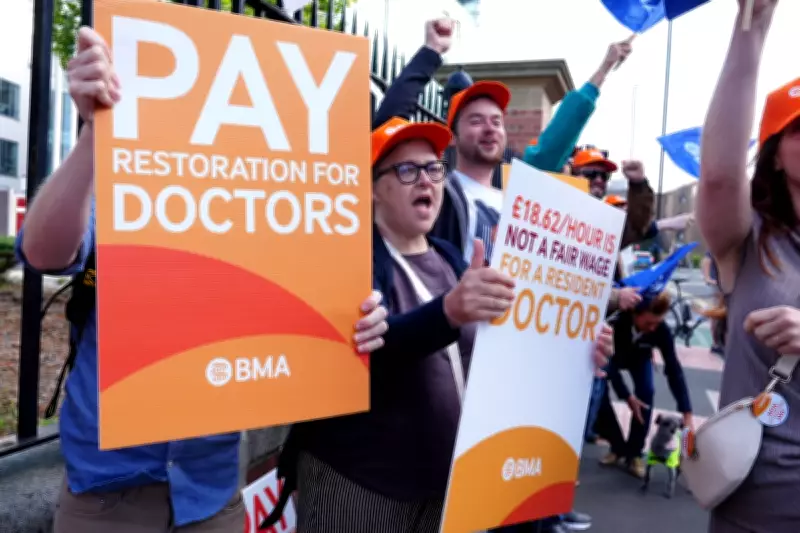
Starmer's High-Stakes Ultimatum to BMA Resident Doctors
Prime Minister Keir Starmer has delivered a dramatic 48-hour ultimatum to the British Medical Association's resident doctors, demanding they call off a planned six-day strike set to begin next Tuesday. In a bold move, Starmer warned that if the industrial action proceeds, the government's current offer of improved pay, training reforms, and enhanced promotion prospects will be immediately withdrawn.
The Government's Hardline Position
The intervention from Number 10 represents a significant escalation in the ongoing dispute, with NHS England confirming the offer will "come off the table" if no agreement is reached. Starmer's statement emphasized that the proposed measures—including an above-inflation pay rise, reforms to pay progression systems, reimbursements for Royal College exam costs, and 4,500 additional specialty training places—resulted from months of collaborative discussions with the BMA.
"Those measures were not chosen randomly, nor were they imposed from above," Starmer declared. "They are the result of months of collaboration with the BMA, who engaged constructively throughout."

Political Dynamics and Strategic Calculations
This firm stance serves multiple political purposes for the Labour government. Firstly, it demonstrates unwavering support for Health Secretary Wes Streeting's negotiating position, preventing any perception of weakness at the top that could undermine the government's broader NHS reform agenda. Secondly, it positions Starmer as decisive leader willing to take tough decisions, particularly important given public fatigue with ongoing healthcare disputes.
The timing is particularly sensitive, with the strike scheduled to begin immediately after the Easter break, potentially causing significant disruption to NHS services and further lengthening waiting lists that the government promised to reduce.
BMA Response and Doctor Sentiment
The BMA has responded defiantly, indicating resident doctors remain determined to proceed with strike action. Union representatives argue the government has "moved the goalposts" in negotiations, claiming that proposed investments have been reduced and stretched over three years compared to discussions just two weeks ago.
Despite a recent strike ballot showing 93.4% support for action, this came on a modest 52.5% turnout—meaning just under half of resident doctors actively voted to back industrial action. This represents a notable decline from January 2023, when 98% voted yes on a 77.5% turnout, suggesting potential softening of support among some doctors.
Public Opinion Shifts
Public sympathy, which has been crucial to the doctors' "pay restoration" campaign aiming to return salaries to 2008 levels, appears to be waning. A recent YouGov poll indicates 53% of people now oppose the latest strike action, with only 38% supportive—a significant reversal from three years ago when 59% supported doctor strikes.
This shift likely reflects frustration with 15 walkouts since 2022 and the fact that resident doctors have already received a near-30% pay rise under the current Labour government.
Broader Implications for NHS and Government
The stakes extend far beyond this immediate confrontation. If the government weakens its position, it risks damaging public confidence in its competence and breaking election promises to end constant NHS disputes. Conversely, prolonged strikes threaten to derail NHS reform efforts and further erode public trust in the healthcare system.
Other NHS workers—including consultants, ambulance drivers, and nurses—could be emboldened to pursue their own industrial actions if the BMA achieves significant concessions. More fundamentally, these ongoing disputes jeopardize the very stability promised during the 2024 general election and could potentially undermine the NHS's future in ways that might not benefit healthcare professionals in the long term.
The coming days will determine whether Starmer's high-risk strategy succeeds in averting another major healthcare disruption or whether resident doctors proceed with what would be their longest strike yet in this protracted dispute.