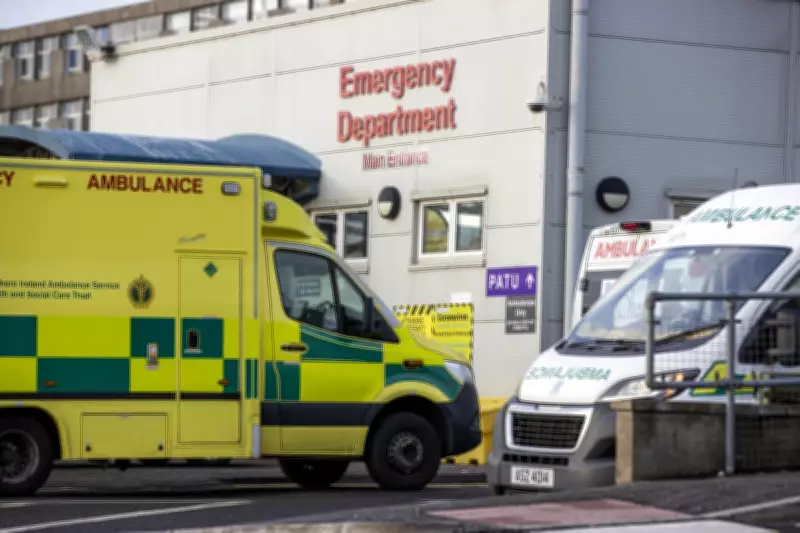
Stormont and health service leaders in Northern Ireland have been called upon to take immediate action to address what has been described as a "catastrophe" unfolding within the region's hospital emergency departments. A stark report from the Royal College of Emergency Medicine (RCEM) has highlighted a deeply concerning trend of excess deaths linked to prolonged waiting times, urging policymakers to treat the situation with the utmost seriousness.
Alarming Rise in Excess Deaths Linked to ED Waits
The RCEM's State of Emergency Medicine in Northern Ireland report reveals that in 2025, an estimated 1,032 excess deaths were associated with patients waiting 12 hours or more in emergency departments before admission. While this figure represents a slight decrease from 1,122 in 2024 and 1,063 in 2023, the underlying trend over a five-year period is profoundly alarming. The estimated mortality figure has more than doubled since 2020, when it stood at 461. A decade ago, in 2016, only 60 excess deaths were attributed to long waits, illustrating the dramatic escalation of the crisis.
Overcrowding and Skyrocketing Waits Despite Stable Demand
The report contends that the severe overcrowding and extended waiting times in emergency departments are not the result of increased patient demand. It notes that the number of people attending EDs has "barely changed," yet the incidence of long waits and associated deaths has "skyrocketed." In 2025, one in every twelve patients (8.3%) endured waits of 24 hours or longer. A particularly shocking case from a December 2025 RCEM survey recorded one emergency department with a wait time exceeding 124 hours—more than three days.

Urgent Recommendations for the Northern Ireland Executive
The RCEM report outlines several critical recommendations for the Northern Ireland Executive to tackle this escalating emergency. Key proposals include:
- Ending corridor care and mortality associated with long ED waits by the end of the decade.
- Adopting a comprehensive "whole-system approach to ending ED overcrowding," distributing responsibility for performance across the entire patient pathway.
- Ensuring clear accountability for eliminating overcrowding and implementing measures to treat excess deaths from long ED waits with the same gravity as deaths in other medical specialties.
A 'Fixable Problem' Requiring Immediate Political Action
Dr. Michael Perry, Northern Ireland vice president for the Royal College of Emergency Medicine, emphasised the urgent need for redress. "Behind these numbers are stories of families ripped apart by avoidable deaths which have happened because successive governments have failed to grab the ED crisis by the horns," he stated. Dr. Perry warned against complacency, noting that the slight reduction in deaths from the previous year should not provide false assurance, as the pace of progress remains "glacial." He highlighted that Northern Ireland's health service has the highest rates of long ED waits and associated deaths per capita of any UK nation, a fact he said should "shock our policymakers to the core."
Dr. Perry asserted that the crisis is a "fixable problem" with known solutions. "Our report contains the answers. Accountability, a whole-system approach to patient flow and targets to ending corridor care and deaths associated with long waits will make the difference," he explained, expressing hope for engagement from policymakers eager to implement these measures.
Department of Health Response and Reset Plan
A Department of Health spokesperson acknowledged the continued pressures on emergency departments, describing it as a "complex problem with no quick fix." The spokesperson outlined that the medium to long-term solution involves reducing and managing demand differently, which includes decreasing the number of people entering EDs and facilitating timely hospital discharges to free up beds.

The department's reset plan aims, over the next three years, to refocus efforts towards earlier support, intervention, prevention, neighbourhood-based care, and encouraging personal health responsibility. It also seeks to improve care for frail elderly patients by providing more services closer to home to prevent avoidable hospital admissions. However, the spokesperson conceded that these initiatives will take time to yield impact and are hindered by a challenging financial position. In the interim, the department commits to managing care quality effectively, prioritising patient and staff needs, and increasing community capacity as a crucial step forward, consistent with the neighbourhood delivery model.