White House Chief of Staff Susie Wiles Announces Breast Cancer Diagnosis
Susie Wiles, the first woman to serve as White House chief of staff, has been diagnosed with early-stage breast cancer. Despite this health challenge, the 68-year-old has announced her intention to continue working while undergoing treatment, demonstrating resilience in her high-profile role.
Diagnosis and Optimistic Outlook
Wiles revealed on Monday that the illness was detected within the past week. In a statement, she struck an optimistic tone, noting that doctors anticipate a strong recovery. "Nearly one in eight women in the United States will face this diagnosis," Wiles said. "Every day these women continue to raise their families, go to work and serve their communities with strength and determination. I now join their ranks."
President Donald Trump echoed this positivity on his Truth Social platform, describing Wiles as "one of the strongest people I know" and stating her prognosis is "excellent." He confirmed she would be "spending virtually full-time at the White House" during her treatment.

Immediate Response and Public Appearance
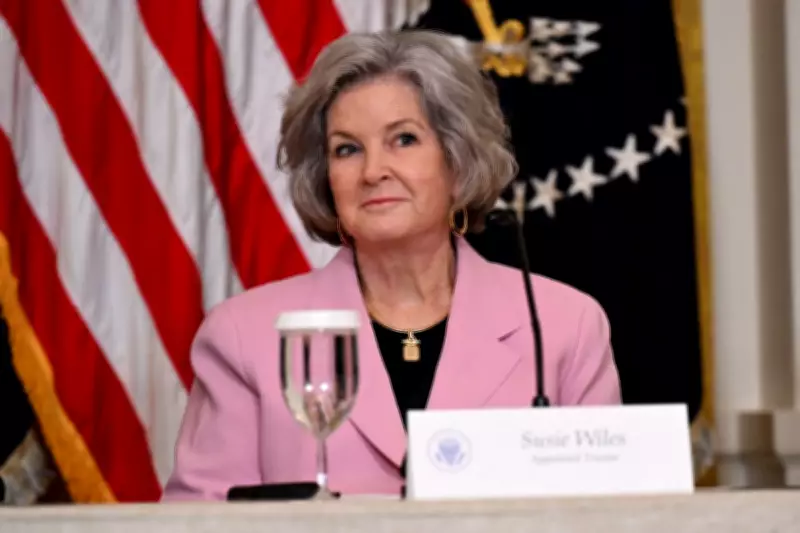
Within 20 minutes of Trump's post, Wiles was seen alongside the president at a meeting of the Kennedy Center board of trustees in the White House East Room. Wearing a pink jacket, she received embraces from attendees as she entered. In his opening remarks, Trump mentioned Wiles had already begun treatment for a "minor difficulty" and emphasized the importance of swift action. "I said do it immediately because with that particular ailment, the faster the better," he told the gathering.
Wiles' Role and Political Context
Susie Wiles is a polarising figure in Washington, praised by Republicans for bringing discipline to Trump's White House and criticized by Democrats as an enabler of his controversial policies. A veteran Republican strategist and former Florida lobbyist, she has been one of Trump's most trusted advisers for nearly a decade, managing his 2016 campaign in Florida and his 2024 comeback effort.
Since Trump's return to office in January 2025, allies credit Wiles with imposing greater order on a historically turbulent White House, while allowing the president considerable operational freedom. Despite her central role, she has generally avoided the public spotlight, though she attracted attention late last year for a candid Vanity Fair interview offering sharp assessments of senior administration figures.
Medical Insights and Support
Medical experts highlight that early detection significantly improves outcomes for breast cancer patients. According to the American Cancer Society, over 300,000 women in the US will be diagnosed with the disease this year. Wiles has expressed gratitude for the support she has received, stating, "I am encouraged by a strong prognosis" and is "deeply thankful" for Trump's backing.
Tulsi Gabbard, the director of national intelligence, posted on social media, "Lifting my friend Susie up in prayer as she begins her treatment and wishing her a speedy recovery! I'm grateful to work alongside her and for her continued dedication to serving our country."
Political Reactions and Controversy
However, not all responses were apolitical. James Blair, a White House deputy chief of staff, attempted to politicise the diagnosis with unfounded claims about Democrats and the deep state. "Susie led President Trump's team through illegitimate indictments, domestic spying by the former administration, rigged federal prosecutions, illegal law enforcement raids, general lawfare, assassination attempts, & more," he wrote. "As with the rest, she will win this battle with grace."
Wiles remains determined to stay at the centre of power in Washington, underscoring her commitment to her duties amidst personal health challenges.