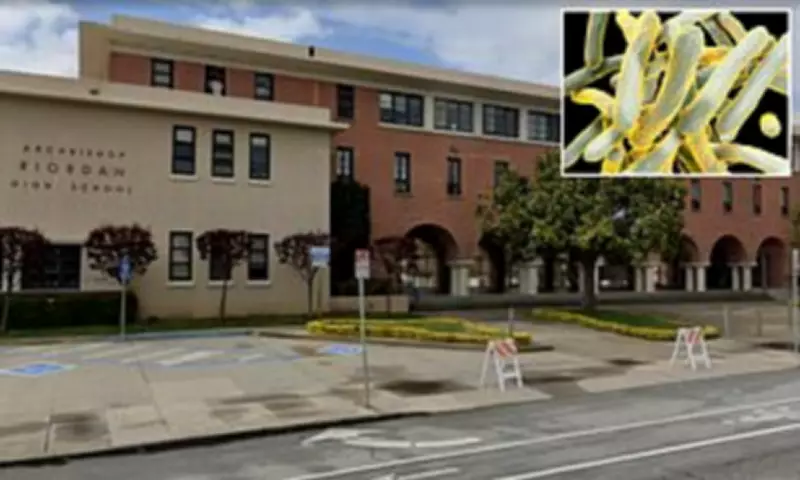
A high school in California is facing a major outbreak of tuberculosis (TB), one of the world's deadliest diseases, health officials have warned. Nearly one in five tested students and staff at Archbishop Riordan High School in San Francisco have tested positive for the respiratory condition, which is becoming increasingly resistant to antibiotics and spreading in developing countries.
Outbreak Details
The San Francisco Department of Public Health reported that the outbreak began in November, with seven active cases confirmed since then. Additionally, 241 individuals have latent TB, meaning they carry the bacteria but are not contagious and show no symptoms. However, without treatment, latent TB can develop into active disease.
In an April 27 letter to the school community, health officials stated: "People with latent TB infection (LTBI) are not contagious. However, latent TB could develop into active TB — a serious illness — if left untreated. Because of this, it is important for people with latent TB to get treated to protect their long-term health and the health of those around them."

The school, which has about 1,200 students and charges approximately $30,000 per year, saw four active and three suspected TB cases reported in February. The last infectious individual was on campus on February 19.
Ongoing Testing
Health officials are conducting new testing starting this week, focusing on those exposed to a recent confirmed case or part of a small group with new latent cases identified in recent rounds. The entire school community underwent testing in March, which officials said indicated a strong reduction in transmission. The new testing is described as "out of an abundance of caution."
Dr. Monica Gandhi, an infectious disease expert at the University of California San Francisco, called the situation "a big outbreak" and noted that a 20% latent TB rate is unusual in the U.S., typically seen in low-income countries.
Tuberculosis in the U.S. and Worldwide
TB infects a few thousand Americans annually, killing around 500, but globally it claims 1.2 million lives each year. The Bacillus Calmette-Guérin (BCG) vaccine is used worldwide but not routinely in the U.S. due to low risk, except for children exposed to active TB or healthcare workers in high-risk areas.
TB spreads through airborne droplets when an infected person coughs, sneezes, or speaks. Early symptoms include persistent cough, chest pain, weight loss, fever, night sweats, and loss of appetite. Later stages can cause severe breathing difficulties, lung damage, and spread to other organs, including the brain, potentially leading to paralysis or strokes.
After a steady decline from 1993 to 2020, U.S. TB cases rose again. In 2025, the U.S. provisionally recorded 10,110 cases, down slightly from 10,330 in 2024, which was the highest since 2011. California saw a 12-year high of 2,150 cases in 2025, with a rate of 5.4 per 100,000, higher than the national rate of 3 per 100,000. Most cases occur in non-U.S.-born citizens.
Active TB is treated with antitubercular agents like Isoniazid, Rifampin, Pyrazinamide, and Ethambutol, typically for at least six months.