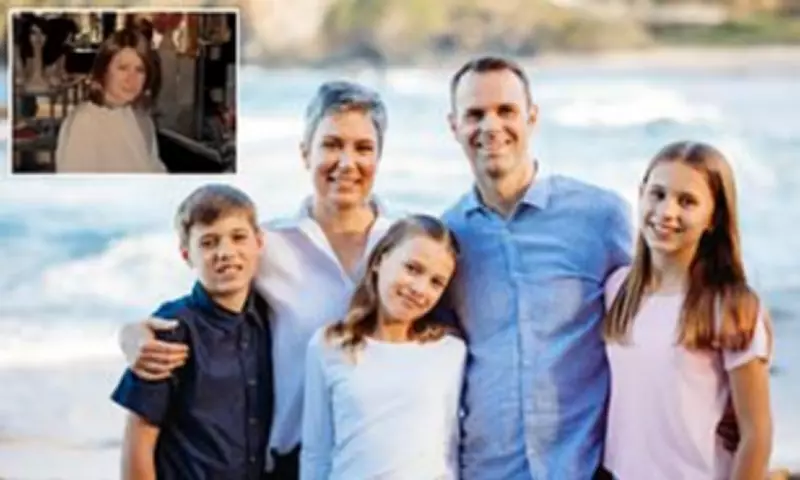
What started as a simple post-workout ache transformed into a cancer diagnosis so rare that Natalie Henderson's doctor initially doubted the pathology results were hers. The Port Macquarie mother-of-three was merely 23 years old in September 2001. She was fit, healthy, and thriving as a young professional in Sydney when she noticed a tiny lump after a boxercise session.
She had no warning signs, no concerning family history, and no reason to suspect cancer was even a possibility. Yet, that small, pea-sized lump, discovered almost by accident due to chest soreness after the gym, would irrevocably change her life's trajectory. Then, nearly 20 years later, it happened again. This time, it was just as shocking—and somehow even crueler. The second diagnosis was not a recurrence of her first breast cancer but an entirely new and different type.
The Initial Discovery and Diagnosis
Natalie still recalls how ordinary that day felt. She had attended a boxercise class and came home with a sore chest, a muscular ache most people would dismiss without a second thought. Running her hand across the top of her chest, she felt something unusual. It was tiny, about the size of a pea, located where her décolletage met the start of her breast, closer to the armpit than where most women would expect to find a lump.

"I had no other physical symptoms," she shared. "I wasn't worried at all. I wasn't thinking, 'this is probably cancer.' I just thought, 'that feels unusual. I should get it checked.'" Her sister happened to have a GP appointment the next day and offered it to her. Natalie went alone, expecting little more than reassurance that the lump was harmless.
Instead, alarm bells rang almost immediately. Her GP sent her for an ultrasound and a fine needle biopsy. When the pathology results showed abnormal cells, the doctor was so surprised she questioned whether the correct results had been sent. Natalie was stunned. "I said, 'what does that mean, is it cancer?' And she said, 'well, yes, that's probably what it is.'" At 23, with no family history and no symptoms beyond that tiny lump found due to gym soreness, the diagnosis felt impossible to grasp.
Treatment and Its Lasting Impact
A second, more invasive core biopsy confirmed it: Natalie had high-grade hormone receptor-positive breast cancer. "It just felt so random," she reflected. At the time, she was a young woman at the start of her adult life, working in Sydney, building her career, and enjoying her twenties. Cancer did not fit into that picture.
She underwent a lumpectomy and sentinel node biopsy at Royal Prince Alfred Hospital, followed by six months of grueling chemotherapy, six weeks of radiotherapy, and five years on tamoxifen. "The chemotherapy was like a permanent hangover. I didn't vomit all the time, but I had a deep ingrained tiredness. I just felt so unwell all the time," she described.
Radiotherapy brought its own challenges, with fatigue building slowly and a painful burn appearing. "I had to use burn cream and have it covered over. Still, to this day, 24 years later, the area is sore to touch. It's a permanent pain that leaves discomfort," she said. "If I get hugged too hard, it hurts. It was really difficult when my children were young—I kept having to remind them not to hug me too tight. I just feel bruised all the time."
A New Life and a Second Devastating Shock
Natalie met her future husband, a British backpacker, just after her treatment ended. More than two decades later, they are still together. However, cancer's impact persisted long after chemotherapy. She struggled to conceive and was told her body responded like that of a 45-year-old, not a woman in her early thirties.
After unsuccessful IVF in Australia, she made the extraordinary decision to leave her job and travel to London for treatment at a highly specialized clinic, spending three and a half months there in what she called "IVF boot camp." "They used a very intense approach to IVF. They give you high doses of medications and monitor you daily. But it worked—and I got pregnant after the first round," she explained.

Natalie's daughter Olive was born in February 2012, and she later had twins Jude and Florence in July 2014—all from embryos frozen during that first round in London. For years, life felt steady again. She kept up annual mammograms and ultrasounds, and for 19 years, everything was clear.
Then, during lockdown in 2021, she felt another lump. This time, it was in the other breast, near her armpit, and felt like a swollen gland. Even then, after all those years, the shock was immense. "I'd had no cause for concern for 19 years. So I was absolutely blown away," she admitted.
Facing Cancer Again as a Mother
Tests revealed something almost unthinkable: it was not a recurrence of her first cancer but a second primary diagnosis—a completely different disease. She had triple-negative breast cancer, an aggressive form that does not respond to hormone-blocking drugs. Doctors found not one tumour but two, both having sprouted in the six months since her last scan.
By then, she was 42, with her eldest daughter aged seven and the twins only five. "I felt sheer terror," she confessed. "I wondered if I was going to die. I was absolutely terrified and distraught, because I was a mother of three children this time around. It felt so much worse."
The first time Natalie was diagnosed, she was shocked. The second time, she knew exactly what cancer could do to a family. "I just thought of the innocence lost for my family, what they'd have to go through. I knew what was coming, because I'd been there before and knew just how much cancer impacts your life forever," she said.
She underwent months of chemotherapy before surgery, living for five months with the cancer still inside her. She received the same gold-standard chemotherapy as in her twenties, but because she had already reached the maximum lifetime dose, two further drugs were tried without success. A lumpectomy showed the cancer had not spread to her lymph nodes, followed by a double mastectomy with immediate reconstruction during COVID lockdowns.
Life After Cancer and a Message of Awareness
Natalie recently reached five years since her second diagnosis, a milestone she describes with real gratitude, especially as triple-negative breast cancer offers no hormonal medication protection post-treatment. She has now been discharged from her oncologist's care, meaning her greatest safeguard is her own instinct.
"My main source of protection is listening to my body, and if I don't feel well, or something doesn't feel right, I know that, for me, it's a prompt to go and get checked," she emphasized. "I've got to be my own best advocate for future health." She also revealed struggling with health anxiety as an adult, practicing not to jump to worst-case scenarios.
Her diagnoses have shaped everything from career choices to financial decisions, forcing caution into once-simple plans. "You never know what's around the corner," she noted. Yet, living with cancer from age 23 has sharpened her appreciation for life. "I feel quite compelled to share with people how much they mean to me. I don't take anyone around me for granted," she added.
Looking back, it still astonishes her that the first cancer was found only due to soreness after a boxing class. Without that fleeting ache, she might not have run her hand across her chest at all. And 20 years later, the second diagnosis came as another bolt from nowhere—different, aggressive, and every bit as life-altering.
Now, Natalie's message is simple: know your body, listen to it, and never ignore something that feels unusual. Because sometimes, the smallest lump can change everything. For people like Natalie, the work of organizations in improving breast cancer treatments through clinical trials is vital, helping patients return to their lives more swiftly.