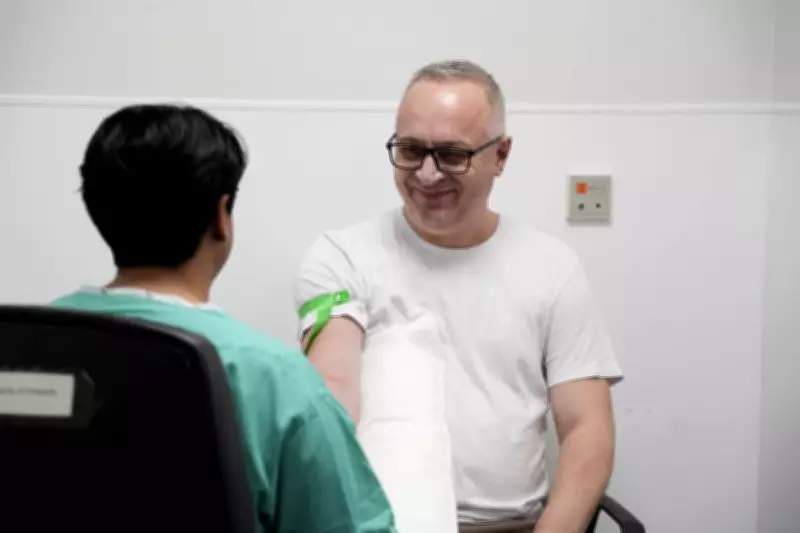
First Participants Enrolled in Groundbreaking UK Prostate Cancer Screening Study
This week marks a significant milestone in British healthcare as the first men have undergone testing in the Transform trial, a landmark UK study that could revolutionise prostate cancer screening. The trial, which represents the most ambitious research programme in this field for a generation, aims to develop a safe and effective population-wide screening system for men.
Official Screening Guidance Awaited Amid Trial Launch
The trial commencement coincides with the imminent publication of final guidance from the UK National Screening Committee (UKNSC), which advises the Government on screening policies. Last year, the committee issued a draft recommendation against population-wide screening using the prostate specific antigen (PSA) test, stating it "is likely to cause more harm than good."
The UKNSC currently recommends screening only for men with BRCA1 and BRCA2 genetic mutations, who face significantly higher prostate cancer risks, suggesting they undergo testing every two years between ages 45 and 61. The committee has not recommended specific screening for black men, who face double the risk of the disease, due to insufficient data, nor for men with family histories of prostate cancer.

Transform Trial Methodology and Objectives
The £42 million Transform trial, jointly funded by Prostate Cancer UK and the National Institute for Health and Care Research (NIHR), is testing various combinations of screening methods to identify the safest and most effective approach. Participants undergo a combination of PSA blood tests, rapid 10-minute MRI scans, and genetic saliva tests at community diagnostic centres.
Jaroslaw Galik, a 55-year-old London resident among the first trial participants, explained his motivation: "When the letter about Transform came through, I realised this was a straightforward way to check my own risk while also contributing to something bigger. If taking part helps move us closer to having a proper screening programme in the future, so men are just invited by their GP like they are for other cancers, that would make such a difference."
Addressing Screening Controversies and Evidence Gaps
The trial addresses significant controversies surrounding prostate cancer screening. Many medical experts argue that the PSA test lacks reliability, as elevated PSA levels don't always indicate cancer, while some men with cancer show normal PSA results. False positives can lead to unnecessary treatments for slow-growing tumours, potentially causing side effects including incontinence and erectile dysfunction.
However, other experts advocate for broader testing and have urged reconsideration of current screening limitations. The UKNSC has committed to reviewing new evidence generated by the Transform trial, which could produce results and inform policy changes within two years.
Focus on High-Risk Groups and Future Implementation
A crucial aspect of the Transform trial involves gathering data specifically relating to black men, with researchers hoping that one in ten participants will be from this higher-risk demographic. The trial initially compares new screening techniques against current NHS methods before advancing the most promising approaches to testing with up to 300,000 men.
Laura Kerby, Chief Executive of Prostate Cancer UK, emphasised the trial's significance: "Men across the country are crying out for a screening programme and we're committed to building a future where every man gets that chance. We know that a safe and effective mass screening programme could save thousands of men's lives and it starts with these men walking through the door today and trialling these tests."
Government Support and Scientific Perspectives
Health Secretary Wes Streeting expressed his support for the initiative: "Transform is the most ambitious prostate cancer research programme in a generation and I'm proud the Government is backing it. The evidence it generates will be crucial in shaping how we screen for this disease for decades to come." He added that any final screening decisions must be "based on science and evidence, not on politics."

Professor Lucy Chappell, Chief Scientific Adviser at the Department of Health and CEO of the NIHR, highlighted the trial's preventive focus: "Transform aims to tackle one of the biggest killers as part of the shift from sickness to prevention. Importantly, the trial will focus on men at highest risk, particularly black men – a group who face double the risk of developing and dying from prostate cancer."
The research team is collaborating closely with black community leaders and organisations to ensure meaningful participation from all societal groups, addressing current evidence gaps while working toward equitable screening solutions that could transform prostate cancer detection and save thousands of lives annually.