US Health Officials Mute Anti-Vaccine Rhetoric Ahead of Midterm Elections
US health officials appear to be shying away from voicing negative views on vaccines in public as November's midterm elections approach. Key polling data indicates that anti-vaccine positions are increasingly seen as a political liability, prompting a strategic shift in messaging from prominent figures within the administration.
Elections Drive Change in Vaccine Messaging
Health officials have implemented unprecedented changes to routine vaccine recommendations over the past year, including slashing one-third of the US childhood immunization schedule. Notably, the recommendation for hepatitis B vaccination at birth was removed. However, even before a federal judge essentially invalidated these moves, officials refrained from championing these dramatic changes. This reticence followed advice from Donald Trump's pollsters, who recommended veering away from anti-vaccine ideology ahead of the critical midterm elections.
The elections seem to be a primary concern for US health officials. At a women's health conference in March sponsored by the US Department of Health and Human Services, Marty Makary, commissioner of the US Food and Drug Administration, referenced support from the "Make America Healthy Again" (Maha) movement in the 2024 election. "Moms showed up to vote for the Maha agenda," he stated, highlighting the political dimensions of health policy.

Kennedy's Shift in Focus
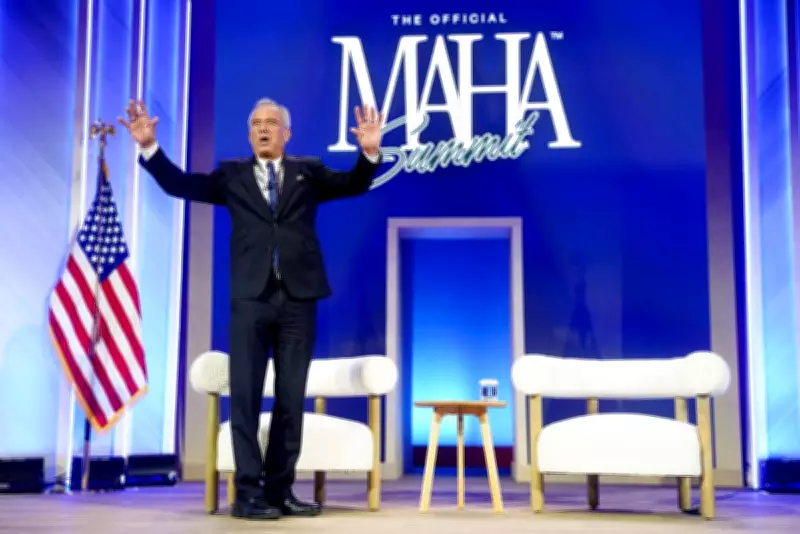
At the conservative CPAC conference in late March, Robert F Kennedy Jr, the HHS secretary and a longtime vaccine opponent, notably avoided explicit mentions of immunizations during his 30-minute "fireside chat." When asked by organizer Mercedes Schlapp what advice he would give to "Maha moms" or "Maha parents," Kennedy did not default to his decades-long rhetoric about toxic exposures and vaccines. Instead, he identified cell phones and social media as the biggest current threats.
When discussing his successes and future priorities, Kennedy focused on reviving the food pyramid, flipping it, and removing nine synthetic food dyes. Although updating baby formula remains a stated priority, health agencies have made minimal progress on this front. Katelyn Jetelina, founder of Your Local Epidemiologist, criticized the administration for not addressing the "root cause" of health issues, instead pursuing "headline wins."
Polling Reveals Political Risks
Among voters surveyed in the 35 most competitive congressional districts, there is "strong bipartisan support for routine childhood vaccines," according to analysts Tony Fabrizio and Bob Ward. This support extends across the Maha movement, with most Maha voters rejecting changes to childhood immunizations. The analysts concluded that "high levels of trust in vaccines" mean "skepticism toward vaccine requirements is politically risky for both parties."
Elizabeth Jacobs, an epidemiology professor at the University of Arizona and a founding member of Defend Public Health, observed, "My perception is absolutely that messaging has gone out to downplay anti-vaccine messaging. It seems like somebody has advised him to stop doing anti-vaccine stuff."
Subtle References and Continued Ideology
Despite the public shift, Kennedy made quiet references to his anti-vaccine ideologies. He mentioned watching a "deterioration in the health of our children, the rise of chronic disease, since 2005"—the year he penned an article for Rolling Stone and Salon, later retracted by Salon, claiming vaccines cause autism. Jacobs noted this reference as "a major glaring sign that he is talking about vaccines, for sure." Kennedy has historically blamed vaccines for higher autism rates, despite numerous studies finding no link.
At CPAC, Kennedy remarked, "I never knew anybody with autism. Suddenly they're everywhere," without acknowledging changes in diagnostic practices or community-based care. Under his leadership, the US ended full recommendations for shots against flu, rotavirus, RSV, and others. Jacobs described Kennedy's past year as "a bull in the china shop. They just broke everything."

Allies and Misinformation Persist
Jay Bhattacharya, head of the National Institutes of Health, mentioned vaccines only once at CPAC, highlighting shingles vaccination's potential link to reducing Alzheimer's risk. However, he echoed Kennedy's rhetoric on "chronic disease," a phrase often used by Kennedy in reference to autism.
Ideological allies continue to push against vaccines publicly. Mark Gorton, president of the Maha Institute, recently called for eliminating all immunizations in the US, stating, "The childhood vaccination schedule needs to be eliminated. And all vaccines need to be removed from the market until they can be proven to be both safe and effective." Del Bigtree, a longtime Kennedy ally, urged followers to "be loud and more proud than you've ever been," while Brian Hooker of Children's Health Defense claimed anti-vaccine ideology is "in the forefront" for US health officials.
Public Health Consequences
Even as officials reduce direct discussion of vaccines, misinformation continues to spread alongside measles and other preventable illnesses as vaccination levels drop. Jetelina warned, "We are going to lose lives over this. We are going backwards on a lot of things, and we don't have time to be spinning our wheels." This shift in rhetoric, driven by electoral politics, underscores the complex interplay between public health and political strategy in the current US landscape.