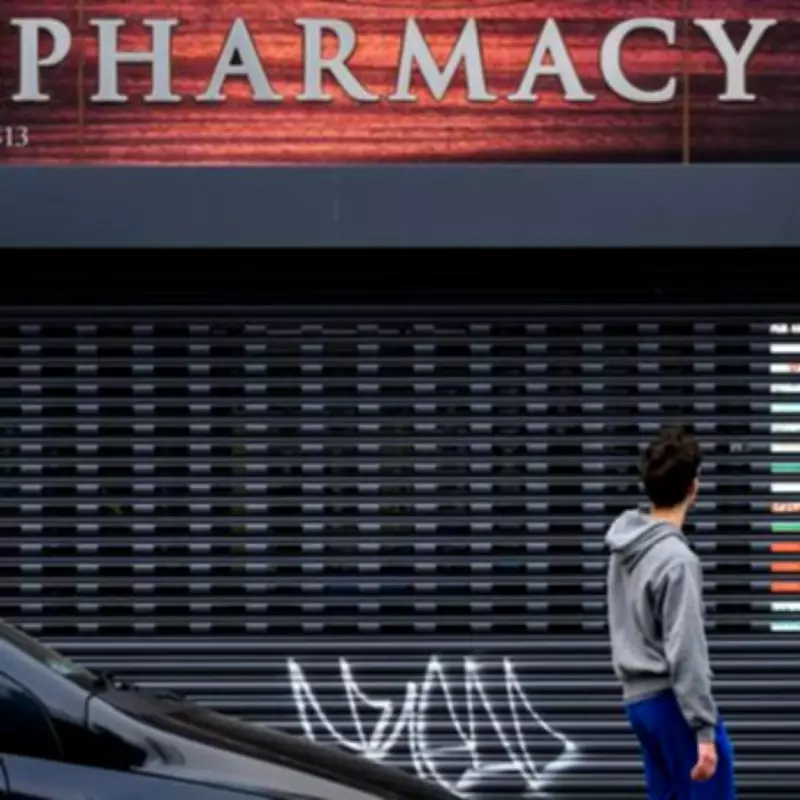
Pharmacies across England are dramatically reducing their weekend opening hours, with some shutting down completely on Saturdays and Sundays, as a severe NHS funding crisis continues to grip the sector. New analysis by the National Pharmacy Association (NPA) paints a stark picture of a network under immense strain, with patients increasingly forced to travel long distances for essential medications and advice.
Steep Decline in Weekend Access
The NPA's comprehensive study reveals that approximately one in six pharmacies in England—around 1,600 stores—have cut their opening hours on weekends. Alarmingly, 8% have ceased operations entirely on Saturdays and Sundays over the past four years. This reduction has resulted in the loss of an estimated 16,000 hours of pharmacy availability on weekends, leaving only 17% of pharmacies open to patients on a Sunday.
Geographic Impact and Patient Hardships
The cuts are not evenly distributed, with certain regions experiencing particularly severe reductions. Kent, Birmingham, and Lancashire have seen some of the steepest drops, losing nearly 30% of weekend hours since 2022. Cornwall has been hardest hit regarding Sunday openings, with 34% fewer pharmacies open compared to four years ago, followed by Oxfordshire and Chester and Cheshire West.

Olivier Picard, Chair of the NPA, stated: "This is yet more evidence that the pharmacy network in England is creaking at the seams after facing deep cuts over a number of years. Sadly the real losers are the millions of patients these pharmacies serve, particularly those in rural areas, who are forced to travel long distances or even go to hospital if they need a prescription or advice for a minor health issue on a Sunday or late at night."
The consequences for patients are significant. The NPA reports instances where individuals must drive for almost an hour to reach their nearest pharmacy on a Sunday, especially in areas like Cornwall. This lack of access is forcing some to resort to overcrowded A&E departments for minor health issues or prescriptions, thereby increasing pressure on already overstretched NHS services.
Root Causes: Funding and Operational Pressures
The primary driver behind these cuts is a chronic lack of NHS funding, compounded by rising operational costs. Despite receiving the first funding increase in years under the Labour government—a £617 million investment over two years—many pharmacies continue to struggle. A previous NPA survey found that 65% of pharmacies in England reported operating at a loss in 2025.
Pharmacists are being forced to make difficult decisions, cutting weekend hours as a measure to avoid complete closure. Olivier Picard explained: "Pharmacists have huge potential to take away pressure from the rest of the health system but the reality is that they are hanging on by their fingertips, raiding pension pots or remortgaging homes to stay open."
The sector has faced a decade of underfunding, with the network now at its lowest point in 20 years. Since 2016, over 1,400 independent community pharmacies have shut, representing a loss of one in ten. The average pharmacy in England is now serving around 1,000 more patients than it did in 2017—an increase of a fifth—exacerbating the strain on remaining facilities.
Regional Breakdown and Service Gaps
In specific areas, the situation is particularly dire. Kent and Birmingham both saw 14 pharmacies stop opening on Sundays since 2022. In Devon, pharmacies operated only one-tenth of the opening hours on a Sunday compared to an average weekday, highlighting severe service gaps.
The NPA is urgently calling for a sustained funding uplift and reform of what it describes as a "broken" contract between pharmacies and the NHS. With the government still preparing its funding offer for the next financial year, the association emphasizes that expanding NHS services through pharmacies is only feasible with significant and consistent investment.
Picard added: "Although we recognise the government took a step forwards last year, much of the uplift disappeared to cover increasing costs including National Insurance and National Living Wage contributions. Like the Government, we want to expand NHS services to patients but this can only happen with sustained and significant investment."

This crisis underscores the vital role pharmacies play in the healthcare ecosystem and the urgent need for financial stability to prevent further reductions in access, especially during weekends when alternative services are limited.