From Crisp Packets to Kitchen Tables: Tracing Britain's Culinary Evolution
For Ben Benton, the story of British taste can be deliciously decoded through the humble crisp. Those small, fried potato discs serve as a flavorful barometer of the nation's ever-changing appetite. In the 1980s, the top five best-selling flavours were Ready Salted, Salt and Vinegar, Cheese and Onion, Prawn Cocktail, and Beef. Essentially, these were the staples found in every Walkers multipack, representing a simpler era of snacking.
A Flavour Revolution on the Shelves
However, the 1990s witnessed a significant shift in preferences. Cheese and Onion ascended to the throne as the most popular flavour, closely followed by Salt and Vinegar, BBQ Beef, Worcester Sauce, and Pickled Onion. This period marked a move towards bolder, more varied taste profiles.
Today, supermarket shelves are brimming with sophisticated flavours such as Black Truffle, Sour Cream and Chive, Olive and Manchego, and Iberian Ham. These modern seasonings make even the once-daring Sweet Chilli 'Sensation' seem rather humble by comparison. Yet, none appear as audaciously experimental as a short-lived 1980s attempt at hedgehog-flavoured crisps, a concept based on the misguided assumption that Romani communities consumed hedgehog.

A Culinary Tour from Cromarty to London
Armed with this light-hearted, crisp-based analysis, chef, writer, and podcaster Ben Benton embarks on an extensive culinary tour spanning the length and breadth of Britain. His journey begins in Cromarty, a small seaport north of Inverness, and concludes in London, traversing the North, Midlands, Wales, the Southeast, and the West along the way.
Benton's book, if used discerningly, could be viewed as a more approachable and realistic alternative to the Michelin guide. It offers an unvarnished look at the nation's food scene, celebrating its highs and candidly addressing its lows.
Highlights and Heartaches of British Dining
Readers are treated to glimpses of the finest Scottish produce, supreme fish cookery at Riley's Fish Shack in Newcastle, the soulful Caribbean spices of Mamma Fay's in Aberystwyth, and the unquestionable skill of chefs and bakers at Coombeshead Farm in Cornwall, whose exceptional bread is dispatched daily to London's top restaurants.
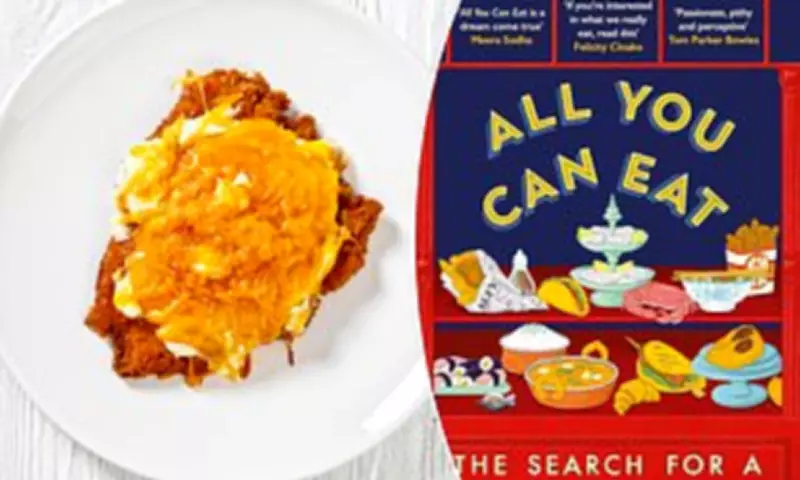
Yet, more often than not, Benton encounters a British food culture still mired in a flavourless, post-rationing mentality, frequently catering to tourists with lacklustre offerings. Middlesbrough is famed for its undoubtedly delicious but equally heart-attack-inducing parmo, described as 'a fluorescent piece of breaded meat [normally chicken], bathed in bechamel and melted Cheddar'. Meanwhile, on Holy Island, renowned for its Viking history and Lindisfarne oysters, visitors are met with overpriced and 'underwhelming' crab sandwiches, chilli dogs, bacon and brie sandwiches, and tuna melts.
The Core Issues: Training and Local Produce
Benton's primary grievance is the persistent failure of many kitchens to utilise local products and the general lack of care for what is produced regionally. He acknowledges that people do not always desire the most refined dishes; sometimes, simple chicken wings suffice. However, he appears to overlook the fact that not everyone aspires to be an exceptional chef, nor have they received the training or remuneration necessary to produce exquisite food consistently.
Reading his book clarifies that the problem with British food often stems not from a deficiency of imagination or care, but from a widespread lack of proper culinary training. Yet, as Benton concedes, not everyone needs to be a Clare Smyth or Gordon Ramsay.
Defining British Food: A Unique Fusion
So, what ultimately defines British food? It emerges as a happy, albeit sometimes haphazard, combination of dishes and flavours traditional to almost every other culture, blended with a distinctive touch of British pragmatism—or laziness, as some might say. We 'take the ingredients we love, the cooking skills we've learned and our idea of a dish from somewhere else, and create a new version… so that with a squint it might be similar to the original inspiration, but more often than not it is something entirely new.'

This easy-reading tour of both Britain's landscape and its culinary offerings will leave readers as intellectually stuffed as Benton undoubtedly was by the journey's end. His exploration serves as a poignant reminder of the nation's complex, evolving relationship with food, from crisp packets to kitchen tables.