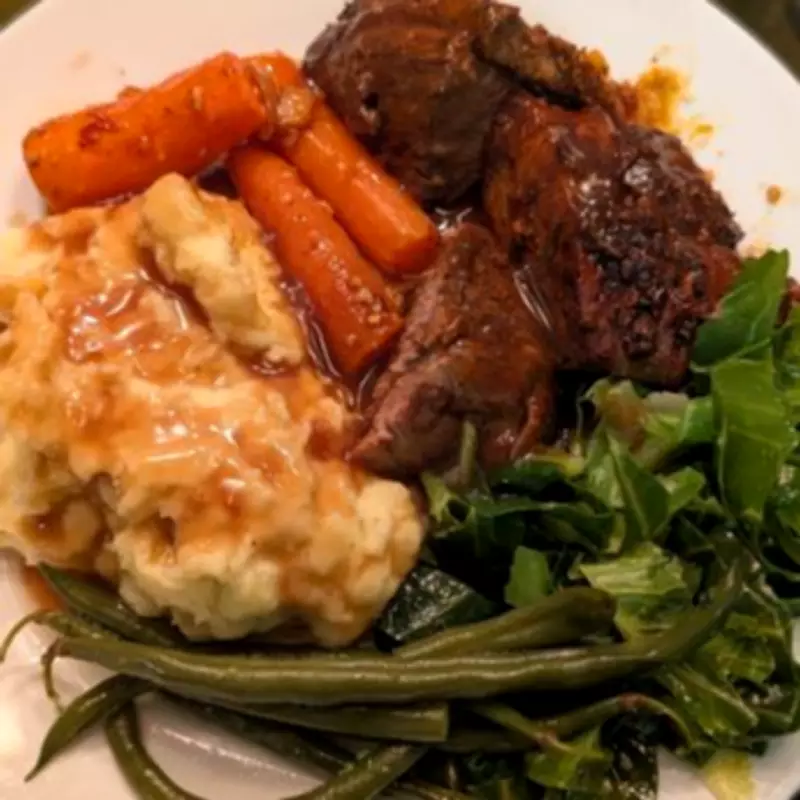
Britons across the nation are gearing up to prepare their traditional Easter Sunday feast. According to culinary authority Good Food, lamb remains the customary Easter Sunday protein, symbolising the conclusion of Lent's 40-day fasting period and representing Jesus as the "Lamb of God" and his sacrifice.
Comparing Cooking Methods for Perfect Lamb
Numerous preparation techniques exist for lamb, with most households opting for either their air fryer or conventional oven. To determine how to achieve melt-in-the-mouth tender leg of lamb, I conducted a comprehensive cooking test using both approaches. The results were strikingly different, with one method I pledge never to repeat.
Ensuring a Fair Cooking Comparison
To guarantee a fair and straightforward cooking comparison, I prepared and seasoned identical lamb joints using the same process. Both pieces received identical treatment up to the cooking stage, allowing for a direct evaluation of the cooking methods themselves.

How I Seasoned the Lamb
This seasoning step remains entirely optional; you can adopt this method, season according to your personal preference, or omit it completely. As my mother frequently observes, all lamb truly requires is garlic and rosemary for excellent results.
For my approach, you can adjust quantities based on your leg of lamb's specific size. If you have allergies or dislike any specified ingredients, it's perfectly acceptable to omit or substitute them. Nevertheless, the following components consistently produce a succulent, flavourful lamb leg that will leave diners wanting more.
Seasoning Ingredients
- One large lamb leg
- Several sprigs of fresh rosemary
- One complete bulb of garlic
- Chicken stock for cooking
- For marinade: Two tablespoons of olive oil
- Two generous tablespoons of Dijon mustard
- One tablespoon of paprika
- Two tablespoons of mixed herbs
- One tablespoon of dried parsley
- One tablespoon of cayenne pepper (reduce if preferring less spice)
- One tablespoon of ginger powder
- One teaspoon of salt
- One teaspoon of mixed spice
- Two tablespoons of garlic powder
- Two tablespoons of brown sugar
- Two tablespoons of jerk seasoning (optional)
- Half a cup of water
Preparation Process
Begin by thoroughly trimming the leg of lamb, removing all excess fat and membranes. This process typically requires 30-45 minutes, during which I stripped away most substantial fat from the meat surface. Ensure you're using a sharp, quality knife for this task.
Once trimmed, pat the lamb dry with kitchen paper. Next, create deep diagonal slashes across the lamb's surface; this technique allows the seasoning to penetrate deeply into the meat fibres.
In a medium-sized mixing bowl, combine all marinade ingredients, beginning with the oil and Dijon mustard, then incorporating the dry seasonings. Stir the mixture thoroughly until well combined.
Should the paste prove too thick, incorporate half a cup of water to achieve a spreadable, paste-like consistency. Apply the seasoning uniformly over the entire lamb surface, ensuring the marinade thoroughly penetrates the cuts you've created.
Subsequently wrap the lamb in cling film and refrigerate to marinate overnight or for a minimum of eight hours. Once adequately marinated, transfer the meat to a baking tray or air fryer basket with several rosemary sprigs and garlic cloves tucked into the scores.
The Oven Method Results
To commence the oven method, I preheated my conventional oven. After 10 to 15 minutes of preheating, I added chicken stock to the tray to maintain moisture in the lamb throughout cooking. I then covered the lamb completely with foil before placing it in the oven.
I roasted the lamb for two to four hours at temperatures between 160°C and 180°C. Throughout the extended cooking period, I consistently basted the lamb with pan juices to prevent drying.
Verdict: This traditional approach proved somewhat lengthy and required attentive monitoring as I found myself constantly checking the oven. That said, the final result delivered exceptionally tender, soft, incredibly succulent and flavourful meat. The lamb achieved such perfect moisture and texture that it simply fell away from the bone with minimal effort.

The Air Fryer Method Results
For the air fryer recipe, I followed Good Food's specific guidance. Their recommendations included: "Preheat the air fryer to 200°C. Place the lamb in the basket and pour over lemon juice. Cook for 15 minutes, then reduce to 180°C and cook for a further 45 minutes, turning halfway through. Transfer to a warm plate, pour over remaining lemon juice, cover with foil, and rest for 10 minutes."
Verdict: Within the initial 15 minutes, the lamb developed an excessively crispy exterior remarkably quickly, prompting me to swiftly lower the air fryer's temperature. I continued cooking for another 30 minutes, but the lamb began appearing charred and overcooked on the surface.
Upon removing the lamb to check doneness, I discovered it remained nearly raw inside despite the external appearance. I consequently decided to finish cooking it in the conventional oven to achieve proper internal temperature.
The final air-fried lamb turned out rather tough and chewy with uneven cooking; I found the texture thoroughly unenjoyable. Based on this experience, I doubt I'll attempt air frying lamb again for such a substantial cut.
Final Cooking Recommendations
For those seeking tender, fall-off-the-bone Easter lamb, the conventional oven method clearly outperformed the air fryer approach in this comprehensive test. While requiring more time and attention, the oven produced superior texture and moisture retention. The air fryer method, despite its convenience for smaller items, proved inadequate for properly cooking a substantial leg of lamb to tender perfection.