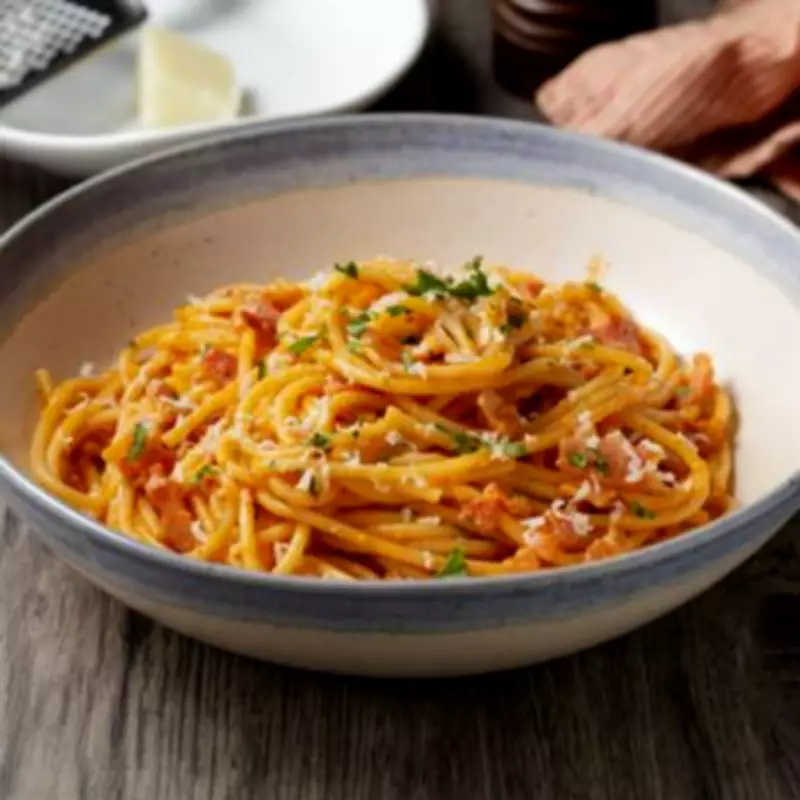
For consistently smooth, restaurant-standard pasta sauce, one straightforward cooking adjustment can guarantee flawless texture every single time. Surprisingly, this culinary secret revolves entirely around the water used to boil your pasta, requiring no additional ingredients whatsoever.
The Science Behind Pasta Water
While it might initially sound peculiar, the quality of any pasta sauce can be dramatically enhanced simply by perfecting the quantity of water employed during the pasta boiling process. Food scientist Matt Villena dedicates his social media presence to educating home cooks about minor kitchen adjustments that can genuinely transform their culinary outcomes.
Demonstrating the Dramatic Difference
Matt Villena was eager to illustrate precisely how the volume of cooking water makes a significant difference to the final dish. He conducted a clear experiment, boiling identical quantities of dried pasta in two distinctly different amounts of water to prove his point conclusively.

He meticulously explained his methodology: "First, I am going to use just enough water to barely cover the pasta. Then I am going to prepare a separate batch where I add more than double that amount of water." After cooking the pasta and carefully removing it, the visual contrast between the two remaining pasta waters was immediately striking and undeniable.
At this crucial juncture, Matt displayed both pasta waters side by side. The batch prepared with less water appeared noticeably denser, cloudier, and more opaque due to its substantially elevated starch concentration. Conversely, the water from the larger volume batch looked almost completely transparent and thin.
Why Starch Concentration Matters for Sauce
Matt Villena revealed why this starch concentration matters so profoundly for sauce quality. He elaborated: "Your pasta sauce is typically a combination of oil and water, two elements that naturally resist mixing together. However, if you incorporate starchy pasta water, it will actually emulsify the sauce effectively, allowing it to cling perfectly to your noodles."
He proceeded to demonstrate the practical contrast between two sauces prepared differently. The version made using the reduced-water, starch-rich pasta water produced a more viscous, cohesive sauce that coated the pasta thoroughly and evenly, resulting in a silkier, more integrated dish.
Viewer Reactions and Additional Benefits
Viewers responding to Matt's informative TikTok clip were overwhelmingly delighted with his clear, scientific breakdown. One user, Poddytat, expressed gratitude: "This is the FIRST time in my 58 years someone has properly explained the why behind this technique. Thank you!"
Another commenter highlighted a significant secondary advantage, noting: "There's also the fact that using less water takes considerably less time to reach a boiling point, saving both energy and time." A third viewer, Loneytoon, declared themselves a converted cook, stating: "I have always used too much water. I will definitely change my pasta cooking method immediately."
This simple yet scientifically sound approach not only elevates your pasta sauce to a silkier, more professional standard but also promotes efficiency in the kitchen. By consciously reducing the water volume when boiling pasta, home cooks can achieve superior emulsification, enhanced sauce adhesion, and noticeable resource savings, all without adding a single extra ingredient to their recipe.