

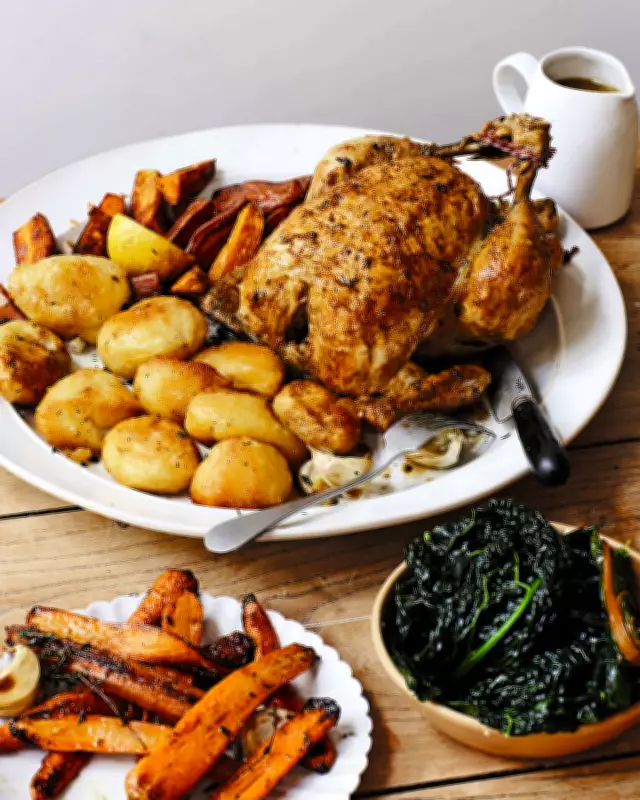
The Ultimate Guide to Perfect Roast Chicken: Expert Tips Revealed
Simplicity is often the key to culinary success, and when it comes to roast chicken, this principle holds true. According to food experts, a great roast chicken begins with selecting a high-quality bird. Ed Smith, author of the book Peckish, emphasises that while many techniques exist, the foundation is straightforward: start with a good chicken, and you will achieve a delicious result.
Essential Rules for Roasting Success
Smith outlines three critical rules for perfect roast chicken. First, choose a free-range, slow-reared bird under 2kg, as smaller chickens tend to roast more evenly. Second, avoid overcooking; Smith recommends roasting for about 50 minutes in a 210C (190C fan) oven, noting that package instructions often suggest too long. Third, allow the chicken to rest for 15-20 minutes after cooking to ensure it remains juicy and hot when served.
To enhance flavour, Smith advises salting the chicken thoroughly inside and out, and if possible, refrigerating it for an hour to a day beforehand. This simple step can significantly improve the taste and texture.

Advanced Techniques from Professional Chefs
For those seeking extra crispiness and moisture, chefs offer additional methods. Mike Davies, chef director of The Camberwell Arms in south London, advocates for brining the chicken overnight in a solution of water, salt, sugar, and aromatics like lemon and bay leaves. He explains that brining, though it may seem complex, is quite manageable with a large container.
Anna Tobias of Cafe Deco in London prefers roasting the chicken upside down. She coats the bird in neutral vegetable oil, seasons it, places half a lemon and a sprig of rosemary in the cavity, and roasts it upside down for 30 minutes at 200C (180C fan) before flipping it for another 30 minutes. This technique crisps the thighs effectively, though Tobias notes she avoids resting the chicken to prevent flabby skin.
Davies also shares a tip from his mother: rubbing butter under the skin to baste the chicken during cooking and moisten the skin. However, he stresses that dry skin is crucial for achieving crispiness.
Innovative Variations and Serving Suggestions
Spatchcocking, or flattening the chicken, is another popular method. Smith highlights that this approach cooks the bird faster, reducing the risk of overcooking the breast while ensuring crispy skin and succulent legs. Using scissors to cut along both sides of the backbone makes the process easy and less daunting.
Experimenting with marinades or rubs can also elevate the dish. Smith suggests that flavours from cuisines like Southern American, Indian, or Thai work wonderfully on roast chicken. He often enjoys leftovers in various ways, such as with salad, pasta, or potato wedges, showcasing the versatility of roast chicken. Tobias, however, believes roast potatoes are the ideal accompaniment, stating that other sides are negotiable.
Ultimately, the experts agree that while techniques can be refined, the essence of a perfect roast chicken lies in starting with a quality bird and applying simple, thoughtful methods. For more culinary advice, readers are encouraged to seek guidance from professional sources.






