Ovarian Cancer Claims a UK Woman's Life Every Two Hours
The stark reality of ovarian cancer in the United Kingdom is that it kills one woman every two hours. In response to this alarming statistic, The Robin Cancer Trust—the nation's sole charity dedicated to testicular, ovarian, and germ cell cancers—is issuing an urgent plea to women across the country. They are urging heightened awareness of the disease's often subtle and easily dismissed symptoms, emphasising that when caught early, ovarian cancer is highly treatable.
The Scale of the Challenge
Annual estimates indicate there are over 7,000 new diagnoses of ovarian cancer in the UK, with the illness claiming nearly 4,000 lives each year. A primary factor in this high mortality rate is the cancer's notorious difficulty to diagnose. Its symptoms are frequently mistaken for more common ailments like irritable bowel syndrome (IBS), general stress, depression, or issues associated with menopause and ageing. Consequently, only one in five patients receives a diagnosis during the early stages when treatment is most likely to succeed.
The survival statistics underscore the critical importance of early detection. According to Cancer Research UK, when cervical cancer is diagnosed at the earliest stage, approximately 95 percent of women survive for more than five years. However, this survival rate plummets to just 40 percent for stage three diagnoses and a mere 15 percent for stage four. It is crucial to note that the HPV vaccine does not offer protection against ovarian cancer, and there is currently no national screening programme in place to detect it.

Understanding the Risk Factors
While ovarian cancer can affect any woman, certain factors significantly elevate an individual's risk. A family history of the disease is a key consideration. Specifically, the presence of BRCA1 and BRCA2 genes can increase the risk of developing ovarian cancer by more than 40 percent and 29 percent, respectively. These genes also heighten the risk of breast cancer.
Other substantial risk factors include endometriosis, a condition where uterine tissue grows outside the womb, causing painful periods and heavy bleeding. This condition can increase ovarian cancer risk fourfold. Additionally, being overweight and having a history of cancer elsewhere in the body can also make an individual more susceptible to developing ovarian cancer.
Recognising the Early Warning Signs
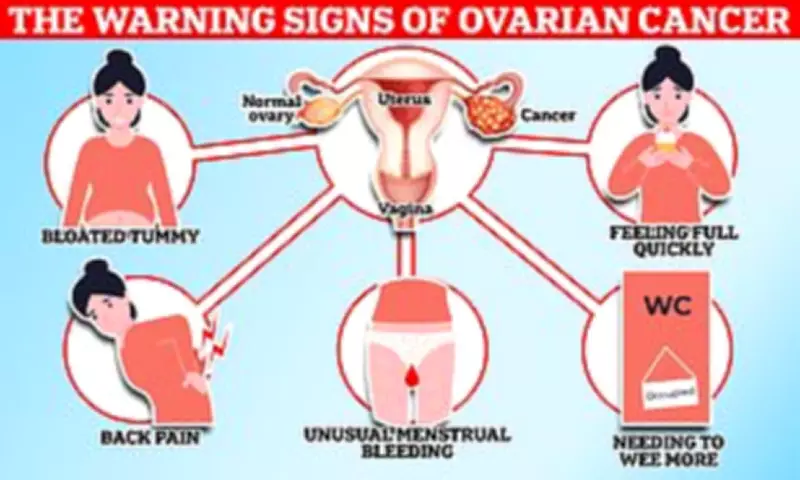
The early symptoms of ovarian cancer are often characterised by persistent, mild to moderate discomfort rather than acute pain. The Robin Cancer Trust stresses that becoming 'symptom-aware' and seeking prompt medical advice upon noticing any signs is vital. Key symptoms to watch for include:

- Persistent Bloating: Ongoing bloating or an increase in abdominal size that does not subside is a critical, yet frequently overlooked, warning sign. Unlike temporary bloating from indigestion, this symptom is typically constant and may make clothing feel tighter or result in a hard, swollen stomach. This is often caused by ascites, a buildup of fluid in the abdominal cavity triggered by the cancer.
- Frequent Urination: A noticeable change in urinary habits, such as needing to urinate more often during the day or night, or experiencing a sudden, urgent need to go, can be an early indicator. This occurs as ovarian tumours grow and press against the bladder, reducing its capacity.
- Feeling Full Quickly: Experiencing a sensation of fullness soon after beginning a meal is another symptom. This happens when tumours press against the stomach and other digestive organs, reducing their capacity. This may be accompanied by nausea or indigestion.
- Irregular Vaginal Bleeding: Any unusual vaginal bleeding, including spotting between periods, heavier menstrual flow, or bleeding after menopause, is a key symptom that requires immediate evaluation by a GP.
- Persistent Abdominal or Pelvic Pain: Ongoing pain or discomfort in the lower abdomen or pelvic area that does not resolve is not normal. This may feel like a dull ache, sharp pain, or pressure and can result from tumour growth, ascites, or the cancer spreading (metastasis).
Other potential signs include persistent indigestion, constipation, diarrhoea, back pain, unexplained fatigue, and unintentional weight loss.
When to Seek Medical Advice
The Robin Cancer Trust acknowledges that many of these symptoms can be completely normal and are often caused by benign factors. However, they strongly advise women to consult their GP if symptoms are persistent, frequent, new, or unusual for them personally.
Toby Freeman, CEO and founder of The Robin Cancer Trust, emphasised: 'Remember, no one knows your body better than you do. Listen to your body, stay symptom aware and seek medical advice if something doesn't feel right. Knowing what's normal for your body, and speaking up when something changes, can save lives.'
This call to action highlights the power of personal vigilance in combating a disease where early awareness can make the difference between life and death.