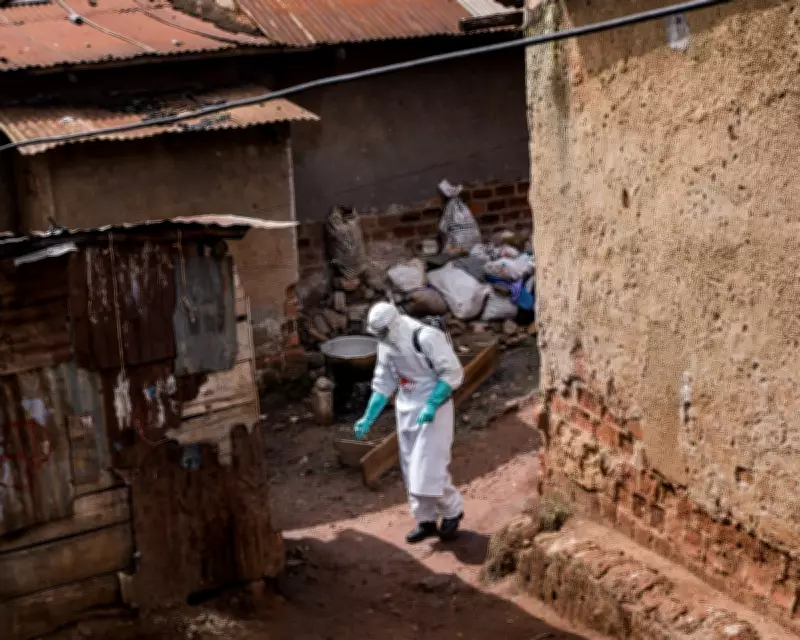
The Red Cross and other traditional agencies are striving to combat Ebola despite massive reductions in aid. The deadly virus, which kills approximately half of those infected, is spreading rapidly in parts of East Africa. Since the outbreak began in Ituri province, Democratic Republic of the Congo (DRC), earlier this month, at least 240 deaths are suspected. Public health officials face immense challenges in one of the most difficult environments: Ituri is a mining hub with dense worker populations and a conflict zone with ongoing rebel fighting. Medical facilities are limited, and displaced people crowd into camps, complicating transmission control. The virus has already reached other regions in eastern DRC and Kampala, Uganda.
Crisis Amidst Aid Cuts
This is the first major Ebola outbreak since the US, UK, and other Western nations made severe cuts to humanitarian aid, beginning with Donald Trump and Elon Musk's dismantling of USAID. The rapid response infrastructure from previous outbreaks has been stripped back, leaving it barely functional. Experts warn that efforts to save lives are severely hampered. Dr. Papys Lame, Ebola outbreak response coordinator in Ituri for the NGO Alima, and Selena Victor, senior director of policy and advocacy for Mercy Corps, discussed containment efforts. The headlines also include: Britain faces a potential £125bn annual financial hit due to rising youth not in employment or education; Donald Trump circulates a draft peace agreement for the Iran war; Andy Burnham backtracks on immigrant benefits restrictions; a Russian drone crashes into a Romanian apartment building; and experts reject abandoning net zero for oil and gas drilling.
Ebola's Spread and Challenges
There is no current vaccine for Ebola. The virus, transmitted from wild animals and through human body fluids, was discovered in 1976 and is prevalent in rainforest regions of western, central, and eastern Africa. The deadliest outbreak from 2014-2016 killed 11,325 people in Guinea, Sierra Leone, and Liberia. Frontline workers are desperate to prevent a repeat in eastern DRC and Uganda. Dr. Lame notes that Ebola likely circulated in Bunia, Ituri's capital, before the outbreak was declared on 15 May. Symptoms resemble malaria and typhoid: fever, muscle pain, vomiting, and diarrhoea. Unlike respiratory illnesses, Ebola is less easily spread, but limited lab testing hampers monitoring. Many more cases are suspected than official WHO figures.

"We don't have a specific treatment for Ebola right now, but we can save people if they come very early. Their chance of being cured is higher. But if people come late, the case fatality rate is high," says Lame. "Patients are afraid because they know Ebola has no cure. Many have lost family or colleagues. It also impacts frontline workers who have lost colleagues." At least five doctors and nurses have died after treating patients at Bunia Evangelical medical centre, including 30-year-old Dr. Vladimir Maduali and Dr. Tibenderana Katho Blaise. Other colleagues are believed infected. Preventive measures are in place, but bravery is essential.
Community Mistrust and Attacks
Despite medical staff's bravery, a fragile relationship with the local community hampers the response. Some in Ituri believe the virus does not exist or was brought by humanitarian workers, fearing hospital visits. Attacks on healthcare facilities have occurred. Strict burial rules for Ebola, which spreads from cadavers, have angered families. In one case, young men set fire to an Ebola centre in Rwampara to retrieve a friend's body. Lame explains that containment conditions exacerbate grief: "The death of a young footballer from suspected Ebola shocked the community. Young people came to ask for his body without treatment. Because it was a suspected Ebola death, we had to organise a safe burial, so people got angry. For us, this is not an attack against the organisation. It is anger and frustration against the loss of an important person."

Dismantled Systems and Global Response
Maintaining community cooperation is vital to ending the outbreak quickly. On Wednesday, WHO chief Tedros Adhanom Ghebreyesus appealed for a ceasefire in Ituri to help contain the virus. But ending the outbreak will likely take months. The 2014 outbreak took over two years with major international effort. Western aid cuts have slowed the response. US foreign assistance to the DRC dropped from $1.4bn in 2024 to $21m this year, with health officials warning of minimal US action. Selena Victor says: "Ebola is truly terrifying. Since 2014, we improved identification and response, training local epidemiologists and health workers. USAID cuts were devastating. The system took long to build but not long to dismantle." Some countries provide funding, but amounts are dwarfed by previous resources. Basic PPE supplies are a concern. Victor urges: "Please, let's not have a situation where they don't have gloves, masks, and gowns. The least we can do is ensure they have everything to stay safe."
Global Implications and Future Steps
University of Oxford scientists are developing an Ebola vaccine for clinical trials within two months. The WHO treats the outbreak as a public health emergency of international concern. But with extreme political polarisation, governments are not responding as before. The US has banned entry for those in DRC, South Sudan, and Uganda within 21 days and is building a quarantine centre in Kenya for affected Americans, drawing criticism. Lame stresses the need for resources: "Community response against Ebola is critical. We need international staff for community engagement, human resources, logistics, water sanitation. Hopefully, we will have enough to do our work."
Other News
In sports, Jannik Sinner lost his French Open second-round match. Cycling's Paul Magnier won stage 18 of the Giro d'Italia. Keely Hodgkinson hints at challenging the 800m world record. Front pages highlight Labour's welfare shake-up, Burnham's state control plan, prostate screening rationing, and more. For entertainment, critics recommend film Backrooms, music Iceage's new album, TV Spider-Noir, and theatre Redcliffe. Today in Focus examines why UK homes and cities are so hot. The Upside features Tipping Point East, a circular construction hub in London reusing materials.