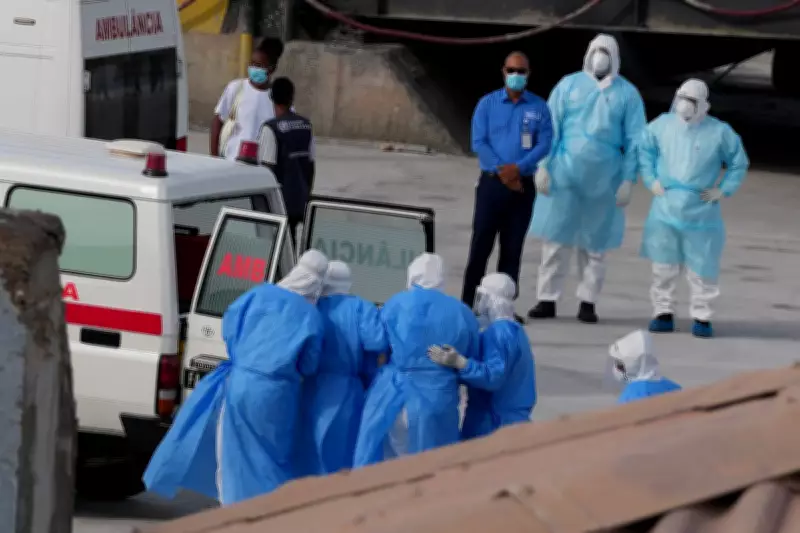
Countries around the world are preparing to manage the 140 passengers and crew members aboard a hantavirus-stricken cruise ship heading for the Canary Islands. The vessel is expected to reach the Spanish island of Tenerife, off the coast of West Africa, early Sunday morning. At least three passengers have died, and several others have been infected.
What We Don't Know
Hantavirus is typically spread by inhaling contaminated rodent droppings, with symptoms appearing one to eight weeks after exposure. The World Health Organization states the risk to the wider public is low, but the Andes virus implicated in this outbreak may rarely spread between people. Authorities and the cruise operator have provided updates, but key information remains lacking.
Where the Outbreak Originated
Argentine investigators suspect a Dutch couple may have contracted the virus during a bird-watching trip before boarding the cruise ship in Argentina on April 1. However, no organization has confirmed where or how they acquired the disease. Argentina’s Health Ministry has focused on the southernmost town, Ushuaia, and plans to travel there in the coming days, according to a written statement to The Associated Press. No explanation was given for the delay.

What Happens Next to the Remaining Passengers
Spanish authorities are preparing to receive the remaining passengers and crew on Tenerife. Officials said Friday that once the ship arrives, passengers will be evacuated in small boats to buses only when their repatriation flights are ready. The United States has agreed to send a plane to pick up its citizens, as will the British government. Other countries have not yet made their plans public, and it is unclear how long passengers will have to wait for flights. Virginia Barcones, Spain’s head of emergency services, said Friday that the country had requested medically equipped planes for symptomatic passengers, but availability is unknown.
How Many People May Have Been Exposed
According to cruise operator Oceanwide Expeditions, the MV Hondius departed Ushuaia on April 1 and made two stops before the outbreak. Six more passengers boarded at the remote island of Tristan da Cunha. The ship then stopped at St. Helena, where 30 passengers disembarked, including a Dutch woman and the body of her deceased husband. The nationalities of two of those 30 passengers are unknown; they are thought to be Chileans who boarded at Tristan da Cunha. Stephen Doughty, the U.K. minister of overseas territories, said Friday that a resident of Tristan da Cunha has been hospitalized with hantavirus symptoms, but it is unclear if this person was a passenger. Initial figures from Oceanwide Expeditions said the ship left Argentina with 114 passengers and an unknown number of crew. Later figures indicated 61 crew members from 12 countries, but it is not known if any crew changed during the journey. Oceanwide Expeditions updated the number and nationalities of passengers who disembarked at St. Helena after discovering a discrepancy in initial figures. Their number is lower than the Dutch Foreign Ministry's estimate, and the reason for the difference is unknown.
The Whereabouts of All Passengers
Many passengers who disembarked at St. Helena traveled to other countries, including the Dutch woman whose husband died on board. She flew to Johannesburg, then briefly boarded a plane preparing to fly to Amsterdam. She was removed because she was too ill to travel and later died. South African and Dutch authorities are trying to trace anyone who had contact with her during her travels. A flight attendant who had contact with the woman has tested negative for hantavirus after reporting symptoms. Some governments, like the United Kingdom, have confirmed the whereabouts of their citizens who left the boat. According to U.K. health officials, two are self-isolating at home, four remain on St. Helena, and one has been traced outside the U.K. However, U.K. officials do not know or have not made public how many others they have come into contact with since.