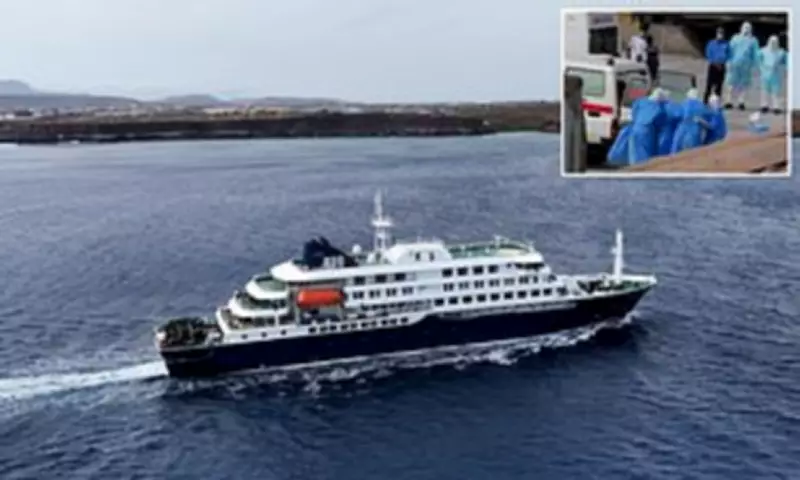
For many, the news may have triggered an uncomfortable sense of déjà vu. Images of hazmat-suited medical workers airlifting gravely ill passengers from the MV Hondius earlier this week were hauntingly reminiscent of the darkest days of the Covid pandemic.
So far, there have been eight cases of hantavirus linked to the outbreak that began on the luxury cruise ship in early April. Five infections have been confirmed, three are suspected, and three people have died. Meanwhile, nine passengers who previously left the stricken vessel are now under home quarantine and being closely monitored, including Americans in six states – Arizona, California, Georgia, New Jersey, Texas and Virginia.
In the latest worrying twist, a Spanish woman who was on the same flight as a passenger who later died from the disease has reportedly been hospitalized with a suspected infection. She was said to have been 'two rows behind the person who died' and had 'only brief contact'. No further details have been released.

Since the episode began, infectious disease experts across the globe have been quick to stress that the risk beyond those directly exposed remains extremely low. However, the outbreak has inevitably raised alarm – not least because hantavirus is little known outside medical circles, has no specific cure, and can in some cases trigger catastrophic lung failure within days.
Should we be worried about hantavirus – and could it really become a pandemic?
The CDC has classified the current hantavirus outbreak as a 'Level 3' emergency – the lowest level it can assign to an outbreak. It signifies the risk to the general public remains minimal, but the situation is being actively monitored and the agency has activated its Emergency Operation Centers. Epidemiologists, scientists and physicians may also have been reassigned from their usual roles to assist with the response.
Dr Todd Ellerin, an infectious diseases expert at Harvard University, told the Daily Mail hantavirus was unlikely to trigger a pandemic or even a major outbreak. 'The world does not have to be worried, but the people on the cruise ship or who were on the cruise ship should be taking care,' he said. 'This is an example of a virus with a high mortality rate, but that is not a particularly good spreader. It's not like the flu or Covid, which spread easily.'
What are officials doing to stop it spreading further?
A CDC team has reportedly been dispatched to evacuate the remaining Americans aboard the MV Hondius. They are expected to be flown to the National Quarantine Unit, a federal facility in Nebraska, to reduce the chance of onward spread. Some countries involved in the response, including the UK and Spain, are using a 45-day isolation or monitoring period for potentially exposed passengers. Experts say the response appears cautious but proportionate.
Hantavirus is usually spread through breathing in dust contaminated with infected rodent urine, saliva or droppings – often during sweeping or cleaning. However, the Andes virus (ANDV) strain identified in the MV Hondius outbreak is unusual because limited person-to-person transmission has previously been documented.
Dr Piet Maes, President-elect of the Hantavirus Society and a virologist at the Plotkin Institute at the University of Brussels, said: 'ANDV is exceptional among hantaviruses because limited person-to-person transmission has been documented, typically after close or prolonged contact with symptomatic individuals.' He added: 'For the general public, the risk remains very low.'
How dangerous is hantavirus – and is this strain worse than others?
Most hantavirus infections do not lead to severe disease. In many cases, people may develop only mild flu-like symptoms – or none at all. However, some patients go on to develop Hantavirus Pulmonary Syndrome (HPS), a rare but potentially devastating condition in which the lungs begin to fill with fluid, leading to severe breathing difficulties, dangerously low blood pressure and, in the worst cases, respiratory failure and death. The CDC says about 38 per cent of patients who develop the respiratory phase of HPS die from the illness.

Earlier this year, hantavirus made headlines after Betsy Arakawa, 65 – the wife of legendary Hollywood actor Gene Hackman – died from the infection at the couple's home in Santa Fe. In the US, hantavirus remains extremely rare. The CDC says 890 cases were reported between 1993 and the end of 2023 – an average of about 30 cases a year.
The Andes strain involved in the MV Hondius outbreak is considered particularly concerning because it is one of the hantaviruses linked to severe pulmonary disease and the only strain known to spread between people in limited circumstances. However, experts say the strain involved in the cruise ship outbreak is not significantly different to other Andes virus outbreaks, and shows no signs of mutation.
Should passengers have been kept on the ship?
Ellerin told the Daily Mail that passengers who were not showing symptoms could potentially have remained aboard temporarily, but those who were sick needed proper medical care ashore. 'Sick patients left on the boat may not receive proper medical care,' he said. 'Patients can also deteriorate rapidly and keeping them on board could cause a delay in their care.' Authorities have therefore focused on controlled evacuation – with passengers removed in protective conditions, separated from the wider population, and placed into quarantine or monitoring arrangements.
How does hantavirus spread – and what can I do to protect myself?
The World Health Organization says the risk to the wider public remains low, but more cases may still emerge among passengers or close contacts because hantavirus can have a long incubation period. Symptoms usually begin between one and eight weeks after exposure. The CDC says Andes virus is the only hantavirus known to spread between people, and even then transmission is generally limited to close contact with someone who is ill.
Dr Katherine O'Reilly, Medical Director at International SOS, said: 'Infection is not typically spread through routine person-to-person contact but is most often linked to exposure to infected rodents or their droppings.' She added that people may unknowingly increase their risk when cleaning enclosed or dusty spaces contaminated by rodents. 'Actions such as sweeping or vacuuming dry debris can disturb contaminated particles and make them easier to inhale,' she said.
Could I catch hantavirus on public transportation?
Experts say the risk from trains, buses or planes remains extremely low. The concern in this outbreak is not casual contact with strangers, but prolonged close exposure to infected rodents – or, in the case of Andes virus, prolonged close contact with a symptomatic infected person. The CDC says person-to-person spread of Andes virus is 'usually limited to people who have close contact with the ill person'.
What about the woman on the plane who reportedly became ill?
The passenger who reportedly fell sick after traveling on a plane with another infected individual has not yet had her infection confirmed. However, Ellerin said that if confirmed, it could indicate onward spread. 'What is unique about the Andes strain of hantavirus is that it can be spread through respiratory droplets, released when someone coughs and sneezes,' he said. 'Someone would need to be in close range to a patient to become infected, however.' Health officials are already tracing anyone who may have been exposed and asking them to quarantine.
Is it possible people could have hantavirus without knowing and pass it on – like Covid?
According to the WHO, symptoms of HPS usually appear two to four weeks after exposure, though they can emerge as early as one week or as late as eight weeks later. Hantavirus is not believed to behave like Covid, where people with no symptoms could efficiently spread the virus through everyday contact. With Andes virus, person-to-person spread has been documented, but it is generally linked to close contact with someone who is already ill or entering the early symptomatic phase. Early symptoms can include headache, dizziness, chills, fever, muscle aches and gastrointestinal problems such as nausea, vomiting, diarrhoea and abdominal pain.
Do we need to start wearing masks again?
No. Experts and health agencies have not advised the general public to wear masks because of the outbreak. Masks and respirators may still be used by healthcare workers, cleaners or emergency responders dealing directly with infected patients or potentially contaminated environments. For everyone else, the more relevant precaution is avoiding exposure to rodents and rodent-contaminated dust.
If I'm worried I may have it, when should I seek medical help?
The CDC advises anyone who develops symptoms after a possible hantavirus exposure to seek medical attention promptly. Warning signs include fever, muscle aches, breathing difficulties, chest tightness, severe weakness or symptoms developing after known exposure to rodents or an infected person. In those circumstances, doctors say people should seek urgent medical advice and inform healthcare providers about any possible hantavirus exposure.