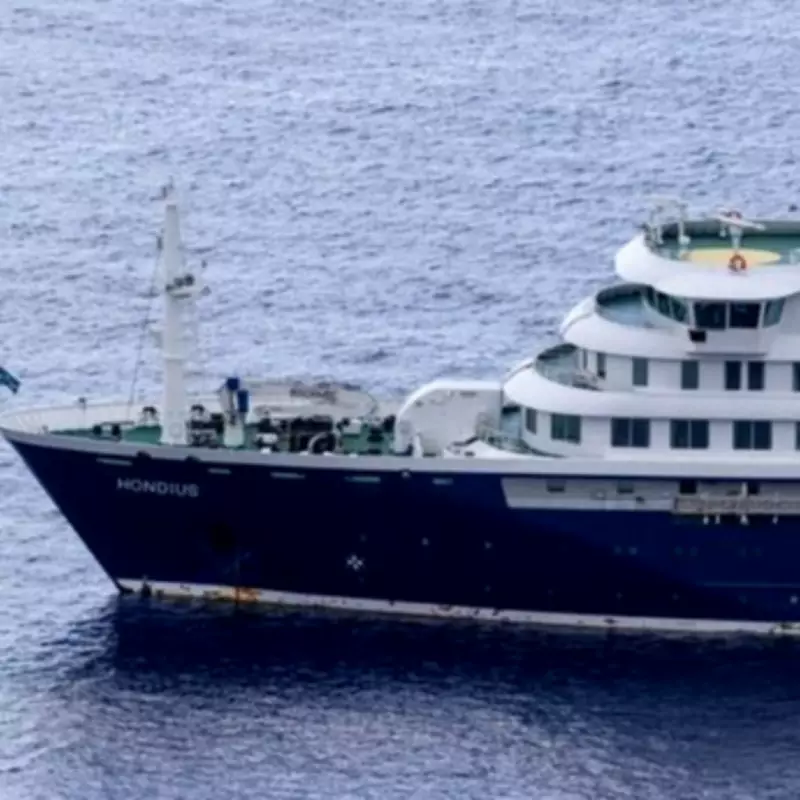
A concerning map has revealed the spread of hantavirus as suspected cases are confirmed across multiple continents. The World Health Organisation has stated that the risk to the general public remains low, but authorities are urgently working to track down and monitor passengers who disembarked a hantavirus-affected cruise ship before the outbreak was identified.
Outbreak Timeline and Fatalities
Health authorities across four continents are racing to trace and monitor passengers who left a hantavirus-affected cruise ship before its deadly outbreak was confirmed, while also attempting to locate others who may have come into contact with them. Three passengers have died in the outbreak: a Dutch couple and a German national. Several others are currently unwell. Symptoms typically appear between one and eight weeks after exposure.
None of the remaining passengers or crew members aboard the ship are currently showing symptoms, Netherlands-based cruise operator Oceanwide Expeditions confirmed on Thursday.

Origin and Investigation
In Argentina, investigators had yet to depart for the southern town where officials from the country's Health Ministry believe the outbreak originated. Argentine investigators suspect that a Dutch couple may have contracted the virus during a bird-watching excursion prior to boarding the cruise ship. On 24 April, nearly a fortnight after the first passenger died on board, more than two dozen people from at least 12 countries disembarked the vessel without any contact tracing taking place, according to the ship's operator and Dutch officials.
It was not until 2 May that health authorities first confirmed hantavirus in a ship passenger, the WHO states. That was in a British man evacuated from the ship to South Africa three days after the St. Helena stop. He was tested in South Africa and remains in intensive care there.
WHO Risk Assessment
The World Health Organisation has stated that the risk to the general public remains low. Hantavirus is typically contracted through inhalation of contaminated rodent droppings and is not easily transmitted between people. "We believe this will be a limited outbreak if the public health measures are implemented and solidarity is shown across all countries," said Dr. Abdirahman Mahamud, the WHO's alert and response director.
Dr Tedros Adhanom Ghebreyesus, director-general of the WHO, said that while the risk to the public is low, there could be more cases due to the incubation period of the Andes virus. "Given the incubation period of the Andes virus, which can be up to six weeks, it's possible that more cases may be reported," he said. "While this is a serious incident, WHO assesses the public health risk as low."
International Response
Three individuals, including the vessel's doctor, were evacuated on Wednesday while the ship was near Cape Verde and transported to specialist hospitals in Europe for treatment. The ship's operator confirmed that a total of 30 passengers, including the deceased Dutch man and his wife, departed the vessel at St. Helena. The Dutch Foreign Ministry places the figure at roughly 40.
Authorities in countries such as South Africa, Singapore, and the Netherlands are now tracing passengers who were aboard the ship. The Dutch pair who represented the initial two cases had travelled across Argentina, Chile, and Uruguay prior to embarking on the vessel, according to the WHO. They had visited locations where the rat species known to transmit the Andes virus is found.
The WHO is collaborating with Argentinian health authorities to trace the couple's journey and has organised the delivery of 2,500 diagnostic kits from Argentina to laboratories across five nations. Argentina's health ministry reported 28 fatalities from hantavirus last year, a rise from the average death toll of 15 over the preceding five years. Almost a third of last year's cases proved fatal.

Risk in the UK
Although hantavirus is a serious infection, the risk to the wider UK population is "very low," according to the UK Health Security Agency. Under the health section of its travel advice for Argentina, the UK Foreign Office states: "Hantavirus is present in Argentina. Read more information about hantavirus in Argentina on TravelHealthPro. Further guidance on hantavirus is available from the UK Health Security Agency and Argentina's Ministry of Health."
Cases Across Europe
The French Health Ministry has issued a statement confirming that a French national has been tested for hantavirus and put in isolation after displaying mild symptoms. Two patients infected with hantavirus are currently being treated in hospitals in the Netherlands in specialist isolation units. One patient is at Radboud University Medical Center in Nijmegen, while the other is at Leiden University Medical Center in Leiden. Three additional people in the Netherlands have been tested for the virus, including a 69-year-old flight attendant. All three were in direct contact with the victim who died in South Africa.
It emerged on Wednesday that a man tested positive for hantavirus in Switzerland after he disembarked at St. Helena, though his exact movements in between remain unclear.
Dr Tedros added: "I would also like to thank the ship's operator for its co-operation, and the passengers and crew who are going through a very difficult and frightening situation. I've been in touch with the ship's captain regularly, including this morning. He told me morale has improved significantly since the ship started moving again."