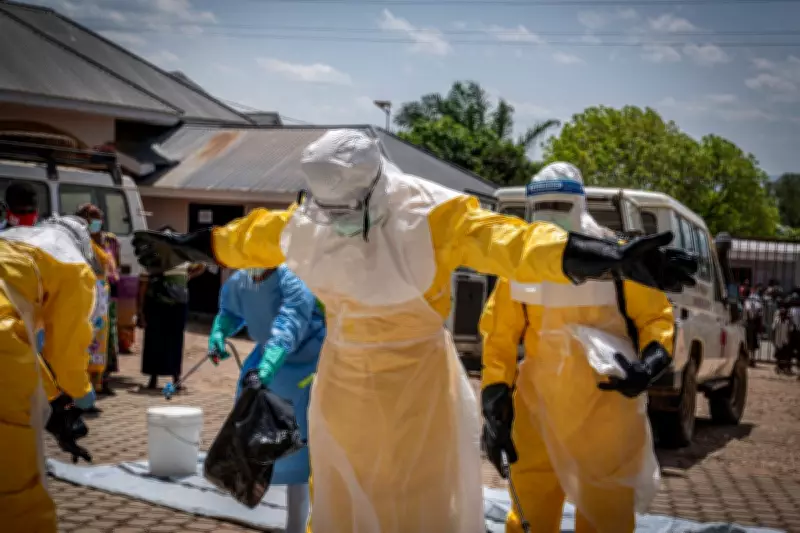
A rapid assessment conducted by ActionAid in the Democratic Republic of Congo's Ituri region has revealed that one in three residents at the epicentre of the deadly Ebola outbreak do not believe the virus is real. This widespread disbelief is severely hampering containment efforts, as only 64 per cent of those surveyed accept Ebola as a genuine disease rather than a spiritual or mystical phenomenon.
Belief and Suspicion
Deep-seated suspicion among local communities, where some view Ebola as a fabrication or 'a white man's invention,' complicates public health interventions. The outbreak has already resulted in at least 223 suspected deaths and nearly 1,000 cases, with the World Health Organisation acknowledging that the epidemic is 'outpacing us.'
Challenges to Containment
Response efforts are further challenged by significant reductions in international aid. US foreign assistance has been cut by nearly 57 per cent following the Trump administration's dismantling of USAID, while the UK has also reduced its aid budget. These cuts undermine the ability to deploy health workers, provide medical supplies, and conduct community outreach.

The combination of disbelief and reduced funding creates a perfect storm, allowing the virus to spread more rapidly. Health officials stress the importance of building trust through local engagement and addressing misconceptions, but resources remain scarce.