Australian Father Faces Death Sentence After Losing Access to Life-Saving Cancer Drug
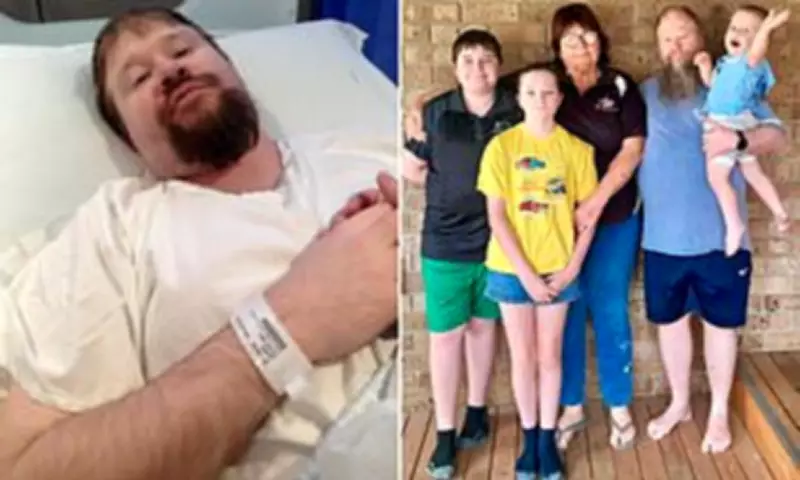
A father-of-three from the New South Wales South Coast is confronting an imminent death sentence after his subsidised access to a revolutionary cancer medication was abruptly withdrawn. Clinton James, 42, has been battling medullary thyroid cancer since 2016, a rare and aggressive form of the disease that does not respond effectively to conventional treatments like chemotherapy or radiation.
The Life-Changing Treatment That Stopped Working
For nearly two years, Mr James had been taking Retevmo (selpercatinib), a targeted therapy that specifically attacks genetic mutations in cancer cells. The drug had produced miraculous results, halting the growth of existing and new tumours while dramatically improving his quality of life. His access was initially provided through pharmaceutical company Eli Lilly's compassionate access program, with expectations that the medication would be listed on Australia's Pharmaceutical Benefits Scheme for medullary thyroid cancer patients by March 2025.
Now, Mr James has been informed that his subsidised access has been withdrawn, forcing him to consider paying approximately $8,000 per month out of pocket to continue the treatment that is keeping him alive. Other patients with the same condition have reportedly been quoted prices as high as $16,000 monthly for the identical medication.

A Desperate Fight for Survival
"It has got to the stage where I'm rationing the supplies I have left, against my doctors' wishes," Mr James revealed. "Every month is important when you're not taking daily medication. I'm not asking for a free ride. All I want is a fair go. Without this drug, I won't survive."
The father is now facing the heartbreaking reality that he may not see his children—Chris, 14, Shayla, 11, and Thomas, 2—grow up if he cannot continue treatment. Medical professionals have warned that without Retevmo, his cancer will return aggressively and spread rapidly throughout his body.
What makes the situation particularly galling for Mr James is that the same drug costs just $25 per month for lung cancer patients under the PBS scheme. "We don't even earn $8,000 a month," he stated, highlighting the impossible financial burden.
Political Intervention and Systemic Failures
In a last-ditch effort to secure affordable access, Mr James and his mother Debra Gibson travelled to Canberra to meet with Coalition health spokesperson Anne Ruston and staff from Health Minister Mark Butler's office. While they emerged from the meetings feeling optimistic about a potential positive outcome, the clock is ticking on Mr James's survival.
The Pharmaceutical Benefits Advisory Committee is scheduled to meet next week to consider Eli Lilly's application for PBS listing of Retevmo for medullary thyroid cancer patients. If approved, the listing could take effect within months, but for Mr James and others in similar situations, that timeline may be too late.
Liberal MP Phillip Thompson, who has been advocating on behalf of affected patients, has called attention to systemic failures within the PBS. "The PBS is supposed to provide access based on medical need not personal wealth," he asserted. "Australians with medullary thyroid cancer cannot wait any longer. We are losing Australians because lifesaving medicines are trapped in a bureaucratic maze."
Broader Implications and International Comparisons
An Eli Lilly spokesperson described Mr James's situation as "a heartbreaking illustration of how broken the PBS is," calling for increased government investment to ensure Australians can access life-changing medicines. The company cited inconsistent advice and excessive bureaucracy surrounding reimbursement for diagnostic genetic tests as factors delaying the PBS listing.
Meanwhile, Mr James hasn't ruled out the drastic measure of relocating overseas to obtain affordable access to Retevmo. The drug has been subsidised for medullary thyroid cancer patients in several countries, including the United Kingdom, for the past five years.

Health Minister Mark Butler acknowledged the broader issue, stating that the government is working through recommendations from the Health Technology Assessment review to enable faster access to medicines at affordable costs. However, he could not comment specifically on Mr James's case.
Community Support and Medical Reality
A fundraiser has been established to help Mr James continue his treatment while awaiting potential PBS listing. "This is simply not something my family and I can sustain on our own, no matter how hard we try," he wrote in his appeal. "Your kindness doesn't just help pay for medicine—it helps buy time, hope, and the chance for me to keep living."
Meredith Cummins, chief executive of NeuroEndocrine Cancer Australia and president of the International Neuroendocrine Cancer Alliance, emphasised the medical urgency. "Selpercatinib has demonstrated strong response rates for people with advanced MTC, but without PBS listing, the cost places it out of reach for many Australians," she explained. "Where treatments have demonstrated clear benefit, patients should have the opportunity to access them so they can live the best life possible."
Mr James's mother made an emotional plea to health authorities: "I am begging the health minister to help save my son's life. Please list this drug on the PBS and don't let cost decide who lives or dies." As the family waits for bureaucratic processes to unfold, they face the terrifying reality that time is running out for a father who simply wants to watch his children grow up.