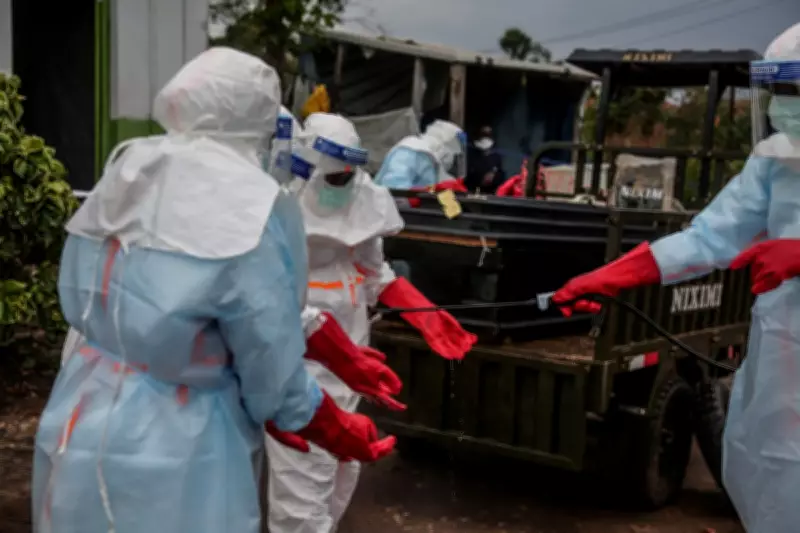
Scientists at Oxford University are developing a vaccine for a new strain of Ebola that could be ready for clinical trials within months. The Democratic Republic of Congo is currently grappling with a national outbreak of the Bundibugyo strain of the virus, which is confirmed to have killed seven people and suspected to be responsible for the deaths of 177 more. There is currently no vaccine or cure for the strain.
Urgent Vaccine Development
On Friday, scientists at Oxford said they are working urgently to develop a vaccine which could be used in case the virus spirals out of control. The team is working on testing the ChAdOx1 BDBV vaccine, a type of viral-vector vaccine that has been previously used in the development of immunisations for emerging infectious diseases – including Covid-19.
Viral vector vaccines use a harmless, modified version of a virus (the vector) to deliver genetic instructions into human cells. ChAdOx1 is a highly adjustable technology, meaning it can quickly be changed to target different viruses. According to the BBC, animal testing is already underway at Oxford.

WHO Warning and UK Funding
The World Health Organisation (WHO) told the BBC the vaccine could be available for use in clinical trials in two to three months. It comes as the risk of the Bundibugyo strain was upgraded from "high" to "very high" by the WHO. So far, 82 cases have been confirmed in Congo, with seven confirmed deaths, 177 suspected deaths and almost 750 suspected cases.
"The potential of this virus spreading rapidly is high, very high, and that changed the whole dynamic," said Abdirahman Mahamud, WHO Director of Health Emergency Alert & Response Operations.
Professor Teresa Lambe, head of vaccine immunology at the Oxford vaccine group and pandemic sciences institute said: "My hope is that this outbreak can be brought under control quickly and that vaccines are ultimately not needed. Nevertheless, our team and partners will continue working to ensure that potential vaccine options are available if they are needed. The ability to move rapidly in situations like this has been built on many years of vaccine research and close collaboration with our global partners."
Britain will provide up to £20 million to contain the outbreak of Ebola in the eastern Democratic Republic of the Congo and Uganda, it announced today. The money, provided by the Foreign, Commonwealth and Development Office, will help the international effort to contain the virus through support for frontline health workers, improved infection control and disease surveillance.