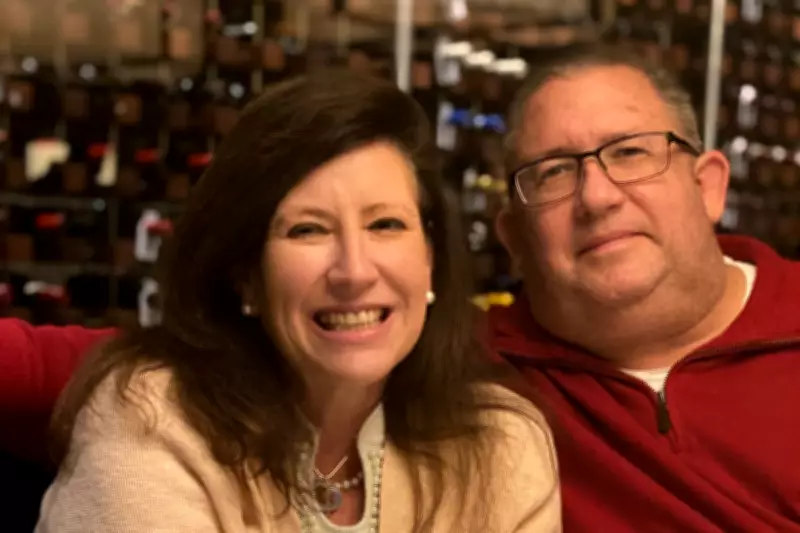
When Debbie Rhodes received a terminal cancer diagnosis nine years ago, she and her husband Randy faced another devastating blow: the high cost of her life-saving medication. Initially prescribed imatinib to manage chronic myeloid leukemia, the drug was covered by their insurance, with out-of-pocket costs ranging from $13,000 to $15,000 per month. The medication proved effective, keeping Debbie's cancer from progressing. However, two years ago, Randy discovered that his new health insurance policy did not cover the drug, leaving the couple facing thousands of dollars in monthly expenses.
A Search for Affordable Medication
Randy, an attorney who had previously litigated against CVS over pediatric cancer drugs, spent days searching for an affordable alternative. He eventually found Cost Plus Drugs, an online pharmacy founded by billionaire Mark Cuban in 2022. The company aims to bring transparency to drug pricing by negotiating directly with manufacturers and eliminating middlemen like pharmacy benefit managers. On Cost Plus Drugs, a 30-day supply of imatinib 400mg costs just $39.75, breaking down to $25.65 for manufacturing, $3.85 for the company, $5 for pharmacy labor, and $5.25 for shipping. In contrast, the retail price for the same drug is $9,657.30.
Emotional Relief
Randy recalled the emotional moment he told his wife about the affordable option. “She broke down into tears,” he said. “I can’t even begin to articulate my emotions.” Debbie described the discovery as “indescribable relief” and shared the information with her oncology team to help other patients.

Understanding Drug Pricing
Imatinib, the generic form of Gleevec, was introduced by Novartis 25 years ago. Its patent expired in 2015, and generic versions are now available. However, U.S. pricing remains complex and opaque. According to a 2020 study in Lancet Haematology, the annual cost of imatinib in Europe is $4,000, compared to an average of $35,000 in the U.S., with a range from $4,423 to $72,300 depending on the manufacturer or distributor.
Jesse Mendelsohn, senior vice president at Model N, explained that the U.S. market is heavily influenced by pharmacy benefit managers (PBMs) and private intermediaries. Manufacturers set high list prices to negotiate rebates with PBMs, and patients without insurance or with high-deductible plans often pay the full retail price. Even generic drugs may not see significant savings over time, as seen with imatinib.
Government Efforts and Alternatives
Successive administrations have attempted to lower drug prices. In May 2025, President Donald Trump signed an executive order mandating a “most-favored-nation” framework, leading to the creation of Trump Rx, a federally-run program offering discounts on some name-brand drugs to uninsured Americans. However, it does not cover generics like imatinib. Meanwhile, platforms like Cost Plus Drugs, GoodRx, and SingleCare provide affordable options for many patients.
For Debbie, now nine years into treatment and still doing well, the affordable medication has been a lifeline. “Indescribable relief,” she wrote. “And later, joy when I shared that information with my oncology team so that other patients who suffer with CML could benefit from Mr. Cuban's remarkable pharmacy.”