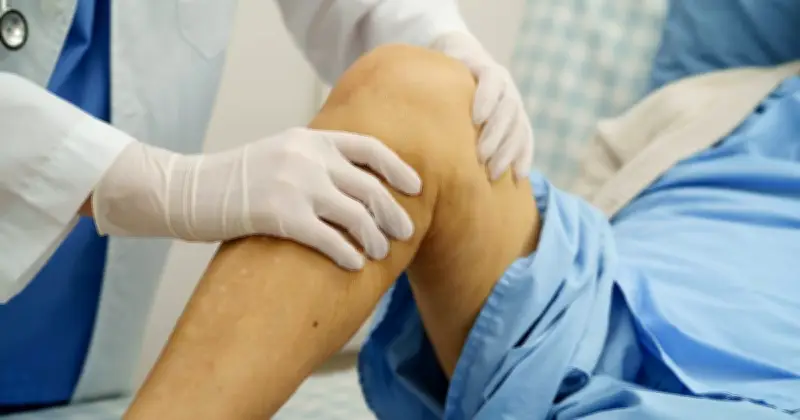
A surgeon has issued a stark warning about a common error people make when they experience a popping sensation in their knee during physical activity. According to joint preservation specialist Professor Paul Lee, dismissing the warning signs and continuing to play could lead to irreversible damage.
The 'biggest mistake' after a knee pop
ACL injuries are among the most frequent serious sporting injuries, affecting everyone from elite athletes to casual joggers and weekend footballers. Professor Lee explains that one of the gravest errors is feeling a pop, experiencing swelling or instability, and then trying to carry on regardless.
The anterior cruciate ligament (ACL) is a crucial stabilising ligament in the knee, often injured during sudden changes of direction, twisting, pivoting, or awkward landings. Sports like football, rugby, skiing, basketball, and tennis are closely associated with ACL injuries, though they can occur in virtually any physical activity.

Traditional treatment and new advances
For decades, the standard treatment for a torn ACL has been reconstruction using a tendon graft from elsewhere in the body. However, advances in sports medicine are opening new possibilities. Professor Lee notes growing interest in techniques that preserve and repair the body's own ligament rather than replacing it.
One such procedure is ACL-STARR Repair, which focuses on mending and retaining the patient's natural ACL. However, the effectiveness of these newer methods often hinges on speed. Early diagnosis is absolutely critical; some ACL tears that may be repairable within the first few weeks can become irreparable if treatment is delayed.
Urgent advice for athletes
Professor Lee urges anyone who experiences a popping sensation, considerable swelling, or a feeling that the knee is buckling to seek specialist assessment without delay. He stresses that the worst thing people can do is ignore it, keep playing, and assume it will settle down on its own. By the time some patients finally seek help, opportunities to preserve the ligament may already have been lost.
The future of sports medicine
Professor Lee believes the future of sports medicine lies increasingly in preservation and regeneration rather than replacement. He says that whenever possible, we should ask whether we can save and restore the body's own tissues instead of automatically replacing them. While reconstructive surgery remains an excellent choice for many patients, preserving natural anatomy is set to become a more prominent focus of treatment.
He clarifies that this is not about replacing ACL reconstruction altogether, but about recognising that for the right patient, treated at the right time, preserving the body's own ligament may sometimes be possible. With more people participating in sport and exercise, recognising early warning signs of ACL injuries could prove crucial to both recovery and long-term knee health. The sooner an injury is properly assessed, the more options patients may have available to them.