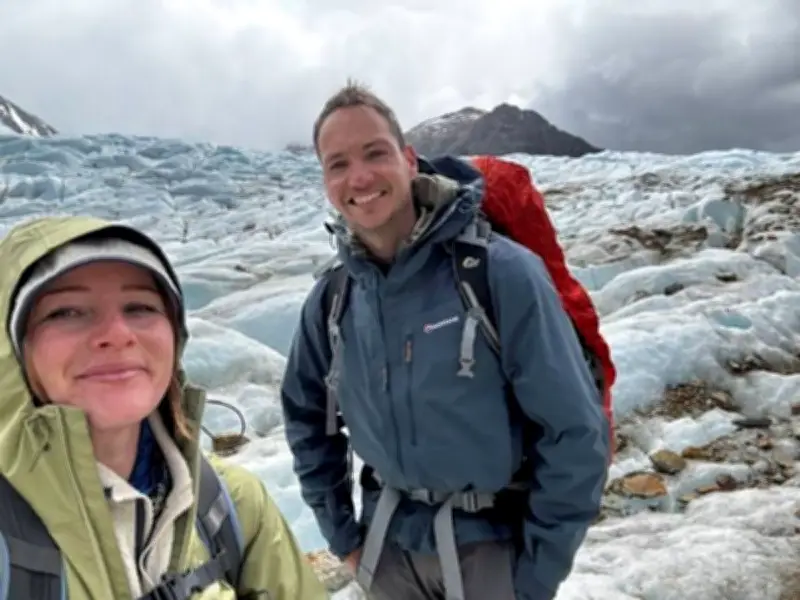
Kate Howson, 32, from Cardiff, was backpacking with her partner Rhys when she noticed an itchy patch on her back. Assuming it was a rash from her rucksack, she ignored it. But the mole turned out to be a melanoma that progressed to stage 3, and the subsequent treatment journey revealed unexpected fertility challenges.
Backpacking Trip Leads to Discovery
In early 2024, Kate and Rhys took a sabbatical to attend weddings in New Zealand and Thailand. While traveling, Kate felt an itch in the middle of her back where a mole was located. Her partner observed redness around the area. "It was exactly where my rucksack was sitting," Kate said. "I assumed it was rubbing against my skin." They sent a photo to her sister-in-law, a doctor, who advised getting it checked upon return.
Back home in March, Kate noticed the mole had darkened and changed shape. She saw her GP, who referred her to dermatology at the University Hospital of Wales in Cardiff. Specialists warned it was likely cancerous, removed the mole that day, and confirmed it was a melanoma.

Cancer Progression and Treatment
Kate underwent a sentinel lymph node biopsy, which revealed the cancer had spread to her groin, upgrading her diagnosis from stage 2 to stage 3. "They scanned me to see the most likely route the cancer might have taken," she said. "It had gone to my groin." She then had surgery to remove those lymph nodes. Results before Christmas 2025 confirmed the metastasis.
Her oncologist suggested immunotherapy, but Kate carried the BRAF mutation, so targeted cancer drugs were chosen. These tablets carry side effects, including potential impacts on fertility. Kate and Rhys had discussed starting a family, so they explored IVF before treatment.
Fertility Challenges
Kate underwent one round of IVF, which revealed abnormally low egg reserves—only three eggs were harvested. With time critical, they funded a second round for embryo freezing, but none fertilised. "One thing you don't think about with a cancer diagnosis is your own fertility," Kate said. "Suddenly finding out I had low fertility felt like another huge blow."
Exhausting IVF options, the couple put family planning on hold. Kate began treatment in April 2025. Throughout, she received counselling from Tenovus Cancer Care. "The hard and unexpected journey with IVF before treatment, and for them not to have worked, is heartbreaking," she added.
Importance of Sun Safety
Rhian Jones, senior support line nurse at Tenovus Cancer Care, stressed: "People are more likely to head outside when the UV index is moderate or high. If you notice any changes in your skin, go to your GP as soon as possible." The ABCDE guide helps recall warning signs for moles.
Kate, a research partnership manager, shared her story to highlight the power of personal narratives. "For me, I could never have imagined going through this at age 32," she said. "It has made me more vigilant about sun safety. Don't be afraid to get moles checked regularly, especially if they change." Kate and Rhys continue to travel in their campervan, now with added caution.