Ancient Korean 'Sacrificial Caste' Revealed in Skeleton DNA Study
Entire families were ritually sacrificed about 1,500 years ago in ancient Korea to honour royalty, according to a groundbreaking new analysis of dozens of skeletons unearthed in Gyeongsan, located in the southeastern region of the Korean Peninsula. The findings provide the first large-scale scientific evidence of the social structure and customs during the Silla Kingdom era, which lasted from 57 BC to 935 AD.
Evidence of Sunjang Rituals and Close-Kin Marriages
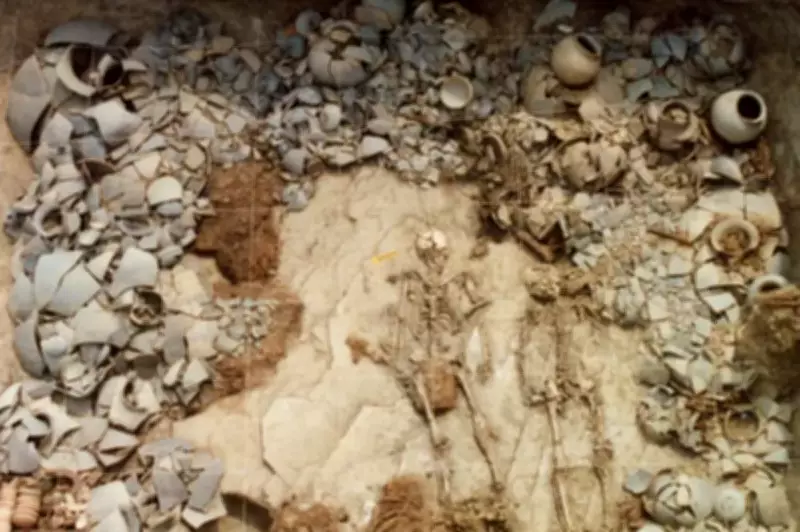
In the latest study, scientists analysed genome-wide data from 78 human remains discovered in 44 tombs at the Imdang-Joyeong burial complex in Gyeongsan. At least 20 of these tombs displayed clear evidence of sunjang, a practice where individuals were sacrificed and buried alongside the deceased. Researchers found that in at least three cases, closely related individuals, including parent-child pairs, were interred together in the same tomb. One burial contained both parents and their child, highlighting the brutal nature of these rituals.
Our genetic findings are the first to confirm the acts of sunjang of an entire household, the researchers wrote in the study published in the journal Science Advances. The analysis also revealed that five of the individuals buried, both royal and non-royal, had parents who were closely related. This indicates that the Silla royal elites and the people who were sacrificed commonly practiced close-kin marriage, a custom previously suspected but now genetically proven.

Discovery of a Hereditary Sacrificial Caste
The findings suggest that people chosen for the sunjang ritual inherited their roles, pointing to the existence of a sacrificial caste in this regional polity outside the Silla core. Genetic relatedness among sacrificial individuals over generations may suggest the presence of families that served as sacrificial individuals for the grave owner class for consecutive generations, the researchers explained. Those selected to be sacrificed and buried likely included servants, retainers, or dependents, reflecting a belief that the dead required attendants in the afterlife.
Jack Davey, director of the Early Korean Studies Center in Cambridge, told Live Science that the presence of what seems to have been a sacrificial caste in this regional polity outside of the Silla core has profound implications for how we understand Silla society. This challenges previous assumptions about social mobility and institutionalised violence in ancient Korean kingdoms.
Historical Context and Archaeological Significance
Archaeologists first unearthed the burial complex in Gyeongsan in 1982, constructed sometime between the 4th and 6th centuries. It was initially thought to contain the graves of local ruling families, with over 1,600 tombs and the remains of nearly 260 individuals discovered. However, the social hierarchy and relationships among those buried had remained elusive until now.
The latest genetic analysis not only confirms the practice of human sacrifice but also offers new insights into how local communities were organised during this period. The researchers stated that the findings highlight a kinship structure distinct from those observed in ancient Europe, shedding light on the unique cultural practices of the Silla Kingdom. This study raises further questions about slavery, social stratification, and the extent of ritual violence in ancient Korean societies, paving the way for future research into this fascinating era.