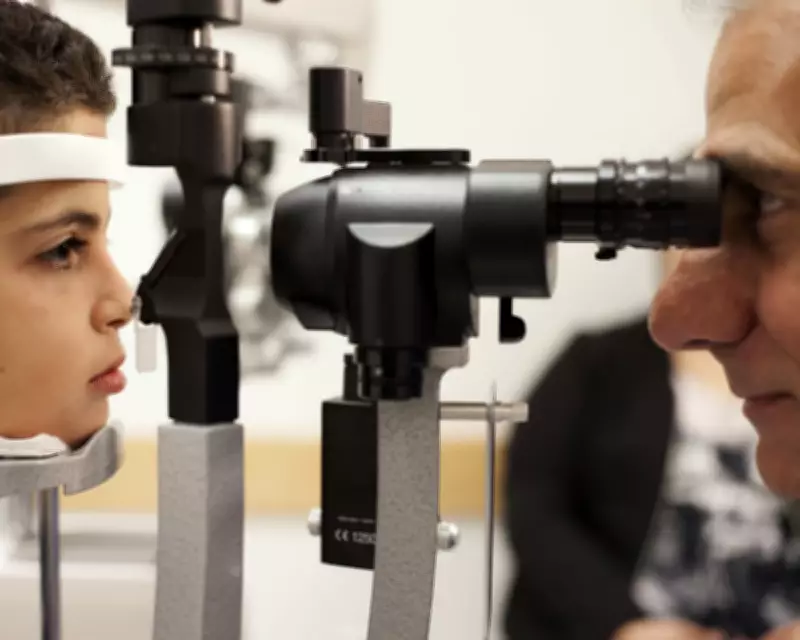
Breakthrough Prize Awards $3m to Scientists for Vision-Restoring Gene Therapy
Three pioneering scientists have been honoured with the prestigious Breakthrough Prize in Life Sciences, often dubbed the 'Oscar of science', for their groundbreaking work on a gene therapy that restores lost vision. The $3 million (£2.2 million) award recognises the 25-year-long project led by molecular biologist Jean Bennett, ophthalmologist Albert Maguire, and physician Katherine High, which resulted in the development of Luxturna.
Transforming Lives with Luxturna
Luxturna, approved in the United States in 2017, has revolutionised treatment for individuals born with Leber congenital amaurosis (LCA), a genetic disorder that typically leads to total blindness by early adulthood. The therapy works by delivering a functional version of the RPE65 gene into retinal cells, effectively correcting the genetic fault responsible for the condition.
Clinical trials provided compelling evidence of its efficacy, with one patient describing the profound moment of seeing their child's face for the first time, along with details like the fine grain in wooden furniture and branches waving in the wind. Other participants reported similarly life-changing improvements, highlighting the therapy's transformative impact.

A Journey of Scientific Dedication
Bennett and Maguire, who met while dissecting a brain at Harvard Medical School, embarked on this ambitious project at the University of Pennsylvania. Despite initial challenges due to limited tools for genetic correction, their perseverance paid off. Bennett reflected on their early days, stating, "The nice thing about being young and naive is I didn't know what I didn't know."
Their work involved extensive testing in animals, including two dogs named Venus and Mercury, which they later adopted as pets after successful treatment. Collaborating with Katherine High, they refined the therapy for human use, culminating in its regulatory approval and widespread acclaim.
Concerns Over Political Attacks on Science
While celebrating the achievement, Bennett expressed deep concerns about the current political climate in the United States. She warned that attacks on science by the administration could "cause damage for generations to come," potentially leading to a brain drain that the country would struggle to recover from. Bennett criticised the politicisation of agendas, undermining of government research agencies, and dismissal of expert advisers.
Echoing these sentiments, Stuart Orkin, another prize recipient, lamented the disassembly of scientific infrastructure, stating, "I'm at a total loss to explain why people in leadership would want to do this." Both scientists emphasised the need to protect and support biomedical research to maintain progress.
Additional Breakthrough Prize Winners
The ceremony in Los Angeles also honoured other significant advancements in life sciences. A second prize was awarded to Swee Lay Thein and Stuart Orkin for their work on gene therapies for sickle cell disease and beta thalassaemia. Their research led to Casgevy, a therapy that edits patients' blood stem cells to produce healthy foetal haemoglobin, offering new hope for those with these blood disorders.
Further prizes recognised achievements in mathematics and physics, including work on nonlinear evolution equations and measurements of muons, showcasing the breadth of scientific innovation celebrated by the Breakthrough Prize.
This recognition underscores the critical role of sustained investment and collaboration in advancing medical science, while highlighting the urgent need to safeguard research from political interference to ensure future breakthroughs.